

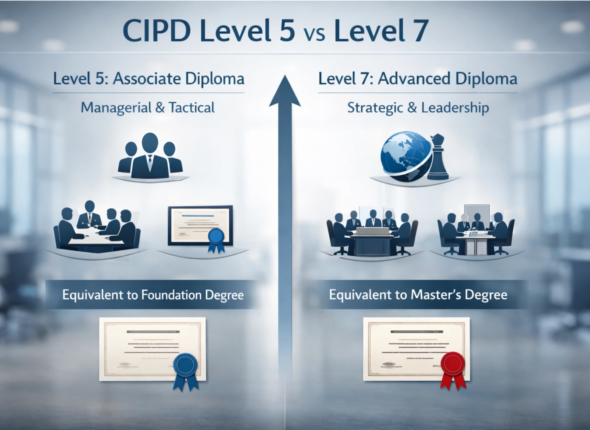
CIPD Level 7 vs Level 5
CIPD Level 5 vs. Level 7: A Detailed Comparison for HR Professionals The Chartered Institute of Personnel and Development (CIPD) qualifications are the gold standard for Human Resources (HR) and Learning & Development (L&D) professionals globally. For those looking to advance their...
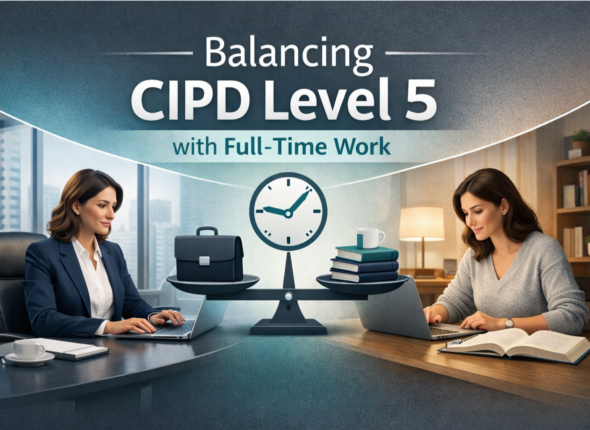
Can I study CIPD Level 5 While Working Full Time
For many HR professionals, career progression is a top priority. The CIPD Level 5 Associate Diploma in People Management is a highly sought-after qualification that can open doors to more senior roles. But for those already juggling a full-time job, the big...
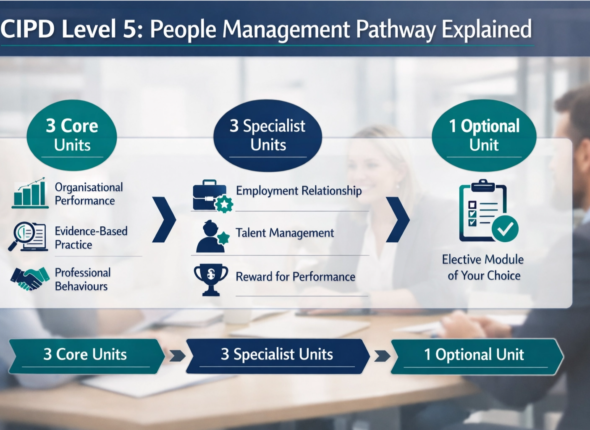
CIPD level 5 People Management Pathway Explained
The Chartered Institute of Personnel and Development (CIPD) is the professional body for HR and people development, setting the gold standard for practitioners worldwide. For those looking to bridge the gap between foundational knowledge and strategic management, the CIPD Level 5 Associate...
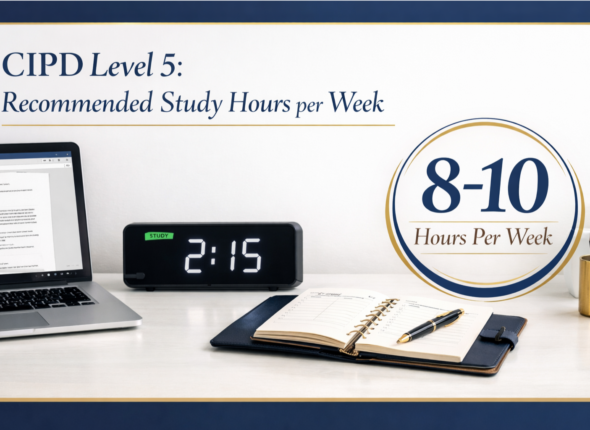
CIPD Level 5 Recommended Study Hours per Week
Embarking on a CIPD Level 5 Associate Diploma in People Management or Learning & Development is a significant step in your HR career. It promises advanced knowledge and a globally recognised qualification, but it also demands a serious time commitment. One of...

CIPD Level 5 Pass Rate UK
The CIPD Level 5 Associate Diploma in People Management or Learning & Development is a pivotal qualification for aspiring HR and L&D professionals in the UK. As an equivalent to the second year of an undergraduate degree, it represents a significant commitment....
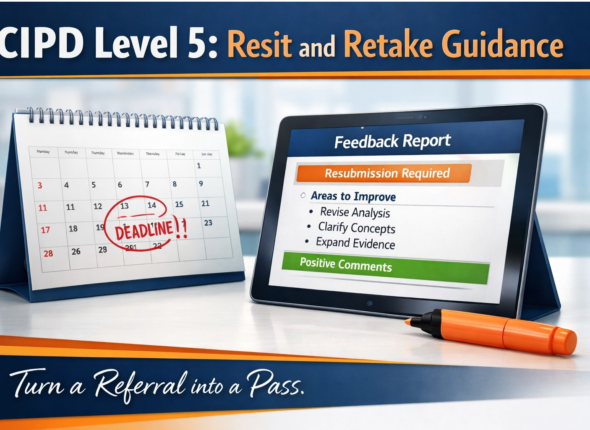
What Happens if you Fail CIPD Level 5 Assignment
Receiving a “Referral” on a CIPD Level 5 assignment can be a disheartening experience, particularly given the time and effort required for the Associate Diploma. However, it is essential to understand that a referral is not a final failure; rather, it is...
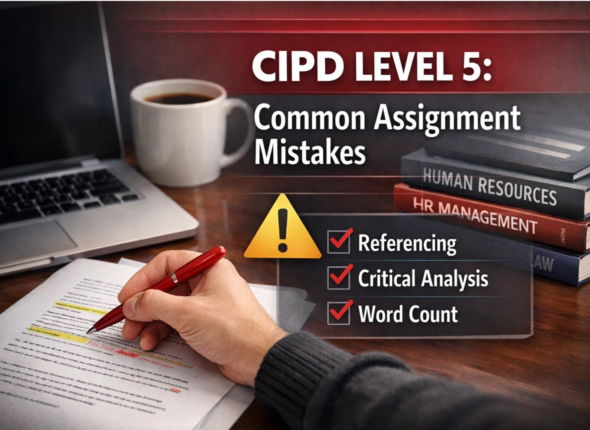
CIPD Level 5 Assignment Common Mistakes
The CIPD Level 5 Associate Diploma in People Management or Organisational Learning and Development marks a significant step in a people professional’s career, transitioning from foundational knowledge to a more strategic and analytical approach . The assignments at this level are designed...
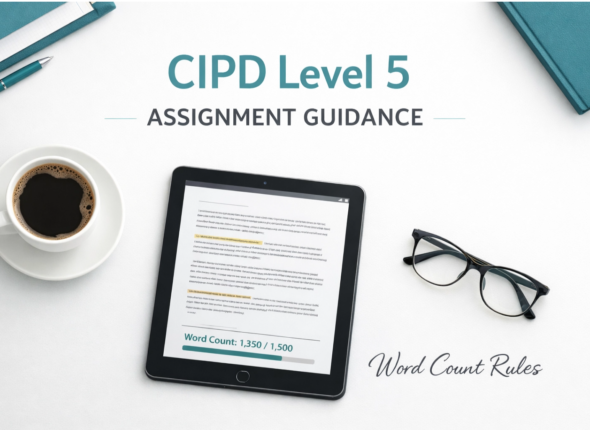
How to Pass CIPD Level 5 First Time
The CIPD Level 5 Associate Diploma in People Management or Organisational Learning & Development is a significant step in your professional journey, marking your transition into a mid-level expert in the people profession. While the qualification is rewarding, the assignment-based assessment structure...
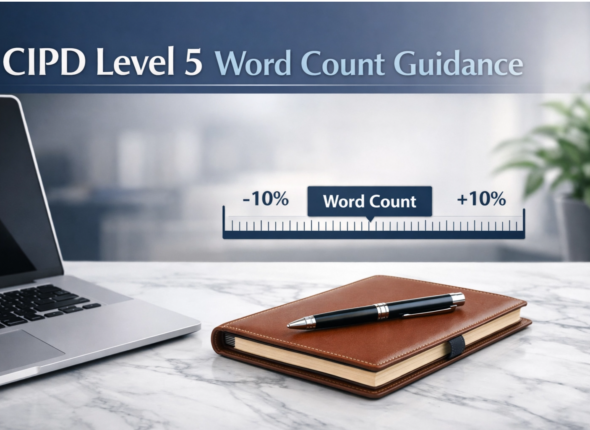
CIPD Level 5 Word Count Guidance
Achieving an Associate Diploma in People Management or Learning and Development from the Chartered Institute of Personnel and Development (CIPD) is a significant milestone for any HR professional. However, the journey to accreditation is paved with rigorous assessments that require not just...
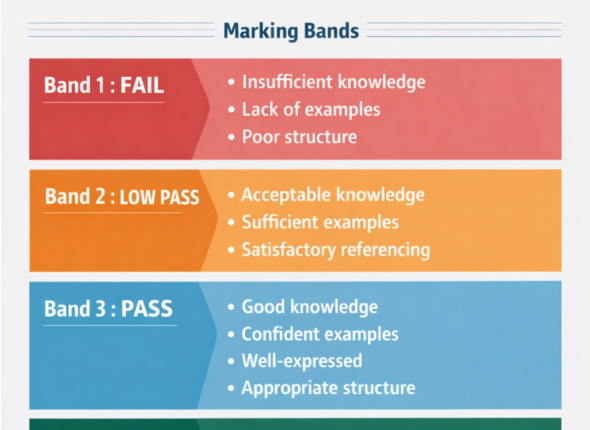
CIPD Level 5 Assignment Grading Criteria
The CIPD Level 5 Associate Diploma in People Management or Organisational Learning and Development marks a significant step in a professional’s career. It moves beyond foundational knowledge, demanding a sophisticated level of analysis and application. For many learners, the grading process can...