

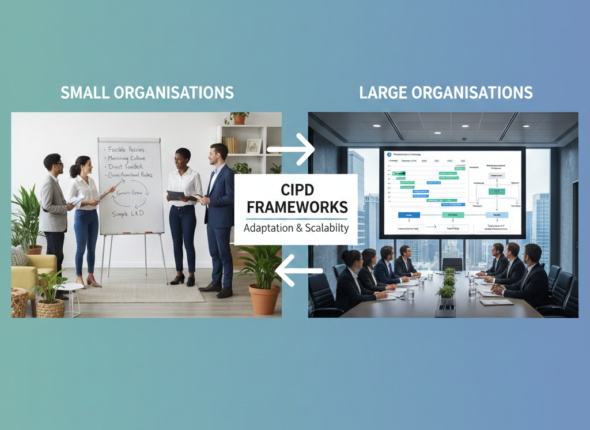
Case studies: Applying CIPD Frameworks in Small vs Large Organisations
The Chartered Institute of Personnel and Development (CIPD) has long served as the global standard-bearer for the HR and People Development profession. Its frameworks, particularly the CIPD Profession Map, provide a comprehensive blueprint for ethical, evidence-based, and impactful people management. However, the...

Navigating CIPD qualifications: choosing between Level 3, 5, or 7
The field of Human Resources (HR) and Learning & Development (L&D) is constantly evolving, demanding a high level of professional competence and strategic insight. For professionals seeking to formalize their expertise, advance their careers, and gain industry-wide recognition, the qualifications offered by...

How to demonstrate professional credibility as a CIPD member
In the dynamic and ever-evolving world of human resources, professional credibility is not just a valuable asset—it is the very foundation upon which successful careers are built. For members of the Chartered Institute of Personnel and Development (CIPD), the world’s leading professional...
Advising on the Importance of Handling Grievances Effectively
Grievance management is a key practice to ensure healthy relations among employees, and in a merged public sector scenario, there is a certain degree of uncertainty and realignment of cultures that might increase tension. Having some concerns voiced and dealt with openly...
Analysing Three Key Causes of Employee Grievances
Employee grievances are formal expressions of dissatisfaction where staff believe their treatment, terms, or conditions breach organisational policies, legal statutes, or implied promises. Grievances not only signal individual discontent but often foreshadow broader systemic issues. In a post‑merger public‑sector setting, addressing the...
Explaining the Principles of Legislation Relating to Unfair Dismissal in Respect of Capability and Misconduct Issues
Under the Employment Rights Act 1996, employees in the UK who have accrued at least two years of continuous service acquire the statutory right not to be unfairly dismissed. Central to any dismissal decision is the requirement that the employer must demonstrate both...
Distinguishing Between Third Party Conciliation, Mediation, and Arbitration
In the aftermath of a merger, disputes over roles, reporting lines, and new processes can escalate quickly. Knowing which third‑party intervention to deploy is essential for timely, cost‑effective resolution. Conciliation, mediation, and arbitration each offer distinct approaches, levels of formality, and outcomes:...
Assessing Emerging Trends in the Types of Conflict and Industrial Sanctions
During the past few years, the industrial landscape of conflict in the UK has dramatically changed due to the economic conditions, changing labour patterns, and a more litigation-oriented management style. Among the most striking changes, one should mention changes towards short-duration, tactical...
Distinguishing Between Organisational Conflict and Misbehaviour
Organisational conflict and misbehaviour both disrupt workplace harmony, but they differ fundamentally in scale, motivation, and appropriate managerial responses, distinctions that are especially critical in a post‑merger public‑sector environment. Organisational Conflict Organisational conflict arises when staff groups collectively object to management on...
Explaining the Concept of Better Working Lives and How This Can Be Designed
The concept of Better Working Lives centres on designing job roles and organisational environments that holistically enhance employee well‑being, engagement, and personal fulfilment, as articulated in the CIPD’s Good Work Index (2023c). Rather than viewing work merely as a source of income,...