

Blog
Critically evaluate how far and in what ways future technological developments will be able to reduce staff costs at PrimeReach Care over the next five years, whilst maintaining or improving service levels.
7CO01 – 2025/2026 – Q 2.1 Case study Case study PrimeReach Care is a government funded, acute health care service to around 500,000 people in its local region. Located across multiple, geographically dispersed sites, it employs over 15,000 people in a wide...

Assess the impact of globalisation at PrimeReach Care, linking this to the potential for it to enhance its processes for sourcing medical staff from overseas into hard-to-recruit posts
7CO01 – 2025/2026 – Q 1.1 Case study Case study PrimeReach Care is a government funded, acute health care service to around 500,000 people in its local region. Located across multiple, geographically dispersed sites, it employs over 15,000 people in a wide...

Reflective Practice: A Simple Guide for CIPD Level 3 Learners
Reflective practice is the cornerstone of professional development in HR and L&D. For those embarking on the CIPD Level 3 Foundation Certificate in People Practice, reflection is a frequent requirement in assignments and professional development logs. This guide aims to demystify reflective...

3CO02 Principles of analytics Example 2025 – 2026
Case Study You have applied for the post of People Analytics Administrator at Company X who are a leading provider of HR solutions to businesses in your region. Company X offers a diverse range of people management and business services to meet...

3CO02 Principles of analytics References
References Aarons, G. A., Wells, R. S., Zagursky, K., Fettes, D. L., & Palinkas, L. A. (2009). Implementing evidence-based practice in community mental health agencies: A multiple stakeholder analysis. American journal of public health, 99(11), 2087-2095. Becker, C. (2017). Toward increased accuracy in productivity...
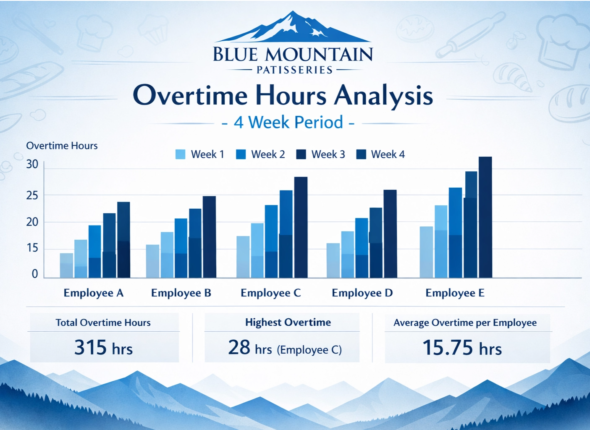
Hours of overtime worked over a four-week period for one of Company X’s clients, Blue Mountain Patisserie
A primary issue is the huge overtime burden placed on certain staff. For instance, B Sykes averages 12.75 hours which is 63.75% of his 20-hour week. H Barrel averages 10 hours which is 62.5% of his 16-hour week while K Pathos averages...

Imagine that you have been successful in your application for the role at Company X. Summarise the ways that you could be customer focused and standards driven in your new role, drawing on your previous experience, as necessary
In my new role as a People Analytics Administrator at Company X, I would prioritise client and colleagues’ needs in every task. This means I would be proactive in scheduling meetings to understand their challenges and their objectives while ensuring that the...
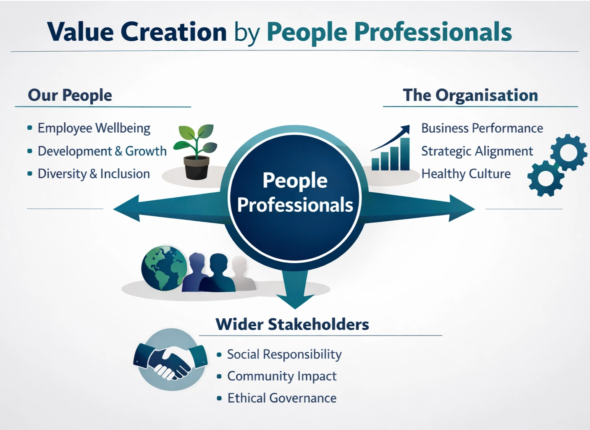
Explain how the people professionals at Company X can create value for their people, their organisation and their wider stakeholders
HR professionals at Company X can create value by aligning their activities with organizational objectives. Firstly, for the staff which includes their employees as well as those of their clients, they can foster a positive work environment in which there is a...
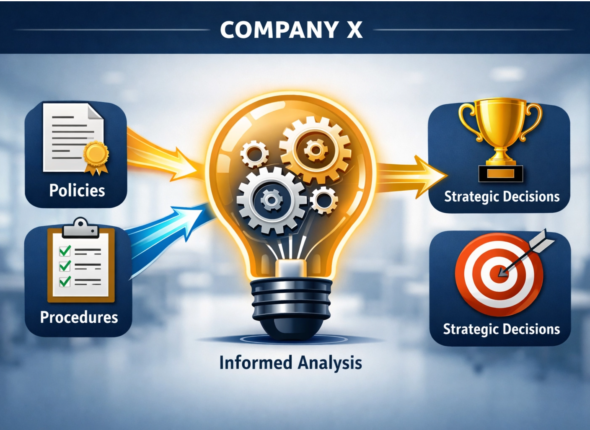
Explain how the application of policies and procedures can inform Company X’s decisions
The application of policies and procedures is an important source of internal evidence that can effectively inform and justify Company X’s strategic and operational decisions (Lin, Murphy & Robinson, 2010). Firstly, these guidelines provided reliable frameworks that ensure decisions related to employee...
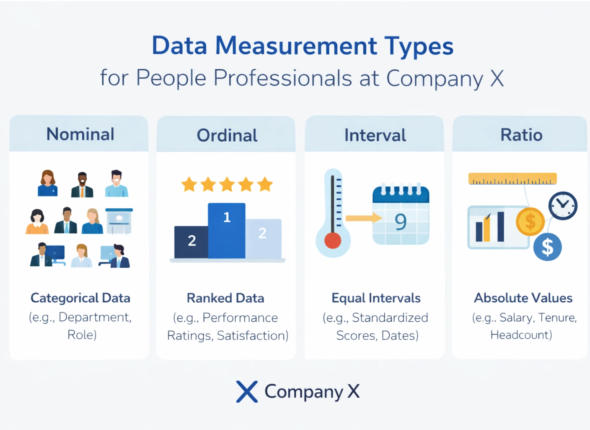
Explain the different types of data measurements that people professionals at Company X could use
People professionals at Company X can use various types of including both qualitative and quantitative types, to make data-driven decisions in their EBP. Qualitative data is descriptive, non-numerical and non- measurable data that provides insights into employee satisfaction levels and opinions. People...