

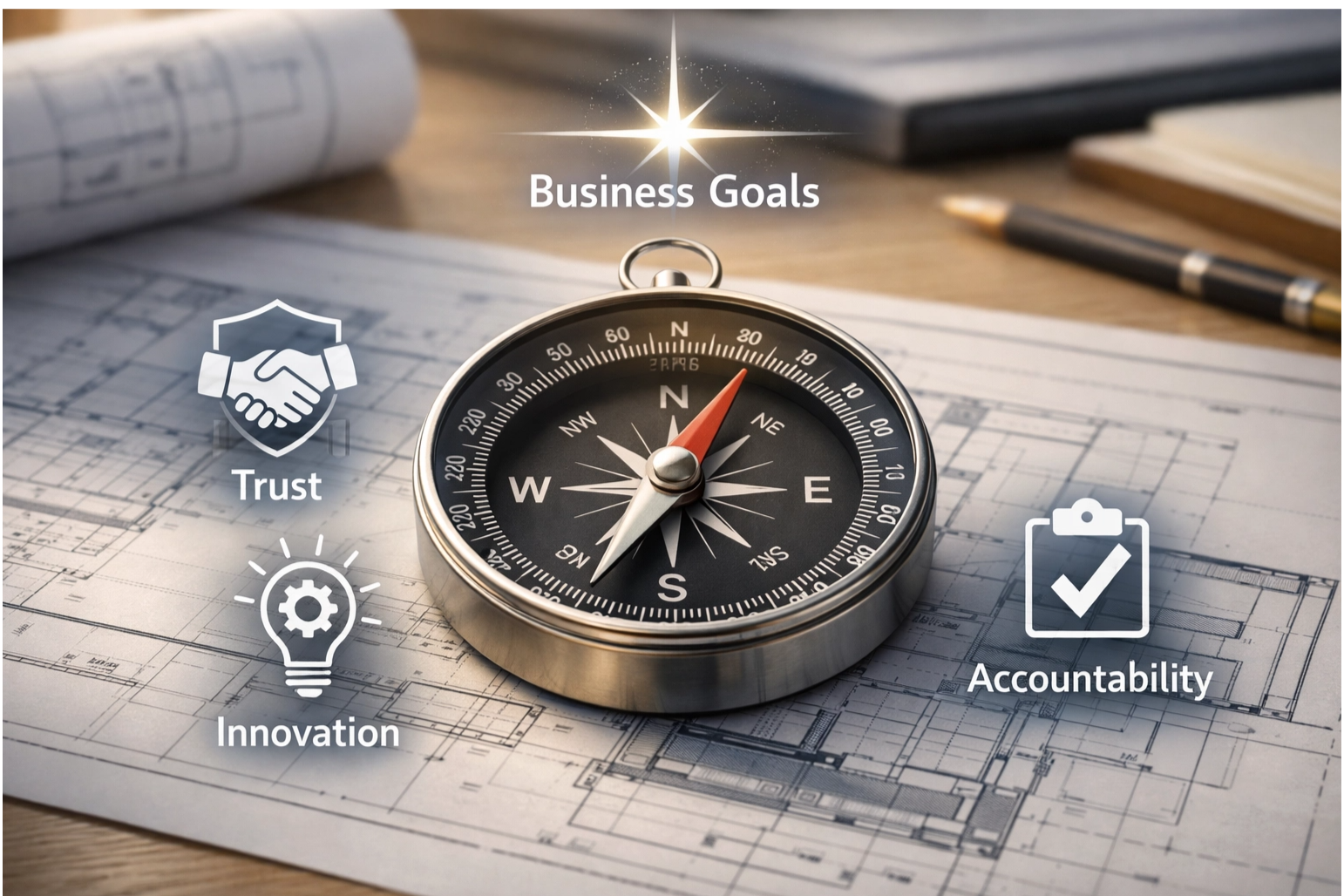
Peter Drucker, the legendary management consultant, famously remarked that “culture eats strategy for breakfast.” This observation has become a cornerstone of modern organizational theory, yet many leaders still struggle to operationalize it. In the high-stakes environment of 21st-century business, the relationship between organizational culture and business objectives is not merely a theoretical concern; it is a fundamental driver of competitive advantage. Organizational culture represents the collective “DNA” of a company—the shared values, unspoken rules, and habitual behaviors that dictate how work gets done. Business objectives, conversely, are the destination: the specific, measurable targets that define success. When these two forces are misaligned, the organization is effectively working against itself, with internal friction slowing down even the most sophisticated strategic plans.
The challenge for modern leaders is that culture is often perceived as “soft” or intangible, while strategy is seen as “hard” and data-driven. However, research consistently shows that organizations with highly aligned cultures and strategies outperform their peers in terms of profitability, employee retention, and customer satisfaction . This blog post explores the multifaceted strategies required to bridge the gap between culture and strategy, providing a comprehensive roadmap for leaders who seek to turn their organizational culture into a powerful engine for achieving business objectives. We will examine how to define the nexus between these two elements, the role of leadership as cultural architects, the necessity of operationalizing values into daily systems, and the importance of continuous measurement and adaptation.
The High Price of Misalignment
The cost of cultural misalignment is staggering, yet often hidden in plain sight. It manifests as a persistent gap between what leadership says and what employees do. This disconnect is a primary reason why an estimated 60% to 90% of strategic plans fail to achieve their intended outcomes . When a company’s culture does not support its strategy, several destructive patterns emerge. First, there is a breakdown in trust. Employees quickly sense when “espoused values”—the lofty ideals printed on office walls—do not match “operational values”—the behaviors that are actually rewarded and modeled by management. This hypocrisy leads to cynicism and disengagement, which are toxic to any strategic initiative.
Furthermore, misalignment creates internal friction that drains organizational energy. If a company’s strategy requires rapid innovation but its culture is risk-averse and bureaucratic, every attempt to launch a new product will be met with resistance, delays, and second-guessing. This friction doesn’t just slow down execution; it actively demoralizes the very people needed to drive change. High turnover among top performers is often a direct result of cultural misalignment, as those with the most talent are usually the first to leave an environment that feels inconsistent or stifling. In the long term, this misalignment erodes the company’s brand, both as an employer and as a provider of goods or services, ultimately leading to a decline in market share and profitability.
Strategy 1: Defining the Culture-Strategy Nexus
True alignment begins with the recognition that culture is not a separate entity from strategy; it is the environment in which strategy lives. The first strategy for alignment is to explicitly define the “Culture-Strategy Nexus”—the specific intersection where cultural behaviors directly enable strategic outcomes. This requires moving beyond generic values like “integrity” or “excellence” and identifying the precise cultural attributes required for your specific business model.
To define this nexus, leaders must ask: “What specific behaviors, if practiced by every employee every day, would make the achievement of our strategic goals inevitable?” For example, if a company’s objective is to become the lowest-cost provider in its industry, its culture must be obsessed with efficiency, frugality, and continuous process improvement. If the objective is to lead through technological innovation, the culture must prioritize curiosity, psychological safety, and the ability to “fail fast.”
Comparison of Strategic Objectives and Required Cultural Traits
Strategic Objective |
Primary Cultural Traits Required |
Potential Cultural Inhibitors |
Operational Excellence |
Discipline, Consistency, Precision, Efficiency
|
Creativity without bounds, Lack of process
|
Product Leadership |
Curiosity, Risk-taking, Speed, Collaboration
|
Fear of failure, Siloed departments
|
Customer Intimacy |
Empathy, Empowerment, Flexibility, Listening
|
Rigid scripts, Hierarchical decision-making
|
Rapid Market Expansion |
Agility, Resilience, Adaptability, Competitive Drive
|
Complacency, Slow consensus-building
|
One effective framework for this definition is “Enterprise Destination Mapping” . This process involves visualizing the organization’s future state and working backward to identify the cultural shifts necessary to get there. It forces leaders to move from abstract concepts to concrete behavioral expectations, ensuring that the culture is designed with the same rigor as the financial plan.
Strategy 2: Leadership as the Cultural Architect
If culture is the “software” of an organization, leaders are the architects and lead programmers. The second critical strategy for alignment is ensuring that leadership at all levels is fully committed to modeling the desired culture. This starts at the C-suite but must cascade down to the frontline supervisors. It is a common mistake to view culture as an “HR initiative.” In reality, culture is shaped by every decision made by every leader, especially in moments of crisis.
Leadership commitment must be visible and consistent. If a company claims to value collaboration but its executives are known for siloed behavior and internal politics, the culture will inevitably follow the executives’ lead. Leaders must become “cultural storytellers,” constantly highlighting examples of employees who embody the desired values and explaining how those behaviors contribute to the company’s success. This narrative helps to make the abstract values tangible and relatable for the entire workforce.
Crucially, middle managers are the most important “translators” in this process. While executives set the vision, it is the middle manager who interacts with the majority of employees daily. They are the ones who decide who gets promoted, how feedback is given, and which behaviors are tolerated. Organizations must invest in training middle managers to understand the strategic importance of culture and provide them with the tools to reinforce it within their teams. This includes integrating cultural metrics into leadership performance reviews, ensuring that a manager’s success is judged not just by their team’s output, but by the health of their team’s culture.
Strategy 3: Operationalizing Values into Systems
For culture to be sustainable, it must be “hardwired” into the organization’s systems and processes. This is the third strategy for alignment: operationalizing values so they become the default mode of operation. This means that culture should serve as a “decision filter” for everything from hiring to capital allocation. If a proposed project or a potential hire does not align with the core cultural values, the system should naturally reject it.
The most critical systems for cultural reinforcement are those related to human capital.
- Recruitment and Onboarding: Companies like Zappos are famous for their cultural interviews, where candidates are assessed primarily on their fit with the company’s core values. Onboarding should not just be about paperwork; it should be a deep immersion into the company’s “why” and its expected behaviors.
- Performance Management: The traditional focus on “what” (results) must be balanced with a focus on “how” (behaviors). A high-performer who achieves their targets but violates cultural norms (e.g., a “brilliant jerk”) can be more damaging to the organization than a moderate performer who upholds the culture.
- Rewards and Recognition: Recognition programs should be explicitly tied to cultural values. When an employee is publicly rewarded for demonstrating a key cultural trait—such as going above and beyond for a customer or identifying a major efficiency gain—it sends a powerful signal to the rest of the organization about what truly matters.
- Communication Channels: Transparent and frequent communication is essential for maintaining alignment. Leaders should use every available channel—town halls, internal newsletters, Slack channels—to reinforce the connection between the company’s culture and its strategic progress.
Strategy 4: Overcoming Barriers to Alignment
Even with the best intentions, organizations often face significant barriers to cultural alignment. Recognizing and proactively addressing these obstacles is a strategy in itself. One of the most common barriers is “Cultural Inertia”—the tendency of an organization to revert to its old ways of doing things, especially under pressure. To overcome this, leaders must be prepared for a long-term commitment; cultural change is a marathon, not a sprint.
Another major barrier is “Siloed Thinking.” When different departments develop their own sub-cultures that are at odds with the overall organizational culture, it creates friction and slows down strategic execution. For example, if the sales team is rewarded for aggressive short-term gains while the product team is focused on long-term quality, conflict is inevitable. Overcoming silos requires cross-functional goals and incentives that force different parts of the organization to work together toward a common objective.
Finally, “Lack of Clarity” can derail alignment efforts. If employees are confused about what the culture actually is or how it relates to their daily work, they will naturally default to their own personal values or the path of least resistance. This is why clear, simple, and repeated communication is so vital. Leaders must eliminate ambiguity by providing concrete examples of what “good” looks like in every context.
Strategy 5: Continuous Feedback and Measurement
The final strategy is to treat culture as a dynamic, measurable business function. You cannot manage what you do not measure. Organizations must move beyond the annual engagement survey and implement a more robust system of cultural analytics. This includes pulse surveys, which provide frequent, real-time snapshots of cultural health, and “culture audits,” which involve a more deep-dive assessment of how values are being lived across the organization .
Measurement should focus on both “leading indicators” (behaviors and perceptions) and “lagging indicators” (business results and turnover rates). For example, if a company’s cultural audit shows a decline in “psychological safety” scores, leaders should anticipate a future decline in innovation and take corrective action before the business results are impacted. This proactive approach allows the organization to adjust its cultural initiatives in real-time, ensuring they remain aligned with the evolving business strategy.
Key Metrics for Measuring Cultural Alignment
Metric Category |
Specific Indicators |
Method of Collection |
Perceptual |
Employee Net Promoter Score (eNPS), Values Alignment Score
|
Pulse Surveys, Focus Groups
|
Behavioral |
Recognition frequency for specific values, Peer-to-peer feedback
|
Recognition Platforms, Performance Reviews
|
Operational |
Turnover rate among high-performers, Internal promotion rate
|
HRIS Data, Talent Reviews
|
Strategic |
Percentage of strategic projects met on time, Innovation pipeline health
|
Project Management Systems, R&D Data
|
Case Studies in Successful Alignment
The power of alignment is best illustrated through real-world examples of companies that have successfully integrated their culture with their business objectives.
Spotify: The Power of Autonomy
Spotify’s business objective is to remain the world’s leading music streaming service through constant innovation. To achieve this, they have built a culture centered on “autonomy and accountability.” They organize their engineers into “squads”—small, cross-functional teams that have the freedom to decide what to build and how to build it. This cultural structure directly enables their strategic need for speed and experimentation, allowing them to release new features faster than their more hierarchical competitors.
Netflix: Freedom and Responsibility
Netflix’s strategy is to produce the world’s best original content and deliver it through a superior platform. Their culture is famously defined by a “Culture Memo” that emphasizes “freedom and responsibility.” They hire only “stunning colleagues” and give them immense freedom, but also hold them to extremely high standards of performance. This culture of high-stakes accountability ensures that every employee is laser-focused on the company’s strategic goal of global content dominance.
Zappos: Delivering Happiness
Zappos’ strategy is to compete not on price, but on service. Their culture is built around ten core values, the most important being “Deliver WOW Through Service.” They operationalize this by offering new hires money to quit if they don’t feel they fit the culture, and by allowing customer service reps to spend as much time as necessary on a single call. This radical commitment to culture has made them a legend in customer service and a highly profitable business.
Aligning organizational culture with business objectives is not a “nice-to-have” HR project; it is a strategic imperative for any organization that seeks to thrive in today’s volatile business environment. It requires a disciplined, multi-faceted approach that starts with a clear definition of the culture-strategy nexus and is sustained by leadership commitment, operational integration, and continuous measurement.
When culture and strategy are in harmony, they create a virtuous cycle of performance. Employees are more engaged because they understand the “why” behind their work; leaders are more effective because they have a clear framework for decision-making; and the organization as a whole is more agile because it is not fighting internal friction. As the business world continues to evolve, the ability to align culture with strategy will remain the ultimate differentiator between companies that merely survive and those that truly lead. Culture may eat strategy for breakfast, but together, they can conquer the world.