

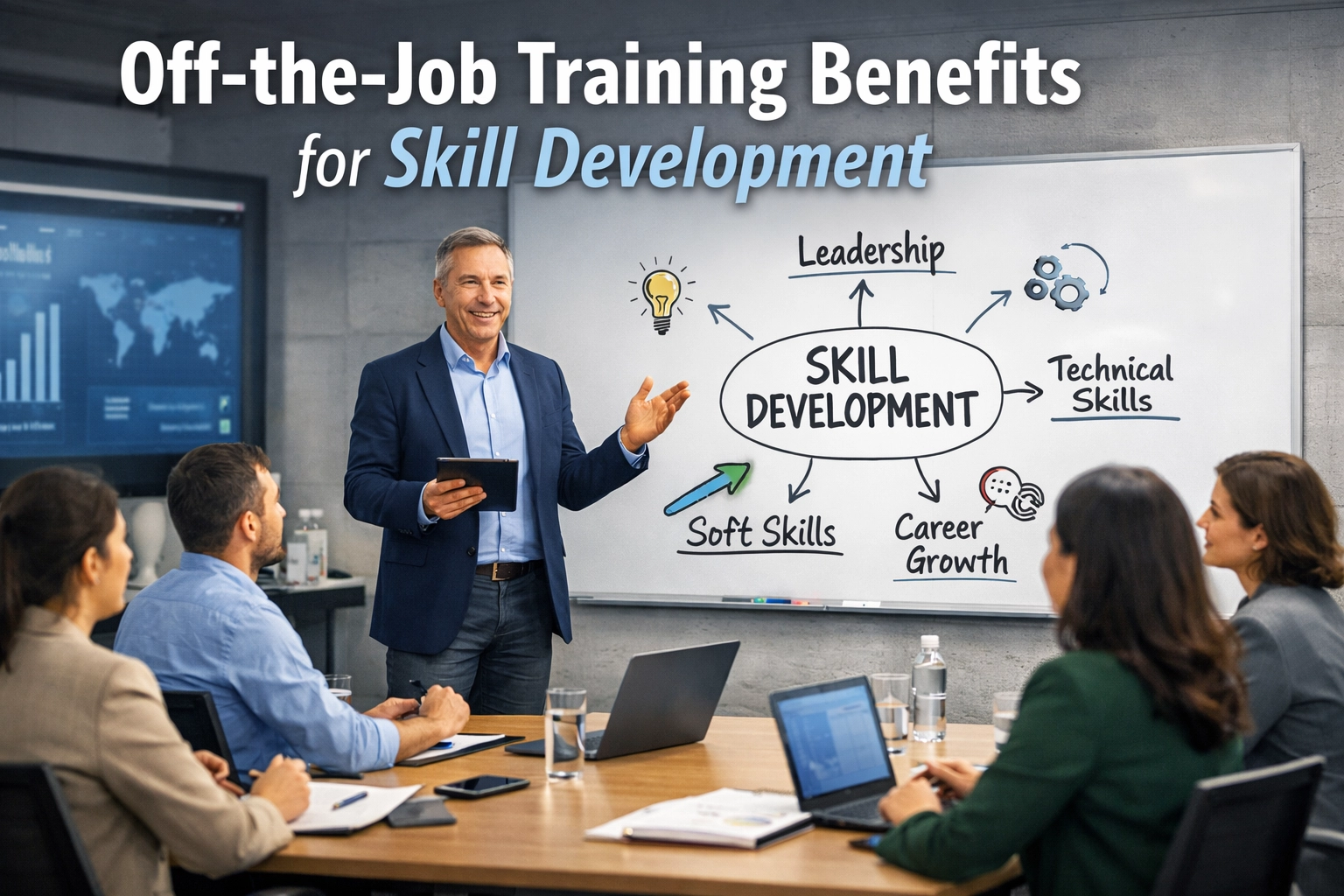
In the rapidly evolving landscape of the modern global economy, the traditional paradigms of professional development are undergoing a significant transformation. As industries are disrupted by technological advancements and shifting market demands, the necessity for continuous skill development has never been more critical. While on-the-job training (OJT) remains a staple of workplace learning, off-the-job training—structured learning that occurs away from the immediate work environment—has emerged as a vital strategic tool for both individual career progression and organizational resilience. This comprehensive analysis explores the multifaceted benefits of off-the-job training, illustrating how it fosters a more proficient, innovative, and engaged workforce.
Understanding Off-the-Job Training
Off-the-job training refers to any educational or developmental activity conducted outside the daily workspace. Unlike OJT, which focuses on learning through direct performance and immediate task completion, off-the-job methods prioritize theoretical understanding, specialized skill acquisition, and broader professional growth. These methods often involve external experts, specialized facilities, or dedicated digital platforms, providing a space where employees can focus entirely on learning without the pressures of ongoing production cycles.
Off-the-job training provides a unique platform for interaction and connection with professionals from various backgrounds, facilitating the expansion of professional networks and the exchange of innovative ideas.
Core Methods of Off-the-Job Training
The diversity of off-the-job training methods allows organizations to tailor their development programs to specific needs. The following table summarizes the most prevalent techniques used in contemporary human resource management:
Method |
Description |
Primary Application |
Classroom Lectures |
Traditional instructor-led sessions focusing on theoretical knowledge.
|
Foundational concepts, compliance, and regulatory updates.
|
Simulations |
Immersive environments that replicate real-world scenarios without real-world risks.
|
High-stakes technical skills, aviation, and emergency response.
|
Workshops & Seminars |
Interactive sessions led by industry experts to build specific competencies.
|
Leadership, communication, and soft skill development.
|
Vestibule Training |
Training in a separate area that replicates the actual workspace and equipment.
|
Technical manufacturing and specialized machinery operation.
|
Case Studies |
Analytical review of real or hypothetical business problems to develop critical thinking.
|
Management training and strategic decision-making.
|
E-Learning & VILT |
Digital courses and virtual instructor-led training accessed remotely.
|
Scalable technical training and self-paced professional development.
|
Strategic Benefits for the Employee
For the individual professional, off-the-job training is more than just a break from routine; it is a catalyst for long-term career success and personal growth. By stepping away from the “firefighting” of daily tasks, employees can engage in deeper, more meaningful learning.
1. Skill Acquisition and Diversification
Off-the-job training empowers employees with diverse skill sets that might not be easily acquired within the confines of their current role. This includes upskilling—improving existing skills—and reskilling—learning entirely new competencies to adapt to industry shifts. A more versatile workforce is better equipped to handle changing job requirements and pivot into new roles as the organization evolves.
2. Access to Expert Knowledge and Industry Best Practices
External training programs often feature instructors who are leading experts in their fields. This exposure provides employees with deep insights into global industry trends and “best-in-class” methodologies that internal mentors might not possess. This high-level expertise helps employees develop a more nuanced perspective of their roles, enabling them to make more informed and impactful decisions upon their return to the workplace.
3. Networking and Collaborative Growth
One of the most underrated benefits of off-the-job training is the opportunity for network expansion. Whether attending a physical seminar or a virtual workshop, employees interact with peers from different organizations and backgrounds. These interactions facilitate an exchange of ideas and experiences that can lead to new collaborations, innovative problem-solving approaches, and a broader understanding of the industry ecosystem.
4. Higher Job Satisfaction and Morale
Investment in professional development is a clear signal from the employer that they value the employee’s growth and future. Studies consistently show that comprehensive training leads to higher job satisfaction [3]. When employees feel that their organization is committed to their development, their morale increases, leading to higher levels of engagement and a stronger sense of loyalty to the company.
5. Personal and Power Skill Development
Beyond technical competencies, off-the-job training significantly contributes to the development of power skills—also known as soft skills—such as critical thinking, time management, and leadership. These programs often encourage self-reflection and foster a growth mindset, which are essential for personal well-being and professional resilience in a high-pressure environment.
Strategic Benefits for the Organization
From an organizational perspective, off-the-job training is a high-yield investment in human capital. It serves as a foundational pillar for building a competitive and future-ready business.
1. Building a Proficient and Competitive Workforce
In a global market, the quality of an organization’s talent is its primary competitive advantage. Off-the-job training ensures that employees are at the forefront of industry advancements. By equipping the workforce with the latest technical knowledge and analytical tools, organizations can maintain a leading position, drive innovation, and handle complex challenges more effectively.
2. Enhanced Retention and Employer Branding
The cost of employee turnover is a significant burden for any business. Off-the-job training programs act as a powerful retention tool by providing clear paths for career progression. Furthermore, a robust commitment to employee development enhances employer branding, making the organization more attractive to top-tier talent who prioritize growth opportunities when choosing an employer.
3. Establishing a Culture of Continuous Learning
Implementing regular off-the-job training helps establish a culture of lifelong learning within the organization. This environment encourages employees to constantly seek improvement and stay curious. A learning-oriented culture not only improves individual performance but also enhances the organization’s collective “intellectual capital,” making it more adaptable to market disruptions.
4. Risk Management and Succession Planning
Well-trained employees are more adept at identifying and mitigating potential risks. For instance, off-the-job training in safety protocols or risk assessment tools can prevent costly mistakes and ensure compliance with complex regulations. Additionally, these programs are essential for succession planning, as they prepare high-potential employees for future leadership roles, ensuring a seamless transition when key positions become vacant.
Comparative Analysis: Off-the-Job vs. On-the-Job Training
While the benefits of off-the-job training are extensive, it is most effective when used in conjunction with on-the-job training. The following table highlights the key distinctions between the two approaches:
Feature |
On-the-Job Training (OJT) |
Off-the-Job Training |
Location |
Immediate workplace/desk.
|
External site, classroom, or home.
|
Focus |
Practical task execution.
|
Theoretical knowledge & specialized skills.
|
Cost |
Generally lower (uses internal resources).
|
Generally higher (fees, travel, downtime).
|
Interruption |
High (daily work persists).
|
Low (dedicated learning time).
|
Mentorship |
Supervisors or senior colleagues.
|
External experts or professional trainers.
|
Risk |
Real errors can impact production.
|
Safe environment for experimentation.
|
The ideal strategy for skill development is a blended learning approach. This synergy allows employees to gain theoretical insights and specialized skills through off-the-job sessions and then apply that knowledge immediately through supervised on-the-job practice.
Maximizing the Return on Investment (ROI)
To ensure that off-the-job training delivers tangible value, organizations must approach it strategically. This involves:
- Aligning Training with Business Goals: Training should address specific skill gaps that hinder organizational objectives.
- Setting Clear Learning Objectives: Both the employer and the employee should have a shared understanding of what success looks like.
- Post-Training Integration: Organizations should provide opportunities for employees to share their new knowledge with colleagues and apply it to their daily tasks.
- Measuring Impact: Using metrics such as improved work quality, reduced error rates, or increased employee engagement to evaluate the program’s effectiveness.
Off-the-job training is an indispensable component of a modern human resource strategy. By providing a dedicated space for deep learning, expert instruction, and professional networking, it empowers employees to reach their full potential while simultaneously driving organizational growth and innovation. While it requires a higher initial investment than on-the-job training, the long-term rewards—ranging from increased retention and improved work quality to a more resilient and competitive workforce—far outweigh the costs. In an era where “skills are the new currency,” organizations that prioritize off-the-job training will be the ones that thrive in the face of uncertainty.