

Unilever can implement hybrid working using Kotter’s eight-step change model. The company must create a sense of urgency (Pollack and Pollack, 2015). Unilever’s leaders will explain why hybrid working is vital over remote. They should share data showing that full remote work reduces collaboration and innovation. Employee surveys or productivity metrics can support this urgency. Moreover, building a guiding coalition will ensure that Unilever has formed a team of supportive managers, HR partners, IT specialists, and employee representatives (The Open University, 2024). This cross-functional group reflects Unilever’s inclusive culture. The coalition leads by example, working on-site regularly to build trust.
The next stage is to develop a clear vision and strategy. The coalition defines hybrid working at Unilever as at least two office days weekly for better teamwork and work-life balance (The Open University, 2024). A strategic vision would support and respond to Unilever’s change. The strategy will target upgrading technology, redesigning office spaces, and training managers. The leader communicates the change vision to all employees and stakeholders (Pollack and Pollack, 2015). Unilever will use many channels to communicate. CEO town hall meetings, internal newsletters, and intranet FAQs would be used to discuss the hybrid working expectations. This is where line managers should discuss plans with teams.
Once the vision is understood, the team would empower broad-based action to remove barriers (Pollack and Pollack, 2015). Unilever identifies obstacles like poor technology or untrained managers. The company should equip staff with necessary digital gadgets such as laptops and then offer training. Also, updating outdated policies, such as attendance tracking, would enable smooth adoption. Then, the company will produce short-term wins (The Open University, 2024). For example, Unilever could experiment with the hybrid model in a few departments or offices. This would be a success to boost morale.
Furthermore, consolidating gains and producing more change maintains change momentum. Unilever uses wins to tackle bigger issues, like refining policies based on feedback (Pollack and Pollack, 2015). The coalition fixes problems, such as office space shortages. Supportive changes like meeting-free afternoons or better collaboration zones encourage office use. Finally, supporting the new approach in the organisational culture would initiate and embrace hybrid working (The Open University, 2024). The company would integrate hybrid work principles into its HR processes and values. This approved change will be updating performance appraisal systems to value outcomes. Training future leaders in hybrid team management ensures continuity. The flexibility in Unilever’s employer brand makes hybrid working part of its identity. Therefore, this change would be successful and sustainable in the long term to keep building Unilever’s culture of inclusivity and adaptive working.
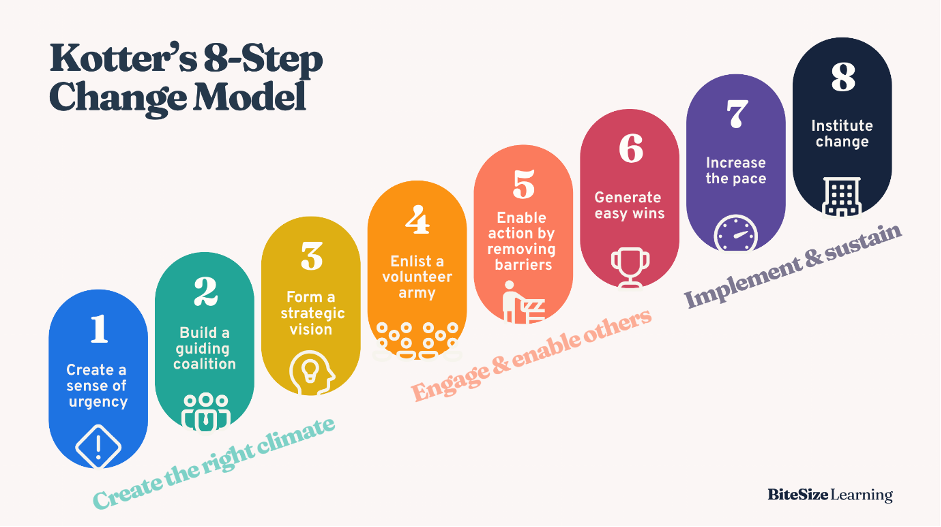
Figure 1: Kotter’s 8 Steps to Managing Change (BiteSize Learning, 2024)