

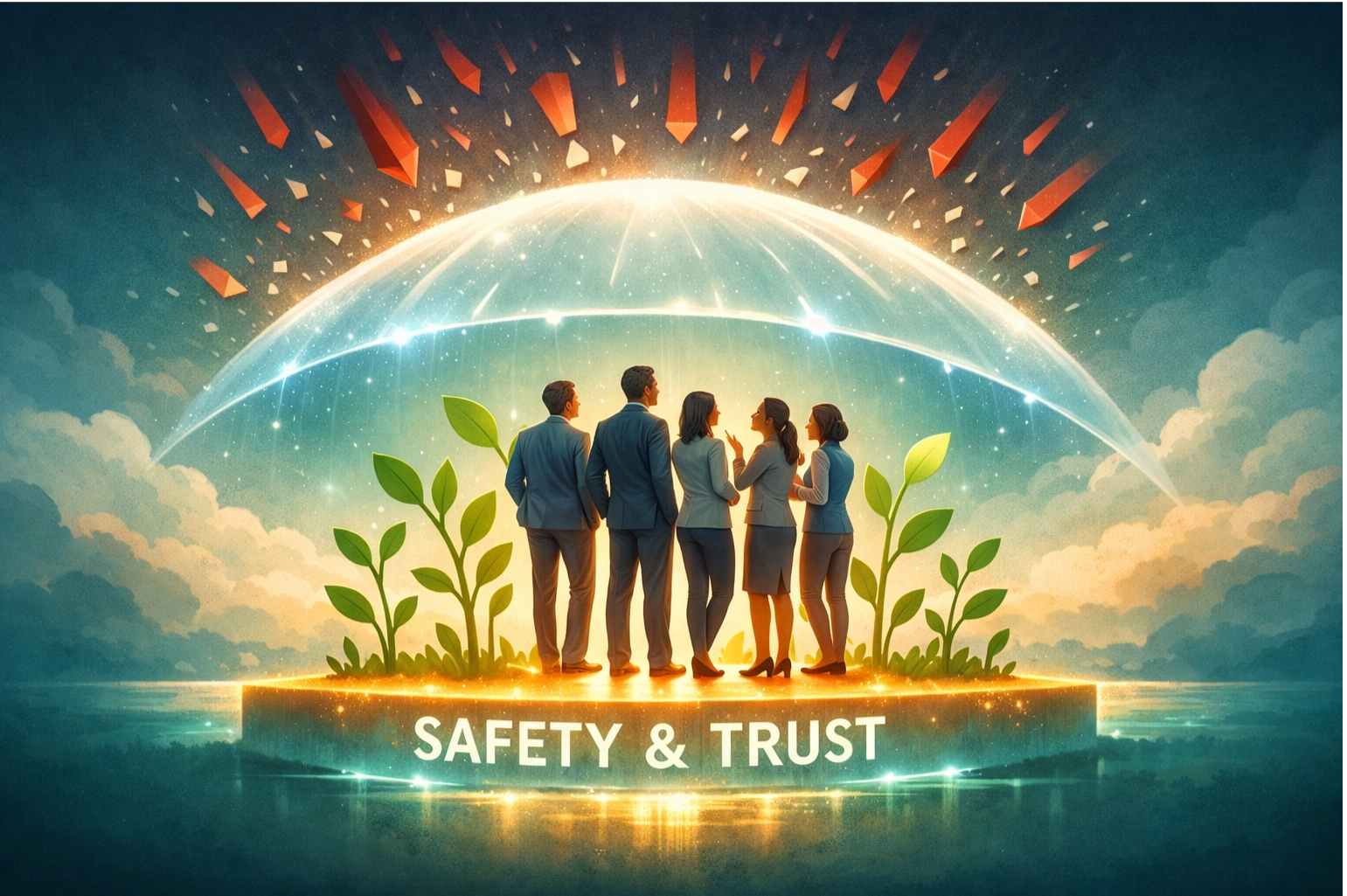
In today’s dynamic and often unpredictable business landscape, organizations are constantly seeking an edge—a way to foster innovation, boost productivity, and retain top talent. While many focus on tangible metrics and strategic frameworks, a crucial, yet often overlooked, element underpins all these aspirations: psychological safety. Far from being a soft skill or a mere buzzword, psychological safety is the bedrock upon which resilient, adaptive, and high-performing workplace cultures are built. This comprehensive exploration delves into what psychological safety truly entails, its profound benefits, and actionable strategies for cultivating it within any organization.
Defining Psychological Safety: More Than Just Being Nice
At its core, psychological safety is a shared belief held by members of a team that the team is safe for interpersonal risk-taking . Coined by Harvard Business School Professor Amy Edmondson in 1999, it describes a climate where individuals feel comfortable expressing their ideas, asking questions, admitting mistakes, and raising concerns without fear of embarrassment, rejection, or punishment .
It is imperative to distinguish psychological safety from mere politeness or a constant state of comfort. As Edmondson herself clarifies, “Too many people think that it’s about feeling comfortable all the time, and that you can’t say anything that makes someone else uncomfortable or you’re violating psychological safety. Anything hard to achieve requires being uncomfortable along the way” . True psychological safety encourages candid dialogue, even when it involves challenging existing norms or delivering difficult feedback, because the underlying trust ensures that such interactions are constructive rather than punitive.
Edmondson identifies four key elements that contribute to a psychologically safe environment :
- Willingness to help: Employees believe that asking for assistance is acceptable and that their colleagues will readily provide it.
- Inclusion and diversity: Individuals feel a genuine sense of belonging, and their diverse experiences and expertise are valued and respected.
- Attitude to risk and failure: Mistakes and failures are viewed not as personal shortcomings but as invaluable opportunities for learning and growth.
- Open conversation: Communication is perceived as open, honest, and safe, encouraging everyone to contribute without reservation.
For a workplace to be genuinely psychologically safe, all four of these dimensions must be present and actively nurtured.
The Transformative Power: Benefits of Psychological Safety
The impact of psychological safety extends across numerous facets of organizational performance and employee well-being. Its presence can be a significant differentiator, transforming good teams into truly great ones.
Enhanced Innovation and Creativity
When employees feel safe to voice unconventional ideas, challenge the status quo, and experiment without fear of failure, innovation flourishes. A culture that embraces risk-taking as a learning opportunity encourages creative problem-solving and the development of novel solutions that might otherwise remain unsaid .
Improved Learning and Error Reporting
In environments lacking psychological safety, mistakes are often hidden or downplayed, preventing organizations from learning from their errors. Conversely, a psychologically safe workplace fosters a culture where errors are openly discussed, analyzed, and used as catalysts for improvement. This transparency is critical, particularly in high-stakes industries, where a failure to report issues can have catastrophic consequences, as tragically exemplified by the Boeing 737 Max crisis, where a lack of psychological safety was cited as a significant factor in engineers’ reluctance to raise safety concerns .
Higher Employee Engagement and Retention
Employees who feel psychologically safe are more engaged, committed, and satisfied with their jobs. They are more likely to contribute their full selves to their work, knowing their contributions are valued and their voices heard. This sense of belonging and respect significantly reduces turnover. Research by the Boston Consulting Group (BCG) indicates that when leaders successfully create psychological safety, retention increases by more than four times for women and for employees from underrepresented groups .
Stronger Team Performance: Lessons from Google’s Project Aristotle
Perhaps one of the most compelling pieces of evidence for the importance of psychological safety comes from Google’s extensive research project, Project Aristotle. This two-year study, which analyzed 180 of Google’s internal teams, aimed to identify the characteristics of highly effective teams . The researchers initially hypothesized that factors like individual skills, personality types, or team composition would be paramount. However, their findings revealed a surprising truth: the most critical factor distinguishing successful teams from others was not who was on the team, but how the team members interacted, structured their work, and viewed their contributions .
Psychological safety emerged as the single most important dynamic, underpinning all other critical factors such as dependability, structure and clarity, meaning, and impact . Google’s research unequivocally demonstrated that teams with high psychological safety were more likely to stay together, less likely to leave Google, more likely to harness the power of diverse ideas from their team members, and ultimately, more effective .
Reduced Stress and Burnout
When individuals constantly fear judgment or reprisal, stress and anxiety levels escalate, leading to burnout and decreased well-being. A psychologically safe environment alleviates this burden, allowing employees to focus their energy on their work rather than on impression management—the act of shaping how others perceive them to avoid appearing incompetent or negative . This reduction in interpersonal risk fosters a healthier, more sustainable work environment.
Cultivating Psychological Safety: Actionable Strategies for Leaders
Building a psychologically safe culture is not a passive endeavor; it requires intentional effort and consistent reinforcement from leadership. Here are several actionable strategies:
1. Talk About It and Prioritize It
The first step is to explicitly acknowledge and prioritize psychological safety. Leaders must openly discuss its importance, define what it means within their specific context, and dispel common misconceptions. By making it a central part of organizational dialogue, leaders signal its value and encourage its adoption .
2. Model Fallibility and Embrace Vulnerability
Leaders play a pivotal role in setting the tone. By openly admitting their own mistakes, acknowledging what they don’t know, and asking for help, leaders model vulnerability and demonstrate that it is safe to be imperfect. This act of “modeling fallibility” encourages team members to do the same, fostering an environment of shared learning and mutual support .
3. Promote Active Listening and “Jazz Dialogues”
Creating space for all voices to be heard is crucial. Amy Edmondson advocates for “jazz dialogues,” a structured approach to conversation that encourages active listening, building on others’ contributions, and responding to emerging ideas rather than sticking to pre-planned agendas . The rules are simple: listen more, speak less, and build constructively on what others share. This intentional structure facilitates meaningful dialogue and co-creation.
4. Implement a Psychological Safety Scale
To understand the current state of psychological safety within an organization, leaders can utilize tools like Edmondson’s psychological safety scale. This survey-based instrument allows employees to rate their agreement with statements such as “I’m comfortable asking other members of my team for help” . Aggregating these responses provides valuable insights into areas of strength and those requiring improvement, enabling targeted interventions.
5. Foster a Learning Mindset Around Failure
Shift the organizational perspective on mistakes from blame to learning. When errors occur, focus on understanding the root causes, identifying systemic issues, and implementing preventative measures, rather than singling out individuals for punishment. This approach reinforces the idea that failure is a stepping stone to innovation and improvement.
6. Encourage Inclusive Leadership Practices
Inclusive leadership is inextricably linked to psychological safety. Leaders must actively seek out and value diverse perspectives, ensuring that all team members feel their unique contributions are recognized. This involves consciously mitigating biases, promoting equitable participation, and creating an environment where everyone feels they belong .
Psychological safety is not a luxury; it is a fundamental requirement for any organization aspiring to thrive in the 21st century. It is the invisible force that empowers employees to bring their whole selves to work, to innovate without fear, to learn from setbacks, and to collaborate effectively. By intentionally cultivating a culture of psychological safety, leaders can unlock the full potential of their teams, foster genuine engagement, and build a workplace where individuals and the organization as a whole can flourish. The investment in psychological safety is an investment in a more resilient, innovative, and human-centric future.