

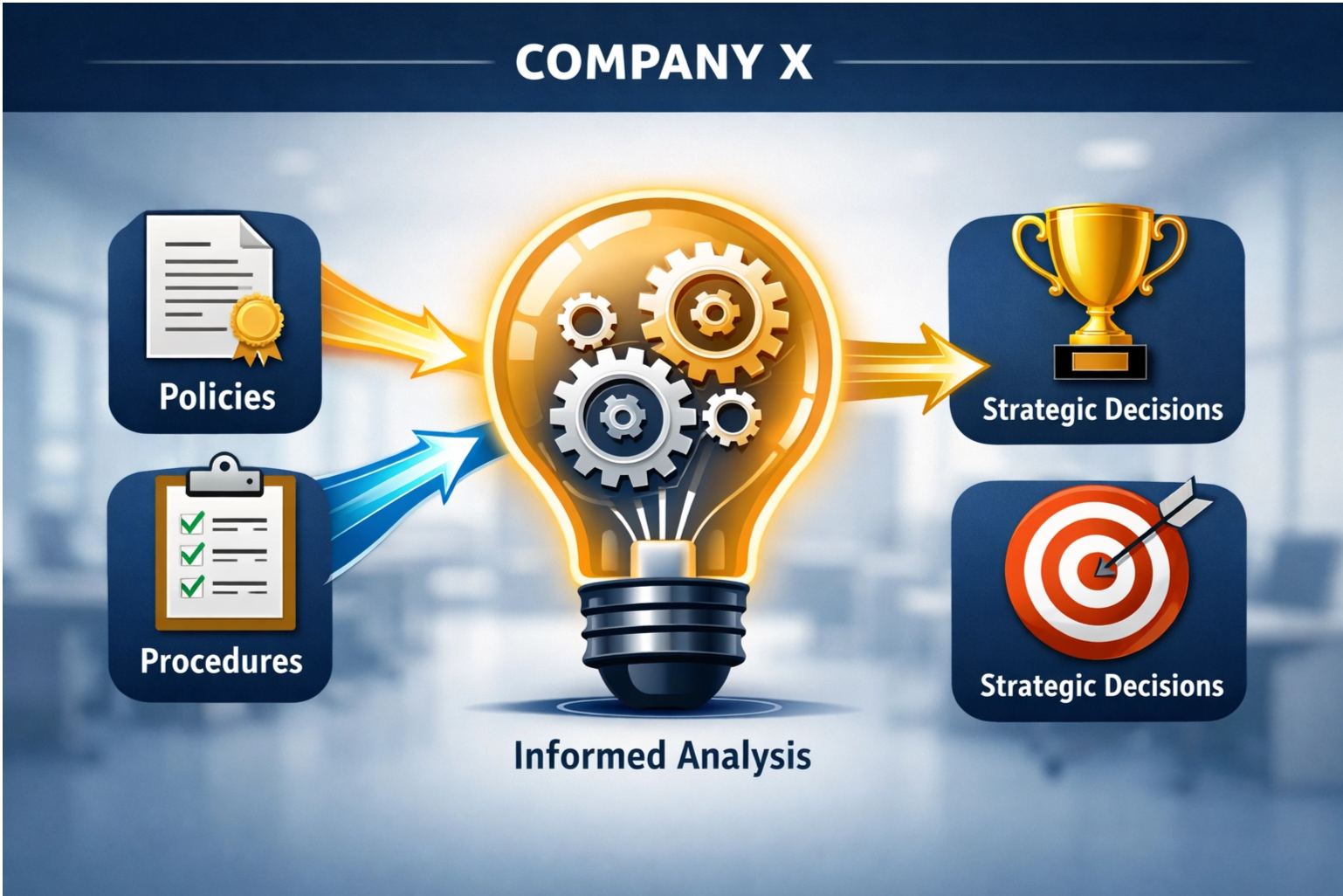
The application of policies and procedures is an important source of internal evidence that can effectively inform and justify Company X’s strategic and operational decisions (Lin, Murphy & Robinson, 2010). Firstly, these guidelines provided reliable frameworks that ensure decisions related to employee relations, performance management and client advice are not arbitrary but are in alignment with legal requirements and organisational values. This enhances objectivity while reducing risk. For example, by analysing the consistent application of disciplinary procedures across various cases, Company X can identify if particular policies are effectively mitigating misconduct or if they require revision.
Secondly, policies and procedures produce valuable data that Company X can analyse to reveal trends and diagnose underlying issues. For example, data gleaned from the application of flexible working policies (approval rates, reasons for denial, departments with highest uptake) can inform decisions about workforce planning, managerial training needs, and even the design of future benefits packages to better meet employee expectations. Such an evidence-based approach transforms policies from static rulebooks into dynamic diagnostic tools, enabling Company X to move beyond assumptions and make decisions grounded in organisational realities.