


Task One – Briefing Paper
AC 1.1 Evaluating Evidence-Based Practice for Effective Decision-Making in Organizations
Evidence-Based Practice (EBP) is a methodical approach to decision-making that addresses organisational challenges and improves human practices by integrating trustworthy data, expert expertise, and stakeholder input. It guarantees that decisions are made based on accurate information and careful consideration rather than gut feeling or assumptions, which leads to better outcomes (CIPD, 2023). Increased decision-making, organisational efficacy, and stakeholder trust are among the main benefits. For instance, data-driven diversity initiatives boost organisational legitimacy and accountability, while evidence-based workforce planning strategies can enhance hiring and reduce attrition (Rousseau, 2018).
Qatar Airways’ devotion to safety, exceptional service, and regulatory compliance makes evidence-based practice (EBP) a critical component of its operational excellence. EBP ensures decision-making in areas such as aeroplane flight operations, customer service, and administration of human resources are supported by credible data, expert judgement, and stakeholder input. One of the practical uses of EBP is to identify problems such as high employee turnover. When paired with qualitative information from departure focus groups or exit interview conversations, quantitative data—such as retention rates—offers comprehensive insights into underlying problems (Young, 2019). For instance, employing this technique to identify obstacles to professional advancement might result in focused solutions like improved promotion pathways or professional development programs (Barends & Briner, 2021). Businesses can improve decision-making alignment with company goals, produce moral outcomes, and create value for stakeholders and employees by applying these ideas.
EBP strategies can be applied to provide guidance and support for sound judgement and decision-making in a variety of organisational and human resource challenges. Here are some specific examples of how EBP could be used to human practices to help in decision-making:
- Training and development: The design and execution of training programs, as well as the choice of pertinent training techniques and resources, may benefit from the application of EBP techniques. An HR specialist might, for instance, use research results to identify the best ways to deliver training, such as e-learning platforms or experiential learning strategies.
- Performance assessment systems, including the choice of particular performance metrics and feedback mechanisms, can be developed and implemented using EBP approaches as a guide (Kimball and Aber, 2013). An HR specialist, for instance, might use study results to identify the best methods for setting goals and providing feedback, like the SMART goal-setting framework (Specific, Measurable, Attainable, Relevant, Time-bound).
- Selection and recruitment: EBP methods can be applied to help create selection criteria and identify the most qualified applicants for a certain position (Baker, Scholes, & West, 2018). A human resources specialist might, for instance, use research data to identify the most effective methods for hiring, including work sample tests or structured interviews.
Notwithstanding its advantages, EBP has challenges include limited access to reliable data, bias in interpretation, and financial constraints. Implementation is frequently hampered by inadequate training and analytical tool investment or poor data quality (Barends & Rousseau, 2022). Organisations can overcome these challenges by adopting critical thinking frameworks, integrating quantitative and qualitative data, and using triangulation to validate findings. Tools such as SPSS, NVivo, and Tableau are essential for analysing complex data, identifying patterns, and effectively informing stakeholders of findings. These tactics encourage moral and open decision-making while enhancing the validity and utility of EBP (CIPD, 2023). Data accessibility, cultural diversity in decision-making, and legal limits are all potential barriers to adopting EBP at Qatar Airways. Addressing them using modern analytics tools like Tableau and SPSS guarantees that decision-making processes are transparent, ethical, and effective.
AC 1.2 Analyzing Tools and Methods for Diagnosing Organizational Challenges and Opportunities
Analysis Tool
An acceptable technique for diagnosing and identifying current and upcoming problems, obstacles, and opportunities is a SWOT analysis. A SWOT analysis is a methodical planning procedure that determines an organization’s internal strengths and weaknesses in addition to external threats and opportunities. It is a useful technique for determining probable issues, difficulties, and opportunities that a company may face in the future. Organisations frequently start their SWOT analysis by identifying their own internal strengths and weaknesses. These could include strengths like a solid reputation, a highly skilled workforce, or financial resources, as well as weaknesses like a lack of innovation or outdated technology (Durai and Sarkar, 2018).
Organizations can then identify threats and possibilities from the outside world. Opportunities include things like partnerships, market trends, and regulatory changes; dangers include things like rivals, recessions, and technological disruptions. Once these components have been identified, businesses can use the findings of a SWOT analysis to guide their decision-making and future planning. An company may use a SWOT analysis, for instance, to determine opportunities for growth, like breaking into a new market or launching a new product, as well as risks that need to be managed, such increased competition or regulatory changes (2018).
With every factor considered, a SWOT analysis is an effective tool for businesses looking to diagnose and identify current and upcoming issues, opportunities, and difficulties. It is a straightforward yet effective technique for obtaining and evaluating important facts that can assist with planning and decision-making (Durai and Sarkar, 2018).
Analysis Method
Scenario planning is one way that organisations may use to identify and diagnose present and future difficulties, challenges, and opportunities. Scenario planning is a method of planning strategy that entails developing and assessing many prospective scenarios in order comprehend the potential effects of various factors and plan for a variety of possible outcomes (Fink, 2019).
Qatar Airways may prepare for interruptions such as airspace limitations, fuel price changes, and pandemics by developing contingency plans to ensure operations and service excellence. They can then evaluate the possible effects of each scenario on their company or organisation by developing a variety of scenarios based on various combinations of these variables (Durai and Sarkar, 2018). This might assist them in comprehending the chances and threats they might encounter in the future and create backup plans or strategies that will allow them to adapt and prosper in a variety of situations.
AC 1.3 Critical Thinking Principles for Objective and Rational Decision-Making Debates
Making logical decisions and drawing well-founded conclusions requires critical thinking, which is the process of studying and assessing data, opinions, and supporting evidence. Critical analysis and logical reasoning are used to examine information rather than accepting it at face value (Houghton, 2020). In aviation, critical thinking ensures that operational choices are based on safety, efficiency, and customer pleasure. The key concepts include:
- Rationality
In order to draw conclusions based on reliable information and discussion, critical thinking requires the use of logical reasoning. It means thoroughly analysing the arguments and information presented, considering their reliability and validity. Ensuring that maintenance choices are based on actual aircraft performance data rather than preconceptions.
- Scepticism
Critical thinking necessitates being sceptical and assessing the veracity of claims and arguments in addition to being open-minded and willing to accept novel concepts. It necessitates the readiness to challenge assumptions and look for evidence to support them.
- Objectivity
Analysing facts and arguments critically means avoiding prejudice and personal preference. This means weighing all viewpoints on an issue while keeping an open mind to fresh ideas.
- Fairness
Respecting others and keeping an open mind are essential components of critical thinking. It involves considering how decisions may affect different groups and being willing to reconsider if new information becomes available (Köchling and Wehner, 2020).
- Clarity
Using precise and appropriate vocabulary and expressing ideas and thoughts in a clear and concise manner are both components of critical thinking. It also means having the ability to communicate ideas effectively with others.
Last but not least, critical thinking is a useful skill that helps people to fairly evaluate data and arguments, reach logical conclusions, and communicate concepts clearly. It is crucial to solving problems and making decisions in a variety of contexts.
The basic ideas of critical thinking can be used to the ideas of both individuals and coworkers in order to have unbiased and reasonable conversations. These ideas can be applied in a number of ways, such as:
- Rationality
When analysing ideas, it is critical to utilise logical thinking and base conclusions on solid facts and arguments. This entails carefully examining the offered facts and arguments, as well as their validity and dependability.
- Scepticism
Being open-minded and prepared to investigate new ideas is important, but so is maintaining scepticism and evaluating the validity of claims and arguments. This calls for a willingness to challenge presumptions and look for evidence to support them. - Objectivity
Being impartial and devoid of prejudice or personal beliefs is essential while evaluating the thoughts of people and colleagues. This means considering all points of view on a topic and being receptive to different viewpoints. - Respecting people and being receptive to different perspectives are essential. This means considering how decisions may affect different groups and being ready to change opinions in response to new information.
It is essential to use precise and appropriate wording when describing thoughts and ideas in a clear and concise manner. This involves having the ability to effectively communicate ideas to others.
All things considered; by applying the fundamental ideas of intellectual inquiry to the opinions of others and colleagues, people can promote unbiased and rational conversation and reach sound conclusions.
AC 1.4 Exploring Decision-Making Processes for Achieving Effective Organizational Outcomes
A key element of problem resolution and producing fruitful outcomes is decision-making. There are a number of decision-making techniques that can be applied to ensure successful outcomes. A few examples of these procedures are:
Making decisions based on intuition.
With this method, a decision is made based on prior experience and intuition. Without much research, it is a less structured approach that relies on a person’s expertise and abilities to draw conclusions quickly. For instance, a physician may use intuitive decision-making in accordance with their training and experience to quickly identify and treat a patient’s ailment.
- Rational decision-making
This method is weighing the pros and drawbacks of several possibilities before reaching a decision according to logical reasoning and facts. It is a systematic process that entails describing the problem, acquiring information, assessing alternatives, and making a choice determined by the best evidence currently available (Neelen and Kirschner, 2020). A manager, for example, may use logical reasoning to assess the costs and advantages of deploying an entirely novel software system in their organisation.
- Consultative decision-making
You should consult experts or other seasoned individuals for their thoughts and opinions before making a decision. This more conversational approach can help guarantee that the best available evidence and expertise are used to inform decisions. For instance, a board of directors may use consultative decision-making to get the opinions of financial experts before to making a significant investment decision.
- Collaborative decision-making
Before making a choice, this approach comprises asking experts or other knowledgeable people for their thoughts and input. This more collaborative method can help ensure that choices are founded on the finest available data and expertise (Houghton, 2020). For example, before making a significant investment decision, a board of directors may use consultative decision-making to get the opinions of financial experts.
All things considered; a number of decision-making techniques can be applied to ensure that favourable outcomes are achieved. The particular circumstances and demands of each case will dictate the best course of action. By weighing their options and choosing the best course of action, people and organisations may make informed decisions that produce positive results.
AC 1.5 Assessment of Ethical Perspectives for Guiding Moral Decision-Making Processes
Moral judgements can be informed and influenced by a variety of ethical theories and viewpoints. Individuals and organisations can make decisions that are in line with their ethical standards and beliefs by having a solid understanding of these notions. Here are a few instances of ethical viewpoints and theories:
- Social Justice
The fair distribution of goods and services within a community is the main emphasis of this ethical perspective. It makes the case that everyone should have equal access to resources and opportunities and that the political, social, and economic structures should be set up to support equality and justice (Young, 2019). For instance, a person may use a social justice perspective to inform their choices by considering how a choice can affect underprivileged or marginalised people
- Utilitarianism
This ethical theory holds that the optimal course of action is the one that maximises the happiness or well-being of the greatest number of people. According to this consequentialist philosophy, the results of an action decide whether it is right or incorrect. A company may apply utilitarianism to guide its decision-making, for instance, by considering the possible effects of a decision on all parties involved, including as employees, clients, and shareholders (CIPD, 2023).
AC 3.1 Evaluation of Methods for Measuring Financial and Non-Financial Performance Effectively
Financial Performance Metrics
Organisations can measure financial success using a variety of methods and methodologies. Some examples of these methods include:
a) Financial ratios
Financial ratios are numerical indicators computed from financial statements, such as the balance sheet and income statement. They are used to evaluate a variety of financial performance metrics, including cash flow, liquidity, and efficiency. Financial ratios include the current ratio, which evaluates an organization’s capacity to meet short-term obligations, and return on investment (ROI), which assesses the profitability of an organization’s assets.
Investors, economists, and other interested parties are familiar with and understand financial ratios. They may quickly and easily compare the financial health of an organisation to industry standards or to its own unique performances over time (Durai and Sarkar, 2018). However, they are based on previous financial data and may not accurately predict future performance.
b) Economic value added (EVA)
Economic value added (EVA) is a financial performance metric that assesses the value that an organisation generates for its owners. It is computed by deducting the value of capital from the net operating profit after taxes (NOPAT). A positive EVA implies that a business entity adds value to its shareholders, whilst a negative EVA suggests that it destroys value.
EVA prioritises shareholder value while taking the cost of capital into account. Consequently, it could be a useful instrument for evaluating the overall efficacy of an organisation (Durai and Sarkar, 2018). EVA can be challenging to compute, though, and it might not account for all the factors that affect an organization’s financial performance, such as intangible assets or non-financial variables.
Non-financial Performance Measurement
Organisations can evaluate non-financial performance using a variety of techniques and approaches. These methods include, for example:
a) Balanced scorecard
A balanced scorecard is a tool for evaluating performance that takes into account both non-financial and financial outcomes. For four different areas—financial, clientele, internal business operations, and development and learning—a set of performance indicators must be established. The balanced scorecard considers performance in these several areas to provide a more thorough view of an organization’s success (Omran et al., 2019). With the help of the balanced scorecard, practitioners can evaluate a number of factors that affect an organization’s overall performance and get a comprehensive picture of its performance. However, the balanced scorecard can be challenging to implement and may require a significant amount of data collection and analysis in order to work.
b) Key performance indicators (KPI)
An organization’s performance in a particular area can be evaluated and monitored using key performance indicators, or KPIs. Adaptable to the specific requirements and goals of an organisation, they can be used to evaluate both financial and non-financial performance (Houghton, 2020). According to Durai and Sarkar (2018), non-monetary KPIs could include sustainability performance, employee engagement, and customer satisfaction.
AC 3.2 Exploring People Practices’ Value and Methods for Measuring Impact
Enhancing Employee Engagement and Retention at Qatar Airways:
People practices are the principles and processes that a firm implements to manage and grow its people. Succession planning, staff performance management, learning and development, and recruiting and onboarding processes are some examples of such activities. People practices, when correctly applied, have a major impact on the performance of a company, staff efficiency and its general success (Armstrong and Taylor, 2023).
Recruiting and keeping excellent personnel is one example of how people practices improve a business. A great employer brand, competitive salary and benefit packages, and attractive work environments may all help attract and retain top talent. As a result, the organisation may profit from their talents, abilities, and expertise (Beevers, Hayden, and Rea, 2019).
Another way that people’s actions add value is by fostering a friendly and positive culture. When workers feel valued and supported by the company they work for, they are more likely to be dedicated and motivated to do their best work. This can lead to increased productivity, better financial success, and higher consumer satisfaction levels (Neelen and Kirschner, 2020).
Employee behaviours may also build a sense of group identity and collaboration inside a company. Employee commitment to their tasks and the overall performance of the firm increases when they feel a feeling of belonging to their fellow workers and the mission of the business (Barends and Briner, 2021). This might lead to better cooperation, communication, and issue resolution inside the firm.
A variety of methodologies may be used to quantify the influence of different people’s behaviours, including:
a) Focus groups
Focus groups are a useful tool for getting more detailed input on people practices from staff members and pinpointing areas that need work.
b) Case studies
Case studies can be utilised to look at particular instances when people practices have benefited the company, such higher customer happiness or productivity.
c) Metrics
Metrics like productivity, absenteeism, and employee turnover can be monitored by organisations to gauge how people practices affect worker performance.
d) Surveys
Employee opinions on a range of personnel procedures, such as contentment with the hiring procedure, training courses, and performance management systems, can be obtained through surveys.
Conclusion:
At Qatar Airways, Evidence-Based Practice promotes informed decision-making, improves operational efficiency, and increases the airline’s position as a global leader. Using data-driven insights, the organisation can continually enhance service delivery, optimise staff management, and maintain its worldwide aviation excellence reputation.
Section / Task Two – Quantitative and Qualitative Analysis Review
AC 2.1, AC 2.2 and AC 2.3
Table 1 – Absence data
a) Trends across departments
| Department | Days Lost | Appearances |
| Production | 71 | 10 |
| Research and Design | 17 | 7 |
| Administration | 20 | 7 |
| Customer Experience | 49 | 11 |
| Finance | 83 | 8 |
| IT | 28 | 5 |
| Marketing | 185 | 4 |
| Logistics | 50 | 5 |
| Delivery | 40 | 8 |
| H&S | 1 | 1 |
| Health and Safety | 66 | 3 |
| Human Resources | 16 | 3 |
| Strategy and innovation | 1 | 1 |
Table 1: Departmental Absences
Figure 1: Departmental Absence Trends
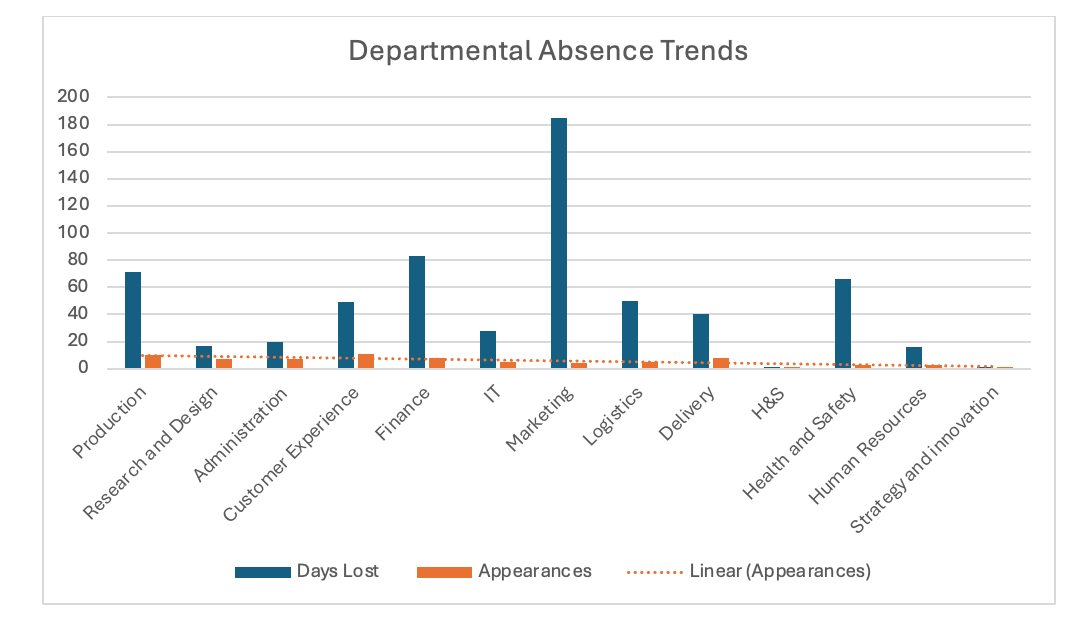
Table 1 and Figure 1 are a tabular and graphical representation of absence data as per department respectively.
Department engagement assessment can be conducted through the evaluation of mean days lost per appearance measurements. These metrics demonstrate low engagement when values increase while higher values indicate higher engagement. This calculation requires division between total absence days by appearance numbers in each department.
Total absence days in the Production Department came out to 7.1 days per appearance. Departments leading the absences list include Finance, Marketing, Health & Safety, and Logistics which implies disengagement within those teams. Active workplace participation according to absence data exists mainly in departments like Strategy & Innovation and Research & Design and Administration which show reduced levels of absence.
The human resources department needs more evaluation to detect workplace difficulties throughout departments with excessive absenteeism rates and to study both task requirements and organizational rules and leadership tactics. Comparative assessments of successful departmental engagement schemes can develop initiatives that enhance workforce spirit together with employee health and keep valuable employees in the organization.
Table 2 – Absence by type data
b) Absence by type
| Type | Days Lost Per Type | Occurrences |
| Cardiovascular | 54 | 1 |
| Cold Flu | 14 | 8 |
| Concussion | 1 | 1 |
| Covid 19 Symptoms | 93 | 16 |
| Depression | 33 | 2 |
| Ear/Nose/Throat | 1 | 1 |
| Genitourinary | 9 | 2 |
| Gynaecological | 1 | 1 |
| Headache/Migraine | 7 | 5 |
| Hernia | 9 | 1 |
| Infection | 12 | 2 |
| Injury at Work | 3 | 1 |
| Injury Outside Work | 35 | 4 |
| Muscular | 3 | 2 |
| Operation | 67 | 4 |
| Private/Confidential | 35 | 1 |
| Skeletal | 128 | 1 |
| Stomach | 16 | 8 |
| Stress Personal | 92 | 5 |
| Stress Work | 1 | 1 |
| Virus | 1 | 1 |
| Vomiting/Diarrhoea | 12 | 5 |
Table 2: Absence by type
Figure 2: Absence by type
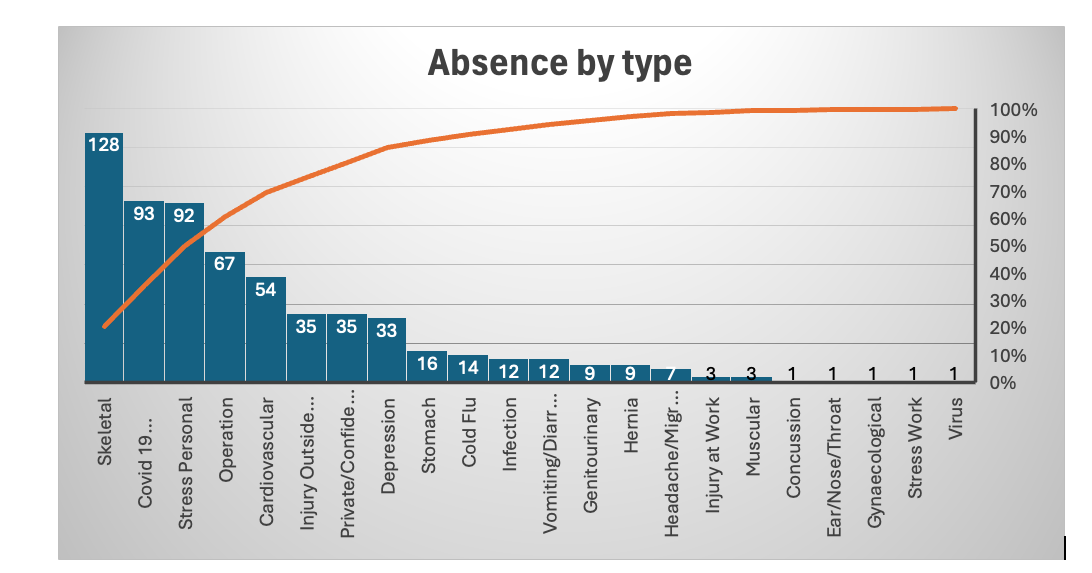
Table 2 and Figure 2 are tabular and graphical representations of absence data by type respectively.
Based on this data, some possible trends are identifiable:
- Skeletal injuries and illnesses account for the most days lost per incidence, followed by cardiovascular and depression conditions.
- Headache/Migraine, Ear/Nose/Throat, and Cold Flu are the diseases or injuries that cause the fewest amount of missed days per occurrence.
- Cold flu and stomach injuries are the most common health conditions, followed by COVID-19 symptoms and stress-related injuries.
- Cardiovascular, traumatic brain injury, gynaecological, hernia, and private/confidential are the conditions that occur the least frequently.
- Skeletal accounts for the greatest average number of days lost per occurrence (128 days lost / 1 occurrence = 128 days lost per occurrence), while Ear/Nose/Throat accounts for the smallest (1 day lost / 1 occurrence = 1 day lost per occurrence).
The company should take into account the circumstances and any possible causes of these patterns, including the impacted individuals’ demographics and working conditions, as well as the procedures and policies in place to promote their health and welfare.
c) Absence by gender
| Days Lost | Occurrences | |
| Female | 255 | 28 |
| Male | 372 | 45 |
Table 3: Absence by gender
Figure 3: Absence by gender
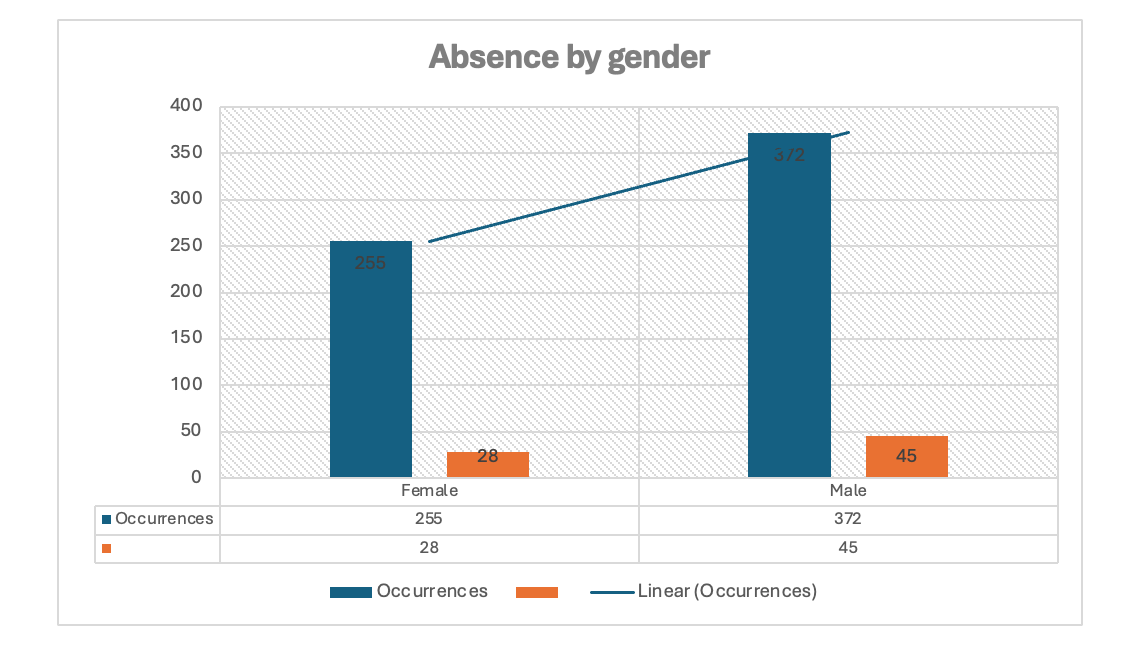
The thorough examination of worker absence patterns by male and female employees reveals the extent of employee participation levels. Total absence time exceeded between male (372 days) and female (255 days) workers and male employees went through more absences (45) than their female counterparts (28). Females accumulated 9.11 days of absence on average for each absence event which exceeded the 8.27 days recorded by male employees.
Research shows that HR specialists must identify distinct factors leading to these observed differences between men and women employees by examining their job roles and workplace demographics as well as occupational demands and organizational policies and health-related factors. Universal knowledge of these influencing elements can help create specific interventions for increasing workplace welfare and employee involvement and absence control strategies.
The 627 absence days which span a 4,639.8 working hour period leads to an estimated cost of £64,111.01 based on a 37-hour workweek. Examining absence management strategies at the strategic level by HR professionals demands both proactive workplace policies and employee wellness programs and flexible work arrangements for lowering absenteeism and enhancing workforce engagement and overall performance.
Table 2 – Feedback scores
A few themes and patterns may be present in Manager A’s feedback scores according to the data provided:
- Positive feedback: Personnel generally provide positive feedback for Manager A in the areas of fully agree (1) and agree (2), as seen by the reasonably high ratings for several statements. The majority of workers, for instance, concurred that Manager A communicates properly (31 fully agree + 5 agree), establishes clear work objectives (4 fully agree + 6 agree), and treats them with respect (29 fully agree + 5 agree).
- Mixed feedback: A number of statements were given a combination of agree, fully agree, and not sure ratings, suggesting that staff members’ opinions of Manager A were not entirely consistent. Employees were divided on whether Manager A is good at resolving conflicts (1 fully agree + 2 agree) and supports their work-life balance (12 entirely agree + 8 agree).
- Negative feedback: Employees tended to give Manager A unfavourable feedback in these areas, as seen by the relatively high disagree (4) and strongly disagree (5) scores given to a number of assertions. Many workers disputed or strongly disagreed, for instance, that Manager A supports their growth (7 disagree + 7 strongly disagree), is receptive to their recommendations (0 disagree + 0 strongly disagree), and permits them to agree on their work goals (0 disagree + 1 strongly disagree).
These results suggest the following suggestions for raising worker satisfaction and engagement with Manager A:
- To enhance employee engagement under Manager A an organized evidence-led methodology must be applied which follows established human resource management standards. The management team can successfully boost employee satisfaction through their existing strengths in communication as well as goal-setting abilities and efforts in building respectful workplace cultures (Armstrong & Taylor, 2023; CIPD, 2023). A sustained focus on positive behaviors enables staff members to build clearer understanding together with greater workplace trust which results in higher job satisfaction that increases overall employee engagement (Barends & Briner, 2021).
- The identification process must run parallel to solving critical issues which affect workplace operations. Through negative feedback leaders identify specific training needs to develop Manager A’s team leadership and coaching skills (Beevers, Hayden & Rea, 2019). The implementation of evidence-based management principles relies on data-based intervention programs to solve managerial deficiencies and build supportive settings that increase workplace performance (Barends & Rousseau, 2018).
- Employee feedback must be continuous through pulse surveys as well as structured focus groups and regular check-ins because these methods help track engagement patterns and recognize ongoing employee concerns (Kimball & Aber, 2013). When employees can openly talk with Manager A they can improve workplace culture together with effectiveness at a continuous pace.
Enhancing Your CIPD 5CO02 Assignment: Actionable Tips
General Tips for Excellence
- Depth over Breadth: While covering all aspects is important, demonstrate a deep understanding of key concepts rather than just listing them. Provide thorough explanations and critical evaluations.
- Real-World Application: Always link theoretical concepts to practical scenarios, ideally drawing from your own professional experience or well-researched case studies. This demonstrates understanding and relevance.
- Critical Evaluation: Do not just describe models or theories; critically evaluate their strengths, weaknesses, and applicability in different contexts. This is crucial for higher marks.
- Structure and Clarity: Ensure your assignment is well-structured, with clear headings, logical flow, and concise language. Make it easy for the assessor to follow your arguments.
- Academic Rigor: Support all claims with credible academic and professional sources. Use a consistent referencing style throughout.
Specific Tips per Assessment Criterion (AC)
AC 1.1 Evaluating Evidence-Based Practice for Effective Decision-Making in Organizations
- Elaborate on the 6 Steps of EBP: Detail each step of the CIPD’s recommended EBP process: Ask, Acquire, Appraise, Aggregate, Apply, and Assess . For each step, explain what it entails and why it is crucial for effective decision-making in an organizational context.
- Critical Evaluation: Discuss the benefits of EBP (e.g., improved decision-making, organizational efficacy, stakeholder trust) but also critically evaluate its challenges (e.g., limited access to reliable data, bias in interpretation, financial constraints, inadequate training) . Suggest strategies to overcome these challenges.
- Organizational Examples: Provide specific, well-explained examples of how EBP can be applied in HR practices, such as training and development, performance assessment, and selection and recruitment .
AC 1.2 Analyzing Tools and Methods for Diagnosing Organizational Challenges and Opportunities
- Diverse Tool Selection: Beyond general mentions, delve into specific diagnostic tools. Consider models like:
- McKinsey 7S Framework: Explain how its seven interdependent elements (Strategy, Structure, Systems, Shared Values, Skills, Style, Staff) can be used to analyze organizational effectiveness and identify misalignments .
- Burke-Litwin Model: This model is more comprehensive, linking transformational and transactional factors to organizational performance and change. Explain how it can diagnose root causes of performance issues .
- Fishbone Diagram (Ishikawa Diagram): Useful for identifying potential causes of a problem. Demonstrate its application in an HR context (e.g., high employee turnover) .
- Application and Limitations: For each tool, describe how it would be applied in a real-world scenario and critically discuss its strengths and limitations in diagnosing HR-related challenges and opportunities.
AC 1.3 Critical Thinking Principles for Objective and Rational Decision-Making Debates
- The RED Model: Explain the three components of the RED model (Recognize Assumptions, Evaluate Arguments, Draw Conclusions) and provide clear examples of how applying this model can lead to more objective and rational decision-making in HR .
- Bias Awareness: Discuss common cognitive biases that can impede objective decision-making (e.g., confirmation bias, availability bias) and how critical thinking principles help mitigate them.
- Practical Scenarios: Illustrate with scenarios where critical thinking is applied to debate different perspectives on an HR issue, leading to a well-reasoned conclusion.
AC 1.4 Exploring Decision-Making Processes for Achieving Effective Organizational Outcomes
- Link to Outcomes: Clearly articulate how the application of EBP and critical thinking directly contributes to achieving specific organizational outcomes (e.g., increased employee engagement, reduced attrition, improved productivity, enhanced organizational reputation).
- Decision-Making Frameworks: Briefly mention or integrate decision-making frameworks (e.g., rational decision-making model) and show how EBP principles enhance these frameworks.
- Case Study Integration: Use a consistent case study or example throughout AC 1 to demonstrate the cumulative impact of EBP, diagnostic tools, and critical thinking on a decision-making process.
AC 1.5 Assessment of Ethical Perspectives for Guiding Moral Decision-Making Processes
- Ethical Frameworks: Introduce and assess relevant ethical frameworks, such as:
- PLUS Ethical Decision-Making Model: Explain how the P (Policies), L (Legal), U (Universal), S (Self) filters can be applied to ensure ethical considerations are integrated into HR decisions .
- Utilitarianism, Deontology, Virtue Ethics: Briefly explain these philosophical approaches and how they might influence HR decisions, providing examples for each.
- Ethical Dilemmas: Discuss common ethical dilemmas in HR (e.g., privacy, fairness in performance management, redundancy decisions) and how ethical perspectives guide moral choices.
AC 2.1, AC 2.2 and AC 2.3 Quantitative and Qualitative Analysis Review
- Data Presentation: Do not just present raw data. Use appropriate visual aids such as charts (bar charts, pie charts, line graphs) and tables to make your findings clear and understandable . Ensure all visuals are properly labeled and referenced in your text.
- Interpretation and Trends: Go beyond describing the data. Interpret what the data means, identify patterns, trends, and anomalies. Explain the significance of these findings for HR and the organization.
- Linking Quantitative and Qualitative: Emphasize how quantitative data (e.g., retention rates, survey scores) can be enriched by qualitative data (e.g., exit interview feedback, focus group discussions) to provide comprehensive insights into underlying problems .
- Avoid Common Mistakes: Highlight common pitfalls such as presenting data without interpretation, using inappropriate chart types, or failing to link findings back to the assignment brief’s requirements.
- Software Usage: Mention the use of tools like Excel for basic analysis and visualization, or more advanced tools like SPSS, NVivo, or Tableau for complex data analysis, pattern identification, and stakeholder communication .
AC 3.1 Evaluation of Methods for Measuring Financial and Non-Financial Performance Effectively
- Balanced Scorecard Approach: Discuss how a balanced scorecard can be used to measure both financial (e.g., ROI of HR programs, cost-per-hire) and non-financial (e.g., employee satisfaction, engagement, retention, diversity metrics) aspects of performance .
- HR Metrics and Analytics: Provide examples of specific HR metrics and explain how they contribute to understanding organizational performance. Differentiate between efficiency metrics and effectiveness metrics.
- Evaluation Criteria: Evaluate the effectiveness of different measurement methods, considering their reliability, validity, and practicality.
AC 3.2 Exploring People Practices’ Value and Methods for Measuring Impact
- Kirkpatrick’s Four Levels of Training Evaluation: Explain how this model (Reaction, Learning, Behavior, Results) can be adapted to measure the impact of various people practices, not just training . Provide examples for each level.
- ROI of HR: Discuss how to calculate and present the Return on Investment (ROI) for HR initiatives, demonstrating their financial value to the organization.
- Stakeholder Communication: Emphasize the importance of effectively communicating the value and impact of people practices to various stakeholders using data and compelling narratives.
Referencing and Academic Rigor
- Consistent Referencing: Use a consistent referencing style (e.g., Harvard, APA) throughout your assignment. Every piece of information that is not your original thought or common knowledge must be cited.
- Credible Sources: Prioritize academic journals, reputable HR bodies (like CIPD), industry reports, and well-established textbooks. Avoid over-reliance on generic websites or blogs.
- Reference List: Include a comprehensive reference list at the end of your assignment, formatted correctly.
References
Armstrong, M., and Taylor, S., 2023. Armstrong’s handbook of human resource management

            practice: A guide to the theory and practice of people management. London, UK:

            Kogan Page.

Baker, S., Scholes, S., and West, M. A., 2018. The evidence-based practice of organizational

psychology: A review and critique. Journal of Occupational and Organizational Psychology, 91(3), 329-351. https://www.sciencedirect.com/science/article/abs/pii/S1053482218304194

Barends, E., & Briner, R. (2021). Evidence-Based Management: How to Use Evidence to

            Make Better Organizational Decisions. Kogan Page.

Barends, E. and Rousseau, D.M. (2018) Evidence-based management: how to use evidence to

            make better organisational decisions. London: Kogan Page.

Barends, E., & Rousseau, D. M. (2022). Evidence-Based Practice: A Guide for Effective

            Management. Kogan Page.

Beevers, K., Hayden, D. and Rea, A. (2019) Learning and development practice in the

            workplace. 4th ed. London: CIPD Kogan Page.

CIPD. (2023). Evidence-Based Practice Factsheet. Chartered Institute of Personnel and

            Development. Retrieved from https://www.cipd.org.

Durai, S., and Sarkar, S., 2018. HR metrics and workforce analytics: it is a journey, not a

destination. Human Resource Management International Digest, 26(8), 32-35. https://www.researchgate.net/profile/Subhashini-Durai/publication/329579899_HR_metrics_and_workforce_analytics_it_is_a_journey_not_a_destination/links/5c86518c299bf1268d501ee7/HR-metrics-and-workforce-analytics-it-is-a-journey-not-a-destination.pdf

Fink, A. (2019) Conducting research literature reviews: from the internet to paper. 5th ed.

            London: Sage

Kimball, B. A., and Aber, J. L., 2013. Evidence-based practice in education: A practical

guide. Guilford Press. https://www.guilford.com/books/Evidence-Based-Practice-in-Education/Bruce-A-Kimball-J-Lawrence-Aber/9781462510621

Köchling, A., and Wehner, M. C., 2020. Discriminated by an algorithm: a systematic review

of discrimination and fairness by algorithmic decision-making in the context of HR recruitment and HR development. Business Research, 13, 795-848. https://link.springer.com/article/10.1007/s40685-020-00134-w

Neelen, M. and Kirschner, P.A. (2020) Evidence-informed learning design: creating training

            to improve performance. London: Kogan Page.

Omran, M. et al., 2019. Non-financial performance measures disclosure, quality strategy, and

organizational financial performance: A mediating model. International Journal of Quality and Reliability Management, 36(5), 652-675. https://www.tandfonline.com/doi/abs/10.1080/14783363.2019.1625708

Hayden, D. (2019) Costing and benchmarking learning and development. Factsheet. London:

            Chartered Institute of Personnel and Development. Available at:

            www.cipd.co.uk/knowledge/strategy/development/benchmarking-factsheet

Houghton, E. (2020) People analytics. Factsheet. London: Chartered Institute of Personnel

            and Development. Available at:

            www.cipd.co.uk/knowledge/strategy/analytics/factsheet

Young, J. (2019) Evidence-based practice for effective decision-making. Factsheet. London:

Chartered Institute of Personnel and Development. Available at: www.cipd.co.uk/knowledge/strategy/analytics/evidence-based-practice-factsheet

Bibliography

Hill, S. and Houghton, E. (2018) Getting started with people analytics: a practitioner’s guide.

            Guide. London: Chartered Institute of Personnel and Development. Available at:

            www.cipd.co.uk/knowledge/strategy/analytics/practitioner-guide

Hill, T. E., 2019. Dignity and practical reason in Kant’s moral theory. Ithaca, NY: Cornell

University Press. https://www.degruyter.com/document/doi/10.7591/9781501735035/html

CIPD. (2019) Evidence-based practice for HR: beyond fads and fiction [podcast]. London:

            Chartered Institute of Personnel and Development. Available at:

            www.cipd.co.uk/podcasts/evidence-basedhr

Rousseau, D. M. (2018). Making Evidence-Based Organizational Decisions. Harvard

            Business Review.

Omran, M. et al., 2019. Non-financial performance measures disclosure, quality strategy, and

organizational financial performance: A mediating model. International Journal of Quality and Reliability Management, 36(5), 652-675. https://www.tandfonline.com/doi/abs/10.1080/14783363.2019.1625708