

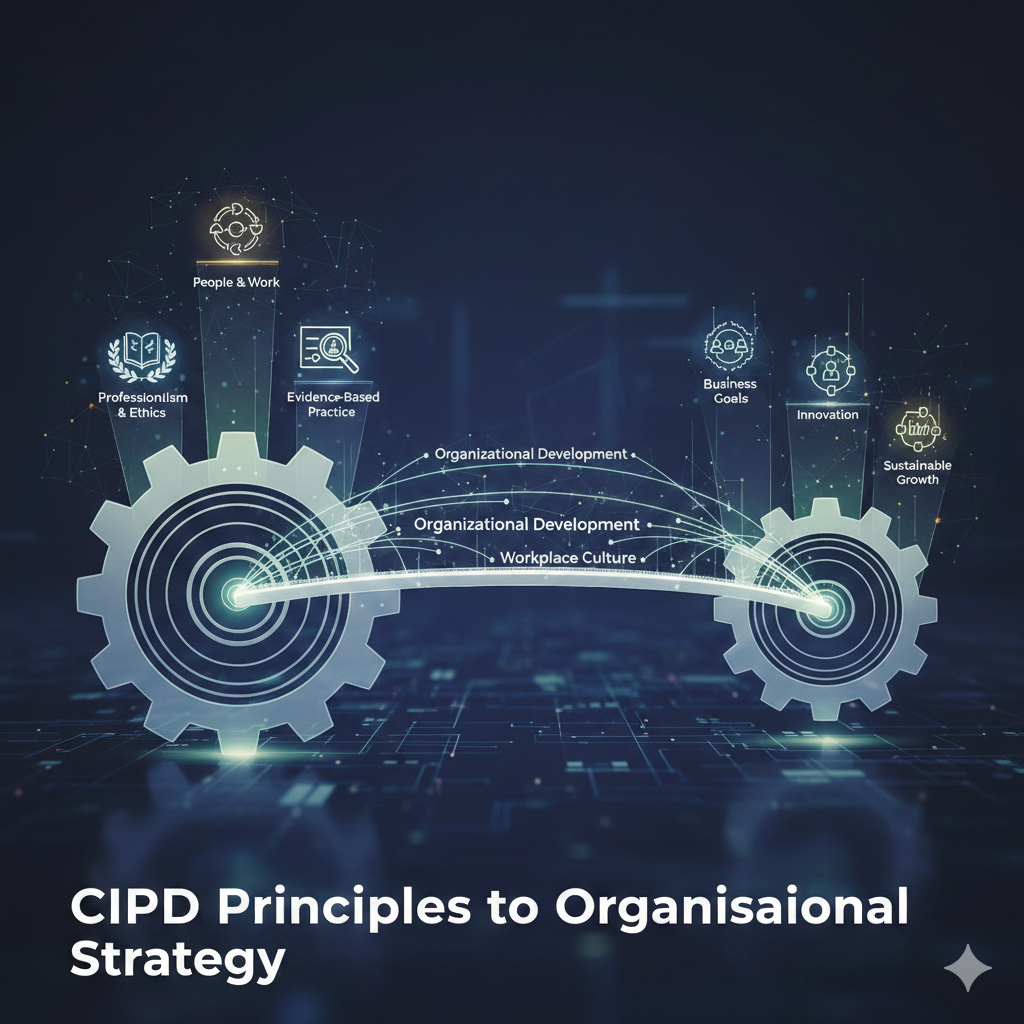
In the contemporary business landscape, the role of the human resources function has undergone a profound transformation. No longer confined to the periphery of administrative tasks and compliance monitoring, the modern people profession is increasingly positioned at the very heart of organisational strategy. This shift is not merely a change in title but a fundamental reimagining of how human capital contributes to sustainable competitive advantage. Central to this evolution is the Chartered Institute of Personnel and Development (CIPD) Profession Map, an international benchmark that defines the standards of excellence for people professionals worldwide.
The Profession Map serves as a comprehensive framework, outlining the core knowledge, behaviours, and specialist expertise required to thrive in a dynamic work environment. However, its true value lies in its ability to bridge the gap between individual professional competence and broader organisational objectives. When people professionals align their practice with the principles of the Map, they do more than just “do HR”; they become architects of organisational success. This blog post explores the intricate links between CIPD principles and organisational strategy, demonstrating how a principles-led, evidence-based, and outcomes-driven approach can transform the people profession into a powerful engine for strategic growth.
By embedding the Profession Map into the fabric of their work, HR leaders can ensure that every initiative—from talent acquisition to cultural transformation—is directly contributing to the organisation’s long-term vision. In the following sections, we will delve into the core components of the Map, examining how its values, knowledge areas, and behaviours provide the toolkit necessary for navigating the complexities of modern business and delivering tangible value to all stakeholders.
The Strategic Heart: Purpose and Values
At the epicentre of the CIPD Profession Map lies a singular, powerful purpose: “Championing better work and working lives.” While this may sound like a philanthropic aspiration, it is, in reality, a core strategic imperative. In an era where talent is the primary differentiator, an organisation’s ability to provide meaningful, inclusive, and productive work is directly linked to its performance. Better work leads to higher engagement, which in turn drives innovation, productivity, and customer satisfaction. Therefore, the purpose of the profession is the very foundation upon which successful organisational strategies are built.
Surrounding this purpose are three core professional values that guide every decision and action: being principles-led, evidence-based, and outcomes-driven. These values are not just ethical guidelines; they are strategic filters that ensure HR interventions are robust, credible, and impactful.
Principles-led Practice
Being principles-led means going beyond the “what” of policy and law to focus on the “why” of ethical practice. In a strategic context, this involves having the professional courage to challenge decisions that might offer short-term gains but risk long-term reputational or cultural damage. For instance, a strategy focused on aggressive cost-cutting might yield immediate financial results, but if it compromises employee well-being or ethical standards, it undermines the organisation’s sustainability. A principles-led professional ensures that the organisation’s strategy remains aligned with its core values, fostering a culture of trust and integrity that attracts and retains top talent.
Evidence-based Decision Making
Strategic alignment requires a move away from “gut feel” and anecdotal evidence toward a more rigorous, data-informed approach. The value of being evidence-based lies in the ability to use a diverse range of data—including people analytics, academic research, stakeholder feedback, and practitioner expertise—to inform strategic choices. When HR can demonstrate, through data, how a specific leadership development programme correlates with improved business performance or how a flexible working policy reduces turnover costs, they gain the credibility needed to influence the boardroom. Evidence-based practice ensures that HR strategies are not just well-intentioned but are grounded in reality and proven to work.
Outcomes-driven Focus
Finally, being outcomes-driven shifts the focus from HR activities (outputs) to the value created for the organisation and its people (outcomes). Too often, HR success is measured by the number of training hours delivered or the speed of recruitment. While these metrics are useful, they do not tell the whole story. An outcomes-driven approach asks: “What impact did this training have on our strategic goal of entering new markets?” or “How has our recruitment strategy improved our diversity of thought and innovation?” By focusing on outcomes, people professionals ensure that their work is always aligned with the “big picture,” delivering measurable value that supports the organisation’s overarching strategy.
Core Knowledge: Bridging the Gap
While the values of the Profession Map provide the “how” of professional practice, the Core Knowledge areas provide the “what.” These standards describe the essential expertise required to be an expert in people, work, and change. For the people professional seeking to influence organisational strategy, three areas are particularly critical: Business Acumen, People Practice, and Culture and Behaviour.
Business Acumen: The Strategic Non-Negotiable
Business acumen is perhaps the most vital knowledge area for strategic alignment. It is the ability to understand the organisation’s business model, its value chain, and the external environment in which it operates. Without a deep understanding of how the organisation makes money, who its competitors are, and what external pressures (such as economic shifts or technological disruptions) it faces, HR initiatives will remain disconnected from reality.
Strategic HR professionals use tools like PESTLE (Political, Economic, Social, Technological, Legal, and Environmental) and SWOT (Strengths, Weaknesses, Opportunities, and Threats) analyses to scan the horizon and anticipate future needs. By speaking the language of the business—discussing EBITDA, market share, and ROI—they can position people strategies as solutions to business problems. For example, if an organisation’s strategy is to pivot toward digital services, a professional with strong business acumen will identify the skills gap, the cultural barriers to agility, and the need for a new reward structure to attract tech talent, all before the strategy is even fully implemented.
People Practice: The Levers of Strategy
People practice covers the traditional “functional” areas of HR, such as resourcing, learning and development, and employee relations. However, in the context of the Profession Map, these are seen as strategic levers. Every people practice must be designed with the end goal in mind. If the organisational strategy is focused on customer intimacy, the recruitment process should prioritise empathy and communication skills, while the reward system should incentivise customer satisfaction over pure sales volume.
Furthermore, the Map emphasises the need for an integrated approach. Strategic alignment is not achieved through isolated initiatives but through a cohesive “people strategy” where all practices reinforce each other and the broader business goals. This holistic view ensures that the workforce is not just managed but is strategically deployed to achieve maximum impact.
Culture and Behaviour: The Human Element of Strategy
It is often said that “culture eats strategy for breakfast.” No matter how brilliant a strategic plan may be, it will fail if the organisation’s culture and the behaviours of its people are not aligned with it. The Profession Map recognises this by making Culture and Behaviour a core knowledge area. People professionals play a crucial role in diagnosing the current culture, identifying the “desired” culture needed to support the strategy, and implementing interventions to bridge the gap.
This involves understanding the psychological contract, the drivers of motivation, and the impact of leadership styles on employee behaviour. By fostering a culture of psychological safety, inclusion, and continuous learning, HR professionals create an environment where the strategy can actually take root and flourish.
Specialist Knowledge: Organisational Development and Design
Beyond the core knowledge areas, the Profession Map includes Specialist Knowledge standards that allow professionals to dive deeper into specific fields. For strategic alignment, Organisational Development and Design (OD&D) is arguably the most impactful specialism.
OD&D as a Strategic Tool
Organisational design is the process of aligning an organisation’s structure, processes, and systems with its strategic objectives. It is about ensuring that the “vessel” is fit for the “journey.” A strategic HR professional specialising in OD&D will ask: “Does our current hierarchy support the speed of decision-making required by our new strategy?” or “Are our communication channels effective for a remote-first workforce?”
Organisational development, on the other hand, focuses on the “health” and “effectiveness” of the organisation. it involves managing change, improving team dynamics, and developing leadership capability. When an organisation undergoes a strategic shift—such as a merger, a digital transformation, or a move to a new market—OD&D specialists are the ones who navigate the human complexity of that change. They ensure that the transition is not just a structural one but a cultural and behavioural one as well, minimizing disruption and maximizing the chances of strategic success.
Workforce Planning and Strategic Agility
A key component of OD&D is strategic workforce planning. This involves analyzing the current workforce, forecasting future needs based on the strategic plan, and identifying gaps. In a rapidly changing world, strategic agility—the ability to pivot quickly—is a major competitive advantage. By ensuring the organisation has the right people with the right skills in the right roles at the right time, OD&D specialists provide the foundation for this agility. They move HR from a reactive “filling vacancies” mode to a proactive “building capability” mode, directly enabling the execution of the organisational strategy.
Core Behaviours: Living the Strategy
The Profession Map is not just about what you know; it is about how you act. The Core Behaviours define the consistent ways of working that enable people professionals to live the values of being principles-led, evidence-based, and outcomes-driven. These behaviours are the “soft skills” that make strategic influence possible.
Ethical Practice and Professional Courage
Strategic alignment often requires making difficult choices. It might mean standing up to a senior leader whose behaviour is toxic, even if they are a high performer, or advocating for long-term investment in employee well-being during a financial downturn. Ethical practice and professional courage are about doing what is right for the organisation’s long-term health, even when it is unpopular. This integrity builds the trust and credibility that HR professionals need to be seen as true strategic partners.
Valuing People and Situational Decision Making
A strategy that does not value its people is destined to fail. The behaviour of “valuing people” involves creating an inclusive environment where everyone can contribute their best. This is not just a moral duty but a strategic one; diverse and inclusive teams are more innovative and better at problem-solving. Furthermore, “situational decision making” allows professionals to adapt their approach to the specific context of the organisation. There is no “one-size-fits-all” in strategic HR. A professional must be able to read the room, understand the unique challenges of their sector, and tailor their interventions accordingly. This flexibility is key to ensuring that HR strategies remain relevant and effective in a changing world.
Practical Application: A Framework for Alignment
The following table summarizes the key links between the CIPD Profession Map components and strategic organisational outcomes:
|
Profession Map Component
|
Strategic Link
|
Organisational Outcome
|
|
Purpose
|
Championing better work and working lives
|
Enhanced employee engagement and sustainable performance
|
|
Core Values
|
Principles-led, Evidence-based, Outcomes-driven
|
Robust, ethical, and data-informed strategic decision-making
|
|
Business Acumen
|
Understanding business models and external environments
|
HR initiatives that solve real business problems and drive ROI
|
|
People Practice
|
Aligning HR levers (recruitment, L&D, reward)
|
A workforce that is specifically equipped to execute the strategy
|
|
Culture & Behaviour
|
Shaping the human element of the organisation
|
A cultural environment that supports and accelerates strategic change
|
|
OD&D
|
Designing structures and systems for performance
|
Organisational agility and effective change management
|
To move from theory to practice, people professionals can use the CIPD Profession Map as a diagnostic tool to audit and improve their strategic alignment. The following framework provides a step-by-step approach:
- Strategic Analysis: Start with the organisation’s strategic plan. What are the top three goals for the next three years? What are the key risks and opportunities?
- Capability Audit: Use the “Core Knowledge” and “Specialist Knowledge” standards to assess the current capability of the people team. Do we have the business acumen to understand the strategy? Do we have the OD&D skills to design the necessary changes?
- Value Alignment: Evaluate current HR initiatives against the three core values. Are they principles-led? Are they based on evidence? Are they focused on strategic outcomes?
- Behavioural Review: Reflect on the “Core Behaviours.” Are we demonstrating the professional courage and situational decision-making needed to influence the boardroom?
- Action Planning: Identify the gaps and create a development plan. This might involve upskilling the HR team, redesigning key people practices, or implementing new data analytics tools.
Hypothetical Case Study: The Digital Pivot
Consider a traditional retail company planning a strategic pivot to e-commerce. A people professional using the Profession Map would first use Business Acumen to understand the new digital business model. They would then apply OD&D specialist knowledge to redesign the organisational structure, moving from a store-based hierarchy to a more agile, tech-focused setup. Using Evidence-based practice, they would analyze market data to design a competitive reward package for software engineers. Throughout the process, they would demonstrate Professional Courage by ensuring that the transition is handled ethically, with proper support for staff whose roles are changing. The Outcome would be a workforce that is not only technically capable but also culturally aligned with the new digital strategy.
Conclusion
Linking CIPD principles to organisational strategy is the hallmark of the modern, high-impact people professional. The Profession Map provides more than just a set of standards; it offers a compass for navigating the complexities of the modern workplace and a toolkit for driving sustainable organisational success. By embedding the Map’s values, knowledge, and behaviours into their daily practice, HR leaders can move beyond the role of “support function” to become true strategic architects.
The journey toward strategic alignment is an ongoing one, requiring continuous learning, professional courage, and a relentless focus on outcomes. However, the rewards are significant. When the people profession is truly aligned with organisational strategy, it doesn’t just champion better work and working lives—it creates the conditions for organisations, and the people within them, to thrive in an uncertain future. As we look ahead, the ability to bridge the gap between human potential and strategic ambition will remain the most critical capability of the people profession, and the CIPD Profession Map will continue to be the essential guide for that journey.