

Table of Contents
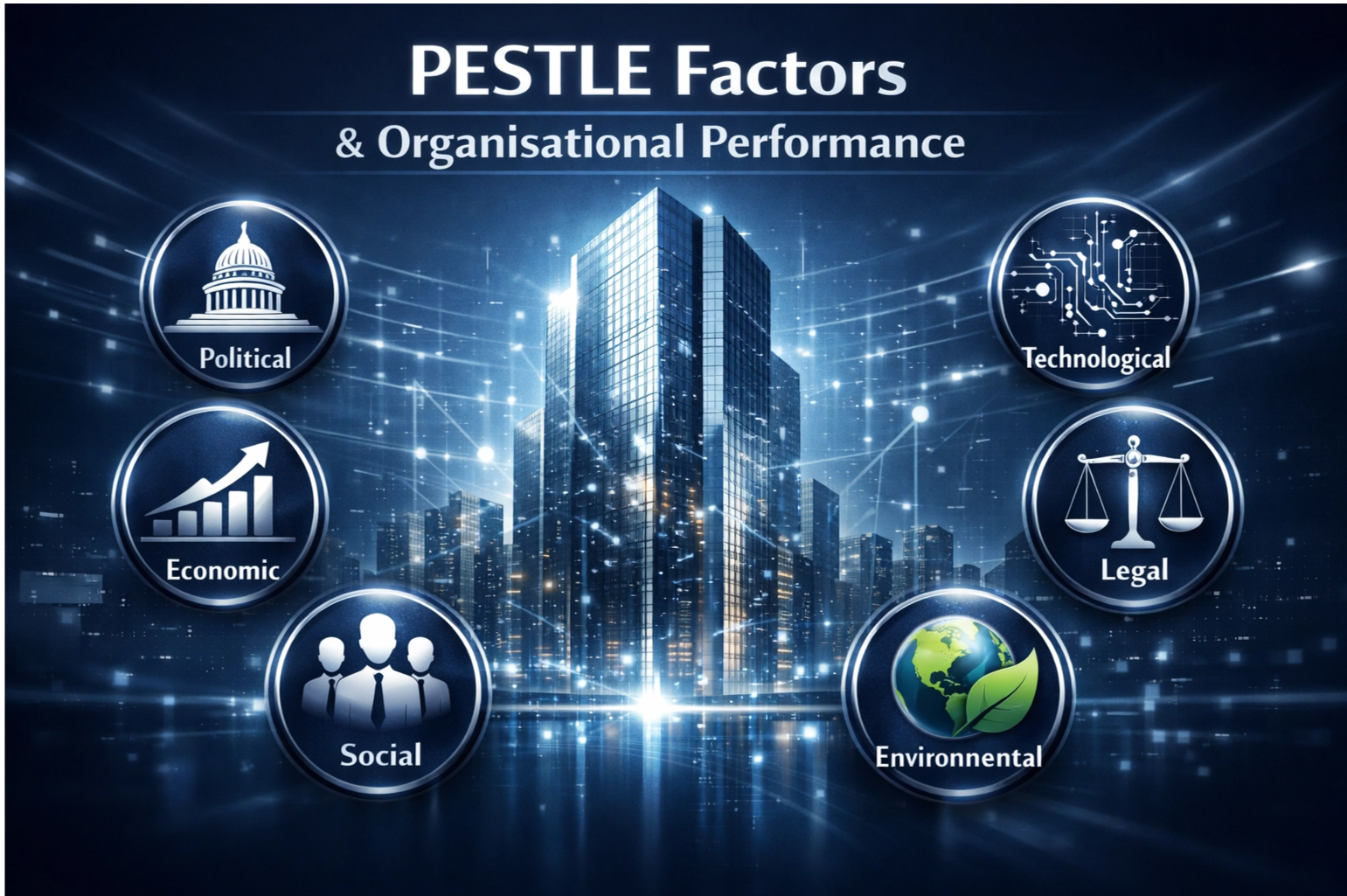
In today’s dynamic business landscape, understanding the external environment is paramount for sustained organisational success. The PESTLE analysis framework provides a comprehensive lens through which businesses can examine the macro-environmental forces shaping their operations and strategic decisions. PESTLE, an acronym for Political, Economic, Social, Technological, Legal, and Environmental factors, offers a structured approach to identifying potential opportunities and threats that lie beyond an organisation’s immediate control. By systematically analysing these elements, businesses can not only mitigate risks but also leverage emerging trends to gain a competitive advantage and enhance overall performance.
We will delve into each PESTLE factor, exploring its individual impact on organisational performance and illustrating these effects with real-world examples. We will demonstrate how a thorough PESTLE analysis is not merely an academic exercise but a critical tool for strategic planning and long-term resilience.
1. Political Factors: Navigating the Regulatory Landscape
Political factors encompass the influence of government policies, political stability, and regulatory frameworks on business operations. A stable political environment fosters predictability, encouraging investment and long-term strategic planning. Conversely, political instability, characterised by frequent policy shifts, civil unrest, or changes in government, introduces significant risks, disrupting operations and deterring investment .
Tax policies, for instance, directly influence a company’s profitability and its decisions regarding expansion and location. Favourable tax regimes can attract businesses to a region, while high or unpredictable taxes can stifle growth and reduce competitiveness. Trade regulations and tariffs also play a crucial role, affecting the cost of importing raw materials and exporting finished goods, thereby impacting supply chain logistics and market access. Furthermore, government involvement in trade unions, competition regulation, and lobbying activities can shape the competitive landscape, either creating barriers to entry or offering advantages to specific industries .
Example: Starbucks and Fair Trade
Starbucks, a global coffee giant, constantly navigates complex political factors. Its commitment to fair trade practices and ethical sourcing of raw materials is partly a response to political pressures and consumer advocacy in Western countries. Compliance with diverse international laws and regulations concerning sourcing and labour practices is a continuous challenge that directly impacts its supply chain and public image .
2. Economic Factors: The Pulse of the Market
Economic factors relate to the broader economic conditions that influence consumer purchasing power, cost of capital, and overall market demand. Key economic indicators such as Gross Domestic Product (GDP) growth rates, interest rates, inflation, exchange rates, and unemployment trends significantly affect an organisation’s financial health and strategic choices .
High GDP growth typically signals a robust economy with increased consumer demand and business expansion opportunities. Conversely, economic recessions can lead to reduced consumer spending as individuals seek cheaper alternatives, directly impacting sales and revenue. Interest rates dictate borrowing costs, influencing investment decisions for expansion or new projects. Inflation erodes purchasing power, affecting pricing strategies and potentially squeezing profit margins. For businesses engaged in international trade, volatile exchange rates can significantly impact profitability, while unemployment trends affect both labour availability and consumer confidence .
Example: Starbucks and Economic Recessions
During economic downturns, Starbucks has observed a shift in consumer behaviour, with many customers opting for more affordable coffee alternatives. This economic pressure necessitates strategic adjustments, such as loyalty programs or value offerings, to retain its customer base. Rising labour and operational costs due to inflation further challenge its profitability, requiring efficient cost management strategies .
3. Social Factors: Understanding Consumer and Workforce Dynamics
Social factors encompass demographic trends, cultural norms, lifestyle changes, and societal values that influence consumer behaviour and workforce characteristics. Understanding these dynamics is vital for effective marketing, product development, and human resource management .
Demographic shifts, such as an aging population or changes in birth rates, can alter market needs and the availability of skilled labour. For instance, an aging population might increase demand for healthcare services and retirement planning products. Evolving lifestyles, such as the rise of remote work or increased health consciousness, can shift consumer preferences towards specific products and services. Cultural norms and values dictate what is acceptable in marketing messages and product offerings, requiring businesses to localize their strategies. Education levels within a society also impact the quality and skills of the available workforce, influencing productivity and innovation .
Example: Beyond Meat and Veganism
Beyond Meat’s success is largely attributable to favourable social factors. The rise of veganism and increasing environmental consciousness among consumers have created a significant market for plant-based meat substitutes. This societal shift towards healthier and more sustainable food choices provides a substantial opportunity for companies like Beyond Meat to expand their market share and influence dietary trends .
4. Technological Factors: Driving Innovation and Efficiency
Technological factors refer to advancements in technology that can create new opportunities, disrupt existing industries, and enhance operational efficiencies. Rapid technological change necessitates continuous adaptation and investment in research and development (R&D) to maintain competitiveness .
Automation, for example, can significantly enhance productivity and reduce labour costs, though it may also require workforce reskilling. Investment in R&D is crucial for driving innovation, leading to new products, services, and processes that provide a competitive edge. Robust internet and communication infrastructure are essential for modern business operations, enabling e-commerce, digital marketing, and global connectivity. Organisations must also manage the life cycle of technology, planning for upgrades and addressing obsolescence to remain efficient and competitive .
Example: Apple’s Technological Edge
Apple’s organisational performance is intrinsically linked to its ability to consistently lead in technological innovation. Its continuous investment in R&D allows it to introduce groundbreaking products and features, maintaining a significant competitive advantage. The company’s mastery of technological advancements, from chip design to user interface, is a cornerstone of its market dominance and profitability .
5. Environmental Factors: Embracing Sustainability
Environmental factors pertain to ecological and environmental considerations that influence business practices, consumer preferences, and regulatory requirements. Growing awareness of climate change and sustainability issues has led to increased pressure on businesses to adopt environmentally friendly practices .
Climate change and extreme weather events can impact agricultural productivity, disrupt supply chains, and affect the availability of natural resources. Environmental policies, such as regulations on emissions and waste management, can increase operational costs but also present opportunities for enhanced corporate social responsibility (CSR) and brand reputation. Natural disasters can severely disrupt operations, necessitating robust risk management strategies. Furthermore, consumer attitudes towards green products and support for renewable energy sources can drive demand for sustainable offerings and influence product development .
Example: Beyond Meat’s Environmental Positioning
Beyond Meat leverages environmental factors as a core part of its brand identity. Its plant-based products are positioned as a more environmentally friendly alternative to traditional meat, appealing to eco-conscious consumers. While the company benefits from this positioning, it also faces scrutiny regarding the environmental impact of its own supply chain, such as concerns about soy farming and deforestation .
6. Legal Factors: Adhering to the Rule of Law
Legal factors involve the laws, regulations, and legal frameworks that govern how businesses operate. Compliance with these laws is essential to avoid penalties, maintain reputation, and ensure ethical business practices .
Employment laws, covering aspects like wages, working conditions, and employee rights, directly impact human resource policies and labour costs. Consumer protection laws safeguard consumers from unfair practices, influencing product safety standards, marketing claims, and after-sales services. Intellectual property laws, including copyrights and patents, protect innovations and assets, crucial for technology-driven companies. Data protection regulations, such as GDPR, have significant implications for how businesses collect, store, and use personal data, affecting IT infrastructure and marketing compliance. Health and safety laws mandate safe working environments, often leading to increased compliance costs but ensuring employee well-being .
Example: Apple and Antitrust Scrutiny
Apple frequently faces legal challenges, particularly antitrust scrutiny and patent litigation. These legal battles can impact its market dominance, product development, and overall business strategy. Navigating complex legal frameworks across different jurisdictions is a continuous and resource-intensive aspect of its operations .
The Indispensable Link to Organisational Performance
The profound impact of PESTLE factors on organisational performance cannot be overstated. Organisations that proactively analyse and respond to these external forces are better positioned to achieve their strategic objectives and sustain long-term growth. The link to performance manifests in several critical ways:
- Strategic Alignment: By understanding the macro-environment, organisations can align their strategies with prevailing trends, ensuring their offerings remain relevant and competitive.
- Risk Mitigation: A thorough PESTLE analysis enables early identification of potential threats, allowing businesses to develop proactive mitigation strategies and minimise adverse impacts.
- Opportunity Identification: Emerging PESTLE trends often present new market opportunities. Organisations that can identify and leverage these shifts, such as technological advancements or changing consumer preferences, can gain a significant first-mover advantage.
- Resource Allocation: A clear understanding of the external environment facilitates more efficient allocation of resources, directing capital and labour towards areas with the highest potential for return.
- Competitive Advantage: Mastery in navigating the macro-environment creates a robust competitive advantage, making the organisation more resilient and adaptable than its less agile counterparts.
In conclusion, the PESTLE framework is an invaluable strategic tool that empowers organisations to understand, adapt to, and thrive within their external environment. From political shifts influencing regulatory landscapes to economic fluctuations impacting consumer spending, social trends reshaping demand, technological innovations driving disruption, environmental concerns demanding sustainability, and legal frameworks setting operational boundaries, each PESTLE factor plays a critical role in shaping an organisation’s trajectory. By integrating PESTLE analysis into their strategic planning processes, businesses can not only anticipate challenges and mitigate risks but also unlock new opportunities, foster innovation, and ultimately achieve superior organisational performance in an ever-evolving global marketplace.