

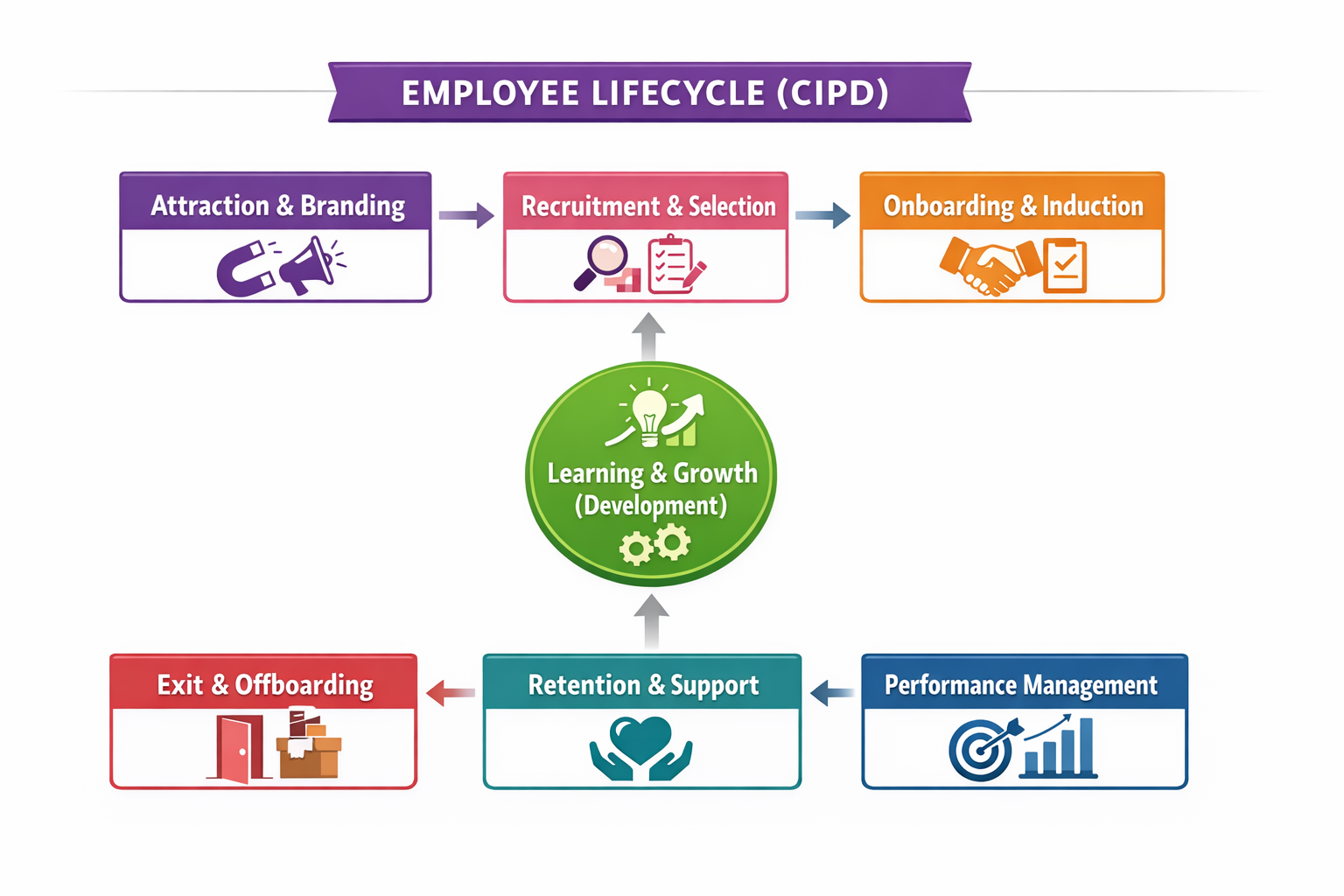
The employee lifecycle, as commonly outlined in HR practice and supported by guidance from the CIPD, represents the complete journey an employee takes from the moment they encounter an organisation to the point they leave it. Understanding this lifecycle helps HR teams and leaders design effective people strategies that support attraction, development, performance, wellbeing, and long-term organisational success. Each stage offers opportunities to strengthen engagement and create a positive employee experience.
1. Attraction & Employer Branding
The lifecycle begins with how an organisation positions itself to potential employees. Attraction is shaped by employer branding, workplace culture, mission, values, and reputation. At this stage, organisations aim to communicate what makes them a desirable place to work—highlighting factors such as career development opportunities, inclusivity, wellbeing support, and organisational purpose. Strong attraction strategies ensure the organisation draws candidates whose values align with its own.
2. Recruitment & Selection
Once interest is generated, the process moves into recruitment and selection. The goal is to identify individuals with the right skills, qualities, and potential to contribute to organisational objectives. Recruitment includes advertising jobs, managing applications, and encouraging a diverse talent pipeline. Selection involves screening, interviewing, assessments, and decision-making. Fairness, consistency, and evidence-based methods are essential to minimise bias and deliver a positive candidate experience.
3. Onboarding & Induction
After a successful hire, onboarding ensures the new employee integrates smoothly into the organisation. Induction covers essential information—such as role expectations, policies, culture, and team relationships. Effective onboarding improves confidence, accelerates performance, and increases early engagement. This stage is crucial for building long-term commitment and helping employees feel welcomed and supported.
4. Learning & Growth (Development)
Employee development is a continuous, central pillar of the lifecycle. Learning opportunities help individuals improve their skills, adapt to change, and achieve career goals. Organisations may provide training, coaching, mentoring, job shadowing, or digital learning resources. A focus on development not only raises capability but also supports productivity and retention, as employees are more likely to stay where they feel they can grow.
5. Performance Management
Performance management ensures employees understand expectations, receive regular feedback, and work towards meaningful objectives. Modern performance approaches emphasise ongoing conversations, coaching, and recognition rather than rigid annual appraisals. This stage helps align individual contributions to organisational aims, encourages accountability, and highlights areas for support or development.
6. Retention & Support
Keeping employees engaged is vital for organisational stability and productivity. Retention is influenced by factors such as wellbeing, workload balance, leadership quality, organisational culture, and recognition. Support systems—ranging from employee assistance programmes to flexible working—help create an environment in which employees feel valued and able to thrive. Ensuring psychological safety and open communication strengthens engagement and reduces turnover.
7. Exit & Offboarding
The lifecycle concludes with offboarding, which includes voluntary resignations, retirements, contract completions, or organisational changes. A respectful and structured exit process supports a positive final experience for the employee. Exit interviews offer valuable insights into organisational strengths and areas for improvement. A well-managed departure can preserve relationships, maintain employer reputation, and create future advocates or potential returners.