

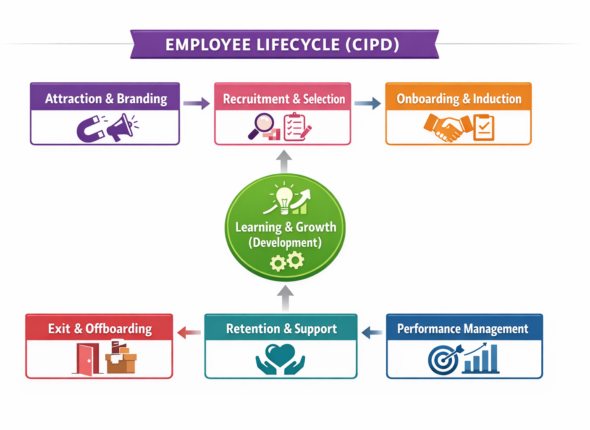
CIPD Employee Lifecycle Diagram
The employee lifecycle, as commonly outlined in HR practice and supported by guidance from the CIPD, represents the complete journey an employee takes from the moment they encounter an organisation to the point they leave it. Understanding this lifecycle helps HR teams...
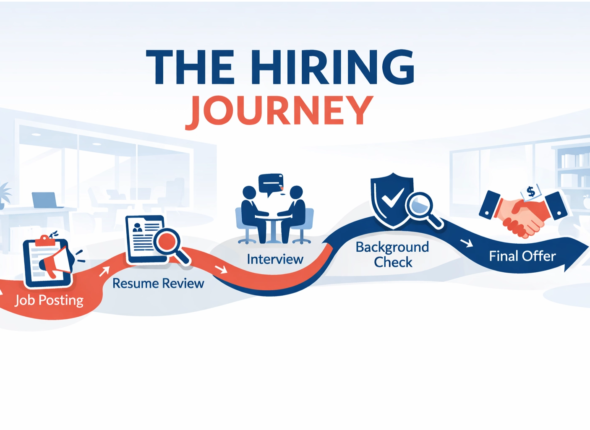
Steps Involved in Recruitment and Selection Process
In today’s dynamic business landscape, attracting and retaining top talent is paramount for organizational success. The process of bringing new individuals into an organization is often multifaceted, involving distinct stages of recruitment and selection. While often used interchangeably, these two phases serve...
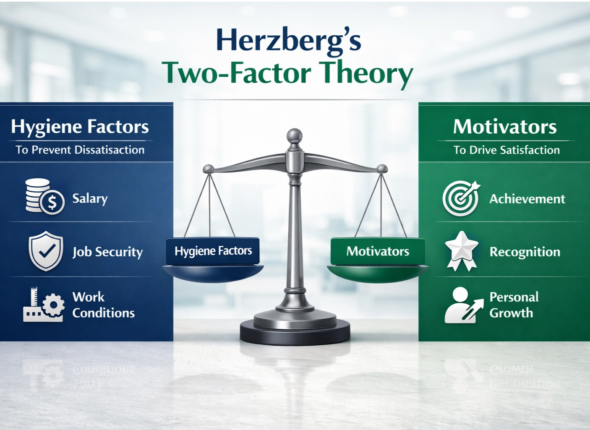
Herzberg’s Two-factor Theory in Motivating Workers
Understanding employee motivation is crucial for organizational success. Psychologist Frederick Herzberg’s Two-Factor Theory, or Motivation-Hygiene Theory, developed in 1959, posits that job satisfaction and dissatisfaction are influenced by distinct sets of factors, rather than being opposite ends of a single spectrum. Herzberg’s...
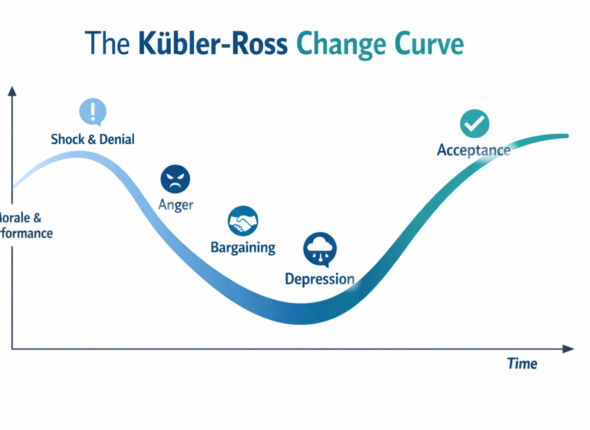
Kübler-Ross Change Curve
Navigating the Human Side of Transition: An In-Depth Look at the Kübler-Ross Change Curve Change is an inescapable constant in both personal life and professional environments. However, despite its frequency, human beings are biologically and psychologically wired to seek stability. When that...
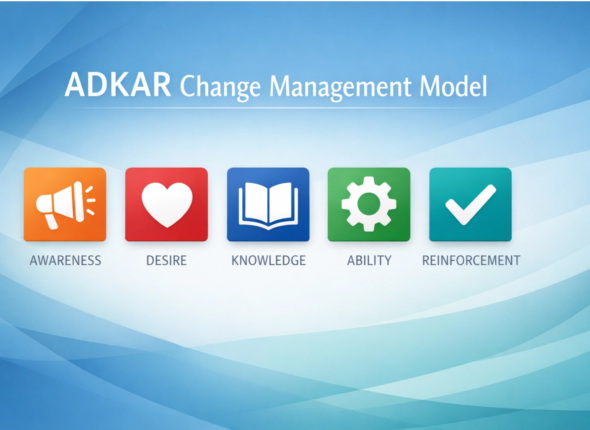
ADKAR Change Management Model
The ADKAR Model: A Comprehensive Guide to Individual-Led Organizational Change In the contemporary business environment, change is not merely an occasional disruption but a constant reality. From digital transformations and mergers to shifts in remote work policies, organizations must adapt rapidly to...
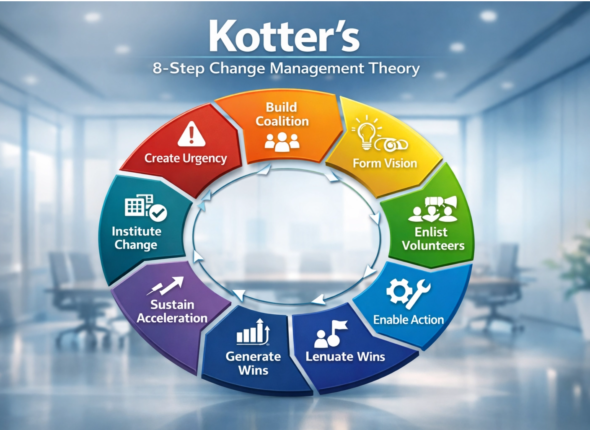
Kotter’s Change Management Theory
In the contemporary business landscape, characterized by rapid technological advancements and shifting market dynamics, the ability to manage change effectively is no longer a luxury but a fundamental necessity for organizational survival. Among the various frameworks developed to guide leaders through these...
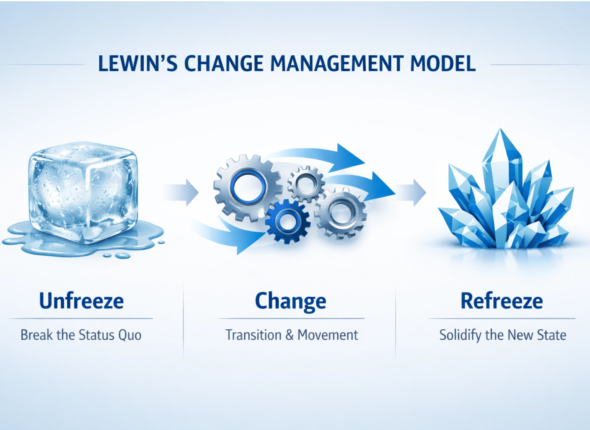
Lewin’s Change Management Model
Lewin’s Change Management Model: A Timeless Framework for Navigating Organizational Transformation In the landscape of organizational psychology and management theory, few concepts have demonstrated the enduring relevance of Kurt Lewin’s Change Management Model. Developed in the 1940s by the German-American psychologist, this...
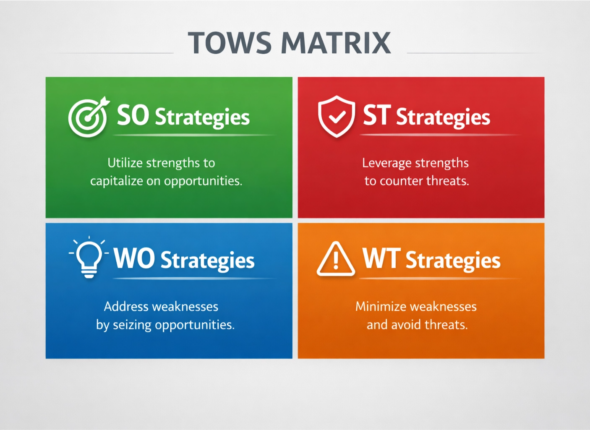
The TOWS Matrix
The TOWS Matrix, developed by Dr. Heinz Weihrich in the 1980s, is a strategic planning tool that builds upon the foundational SWOT (Strengths, Weaknesses, Opportunities, Threats) analysis. While SWOT analysis primarily serves as an analytical framework for identifying internal and external factors...
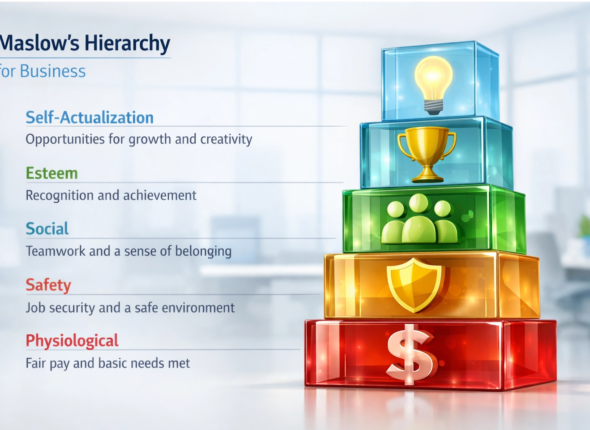
Maslow’s Hierarchy of Needs Applied to Employee Motivation
The Enduring Legacy of Humanistic Psychology Abraham Maslow’s Hierarchy of Needs, first introduced in his 1943 paper “A Theory of Human Motivation,” represents a watershed moment in the transition from behavioral to humanistic psychology . At a time when psychological research was...
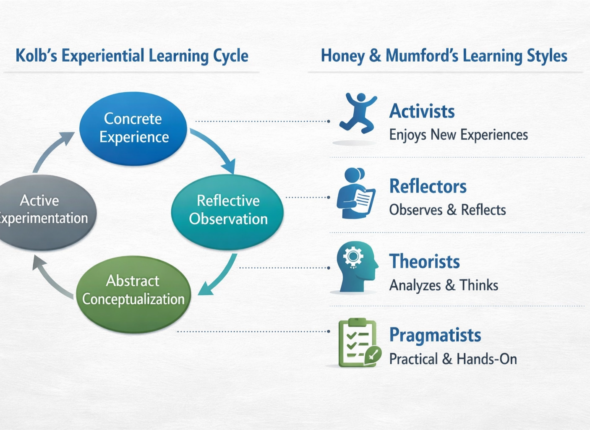
Comparison of Kolb’s Experiential Learning Cycle and Honey & Mumford’s Learning Styles
Table of Contents This article outlines the key differences between David Kolb’s Experiential Learning Cycle and Peter Honey and Alan Mumford’s Learning Styles. While closely related, these models serve distinct purposes in understanding and applying learning theory. 1. Origins and Relationship David...