

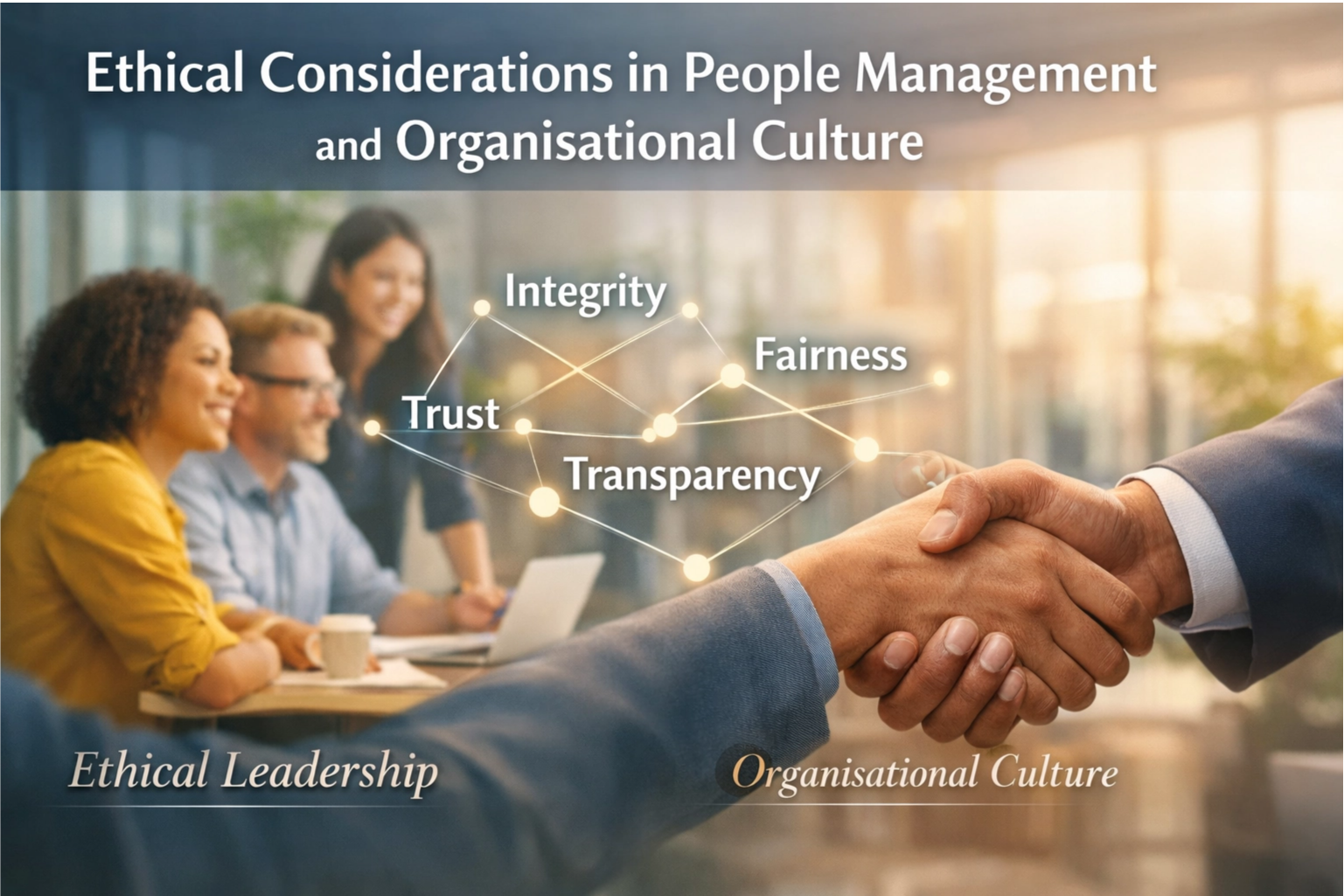
In the rapidly evolving landscape of the mid-2020s, the definition of corporate success has undergone a fundamental transformation. No longer is it sufficient for organizations to measure performance solely through the lens of quarterly earnings or market share. Instead, the focus has shifted toward the “human element”—the intricate web of relationships, values, and behaviors that constitute people management and organizational culture. As we navigate 2026, ethical considerations have moved from the periphery of “compliance” to the very core of strategic leadership. This shift reflects a growing realization that an organization’s moral compass is its most reliable predictor of long-term sustainability.
The Ethical Foundation: Redefining People Management
People management is, at its heart, an ethical endeavor. It involves the exercise of power and influence over individuals’ livelihoods, careers, and well-being. Consequently, every HR policy and leadership decision carries moral weight.
1. Fairness Across the Employee Lifecycle
The ethical journey begins at the point of entry. Recruitment and selection processes are often fraught with unconscious biases that can undermine the principle of meritocracy. In 2026, the ethical imperative is to move beyond simple “diversity quotas” toward deep-rooted equity. This means critically examining the algorithms used in talent acquisition and ensuring that the data fueling these systems is not perpetuating historical inequities. Fairness must also extend to performance management and promotion. When employees perceive a “say-do” gap—where the stated values of the company do not match the reality of who gets rewarded—trust evaporates, and the ethical foundation of the culture crumbles.
2. From Compliance to “Ethical Fitness”
Traditionally, ethics in people management was synonymous with compliance—following the law and avoiding litigation. However, modern organizations are adopting the concept of “ethical fitness.” Just as physical fitness requires regular exercise, ethical fitness requires the continuous practice of identifying and navigating “grey areas.” Ethical dilemmas in the workplace are rarely black and white; they often involve competing “rights” (e.g., the right to privacy vs. the need for security). Leaders must equip their teams with the tools to deliberate on these dilemmas, fostering a capability for moral reasoning that goes far beyond a handbook of rules.
Organizational Culture: The Invisible Hand of Ethics
If people management provides the framework, organizational culture is the environment in which that framework operates. Culture is the “invisible hand” that guides employee behavior when no one is watching. An ethical culture is not one that is free of mistakes, but one where integrity is woven into the daily fabric of interaction.
1. The Role of Leadership as Moral Architects
Leaders are the primary architects of organizational culture. Their actions—more than their words—set the ethical tone. When a leader prioritizes short-term gains over long-term values, or when they ignore “brilliant jerks” who deliver results but toxic behavior, they send a clear message about what the organization truly values. In 2026, leadership ethics is characterized by transparency and accountability. Ethical leaders do not just “lead by example”; they actively invite scrutiny and create systems where their own power is checked.
2. Bridging the “Say-Do” Gap
One of the most significant threats to an ethical culture is the “say-do” gap. This occurs when an organization’s proclaimed values (often displayed on office walls or websites) are inconsistent with its actual practices. For instance, a company may claim to value “work-life balance” while rewarding those who work eighty-hour weeks. This hypocrisy breeds cynicism and disengagement. To bridge this gap, organizations must conduct regular “culture audits,” using anonymous feedback and behavioral data to ensure that the lived experience of employees aligns with the corporate mission.
Psychological Safety: The Ethical Imperative for Integrity
A critical, yet often overlooked, ethical consideration is psychological safety—the belief that one can speak up without fear of punishment or humiliation. Without psychological safety, an ethical culture is impossible.
1. The Silence of Fear
Research consistently shows a significant gap between employees observing unethical behavior and those reporting it. Often, this gap exceeds 30%, and in some high-pressure industries, it can be as high as 50%. The two primary reasons for this silence are fear of retaliation and a sense of futility—the belief that even if a report is made, no meaningful action will be taken. Ethically, an organization has a profound responsibility to protect those who speak up. This protection must be more than just a legal safeguard; it must be a cultural one.
This involves moving beyond the traditional “whistleblower hotline,” which often feels clinical and intimidating. Instead, organizations should foster an environment where raising concerns is treated as a vital professional duty rather than an act of betrayal or “snitching.” When an employee points out a safety violation, a financial discrepancy, or a case of harassment, they are acting as a guardian of the company’s values. Recognizing and rewarding this “ethical courage” is essential for turning silence into a proactive dialogue that prevents small lapses from escalating into systemic failures.
2. Encouraging “Speaking Up” vs. “Whistleblowing”
In a truly ethical culture, the goal is to make “whistleblowing” a last resort because issues are addressed as a matter of course during day-to-day interactions. When employees feel safe to challenge a manager’s decision or point out a potential risk, the organization becomes more resilient. This “speaking up” culture is an ethical safeguard, preventing small lapses from escalating into systemic failures.
The Technological Frontier: AI and the Ethics of Surveillance
As we move further into the age of artificial intelligence, the ethical landscape of people management has expanded to include digital considerations.
1. Algorithmic Bias and Transparency
The use of AI in HR—from screening resumes to predicting employee turnover—presents profound ethical challenges that were barely understood a decade ago. If an algorithm is trained on biased historical data—for instance, data from a period when a company primarily hired from a specific demographic—it will learn to replicate those patterns, effectively automating and scaling systemic bias under the guise of “objective” data.
The ethical response is not to abandon AI, as its efficiency benefits are undeniable, but to demand radical transparency and robust human oversight. Organizations have a moral obligation to understand the “black box” of their AI systems. They must be able to explain to an unsuccessful candidate or a passed-over employee exactly how an AI-driven decision was reached. Furthermore, these systems must be subject to regular “bias audits” conducted by independent third parties to ensure they remain aligned with the organization’s equity goals. The goal is “augmented intelligence,” where AI assists human judgment rather than replacing it, ensuring that the final decision always rests with a person who can be held accountable.
2. The Surveillance Dilemma
The rise of remote and hybrid work has led to an increase in “productivity surveillance”—the use of software to track keystrokes, screen time, or even webcam activity. While employers have a legitimate right to ensure that work is being performed, the ethical boundaries of this monitoring are often crossed. Excessive surveillance raises serious concerns regarding individual privacy and the psychological contract between employer and employee.
Surveillance-heavy environments often erode morale and signal a profound lack of trust, which can ironically lead to “productivity theater”—where employees focus on looking busy rather than doing meaningful work. This erosion of trust is a significant ethical cost that many companies fail to account for. The ethical path forward involves a fundamental shift from monitoring activity to measuring outcomes. By focusing on the value created rather than the hours spent at a keyboard, organizations can respect employee autonomy while still maintaining high standards of performance. Furthermore, any data collection that does occur must be governed by a policy of “informed consent,” where employees are fully aware of what is being tracked, why it is being tracked, and how that data will be used.
DEI and Sustainability: Ethics Beyond the Office Walls
In 2026, ethical people management also encompasses an organization’s impact on society and the environment. Diversity, Equity, and Inclusion (DEI) and Environmental, Social, and Governance (ESG) criteria are now viewed as moral imperatives.
1. Inclusion as a Moral Obligation
DEI is often framed as a “business case”—the idea that diverse teams are more innovative. While true, the ethical case for DEI is even stronger: it is simply the right thing to do. An ethical organization recognizes that it operates within a broader social context and has a responsibility to provide equal opportunity to all, regardless of background. This involves dismantling systemic barriers and fostering a sense of belonging for every employee.
2. The Integration of ESG into Culture
Sustainability is no longer just about carbon footprints; it is about the “S” in ESG—the social impact. Ethical people management involves ensuring fair wages, safe working conditions, and supporting the mental health of employees. When an organization integrates sustainability into its culture, it aligns its internal people practices with its external brand promise, creating a cohesive ethical identity.
Building the Future-Proof Ethical Culture
The ethical considerations in people management and organizational culture are not static; they evolve alongside technology, society, and our understanding of human behavior. However, the core principles remain constant: fairness, transparency, accountability, and respect for human dignity.
Building an ethical culture is not a one-time project but a continuous journey. It requires leaders who are willing to be vulnerable, HR professionals who act as moral guardians, and employees who feel empowered to act with integrity. As we look toward the future, the organizations that thrive will be those that recognize that their greatest asset is not their technology or their capital, but the trust and commitment of their people. By placing ethics at the center of their culture, these organizations do more than just avoid scandal; they create a workplace where people can truly flourish.
Summary of Key Ethical Considerations
Area |
Key Ethical Concern |
Strategy for 2026 |
Recruitment |
Unconscious and Algorithmic Bias
|
Regular audits of AI tools and diverse interview panels.
|
Leadership |
The “Say-Do” Gap
|
Leadership accountability and transparent communication.
|
Reporting |
Fear of Retaliation
|
Building psychological safety and robust protection for “speakers up.”
|
Surveillance |
Privacy vs. Productivity
|
Focus on outcomes and transparent data policies.
|
DEI |
Performative vs. Substantive Inclusion
|
Moving from quotas to systemic equity and belonging.
|
AI in HR |
Lack of Transparency
|
Ensuring human-in-the-loop and explainable AI systems.
|
By addressing these considerations, organizations can navigate the complexities of the modern workplace with a clear sense of purpose and a steadfast commitment to doing what is right.