

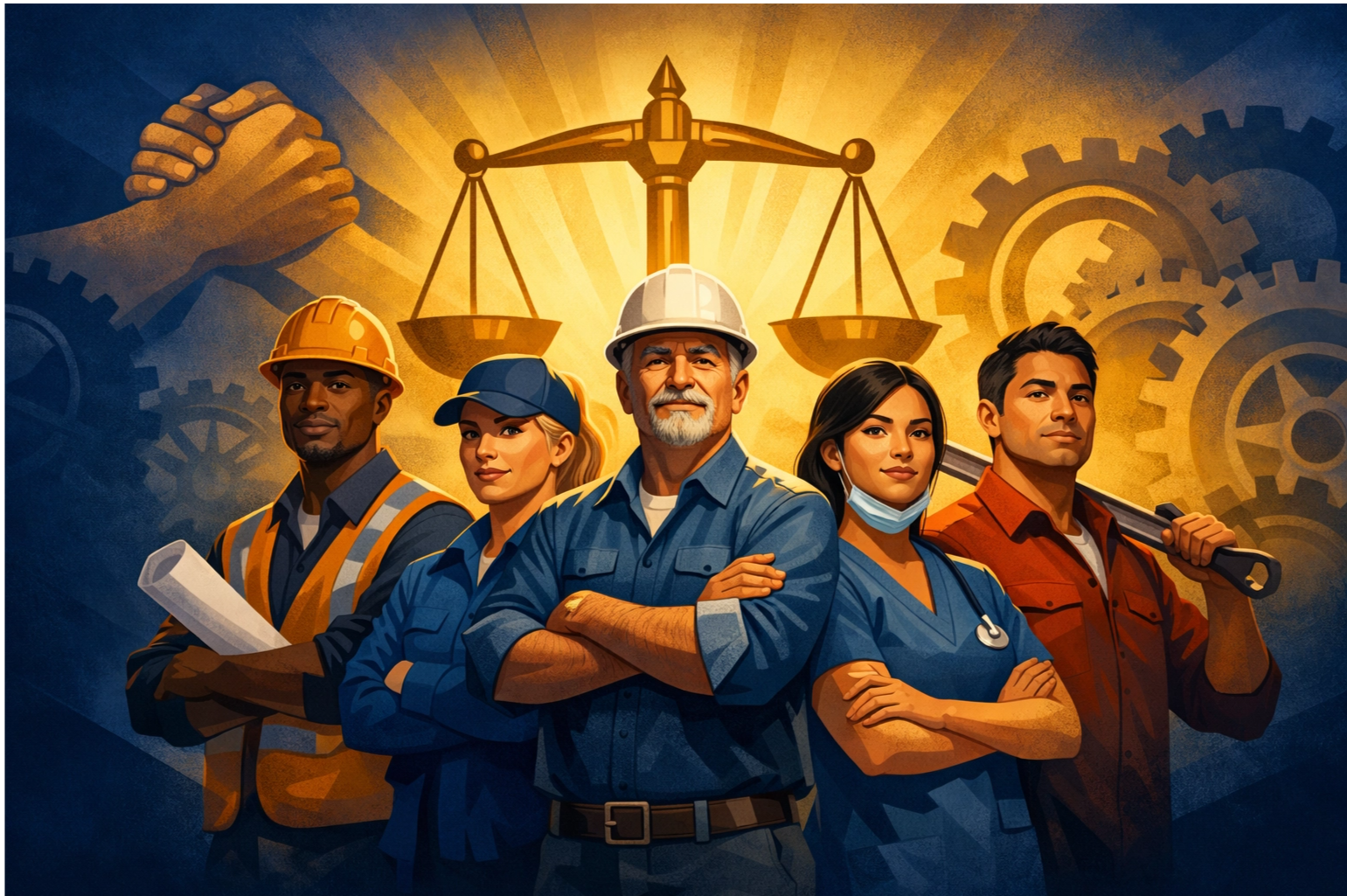
In the modern global economy, the relationship between employers and employees is often characterized by a significant power imbalance. While individual workers may find themselves vulnerable to exploitation, unfair treatment, or unsafe conditions, the collective voice of labor has historically served as a powerful counterweight. Trade unions, organizations formed by workers to protect and further their rights and interests, remain the most effective vehicle for achieving social justice in the workplace. From the early days of the Industrial Revolution to the complexities of the 2021 gig economy and the rise of Artificial Intelligence, trade unions have been at the forefront of the struggle for dignity, safety, and fair compensation.
“Trade unions are critical to protecting and promoting human rights including economic, social, and cultural rights and the right to be free from discrimination.”
This piece post explores the multifaceted role of trade unions, examining their historical significance, core functions, and their evolving strategies in the face of 21st-century challenges.
A Legacy of Struggle: Historical Context
The origins of trade unions can be traced back to the 18th and 19th centuries, a period marked by rapid industrialization and the systematic exploitation of the working class. During this era, workers faced grueling 16-hour days, hazardous environments, and the widespread use of child labor. Initially, these associations were often illegal, with governments viewing them as “conspiracies” in restraint of trade.
However, through persistent activism and often violent conflict, unions secured legal recognition and began to transform the fabric of society. Key historical milestones include:
Milestone |
Significance |
The 8-Hour Workday |
A global movement led by unions to establish a fair balance between work, rest, and recreation.
|
Child Labor Laws |
Unions were instrumental in advocating for legislation that removed children from factories and placed them in schools.
|
The Weekend |
The concept of a two-day break from work is a direct result of union negotiations for a 40-hour work week.
|
Safety Legislation |
Landmark laws like the 1914 Clayton Antitrust Act in the U.S. protected the right to strike and laid the groundwork for modern safety standards.
|
These victories were not merely economic; they were fundamental shifts in how society values human life over industrial output. A poignant example of this struggle is the Triangle Shirtwaist Factory fire of 1911 in New York City. The tragedy, which claimed the lives of 146 garment workers—mostly young immigrant women—due to locked exit doors and inadequate fire escapes, became a turning point for the American labor movement. In its aftermath, the International Ladies’ Garment Workers’ Union (ILGWU) led a massive push for stricter building codes, fire safety regulations, and shorter workweeks. This event underscored a core truth that unions have championed for centuries: that workplace safety is a fundamental human right, not a negotiable luxury. Similarly, the Tolpuddle Martyrs in 1834 Britain, who were sentenced to penal transportation for forming a friendly society, highlight the extreme legal barriers workers once faced simply for seeking collective security. Their eventual pardon and return became a symbol of the burgeoning power of organized labor to challenge unjust laws.
Core Functions: How Unions Protect Rights
The primary mechanism through which unions operate is collective bargaining. This process involves negotiating with employers on behalf of all members to establish a legally binding contract, often referred to as a Collective Bargaining Agreement (CBA).
1. Wage and Benefit Standards
Unions play a decisive role in raising the floor for wages. Research indicates that unionized workers earn significantly more than their non-union counterparts. For instance, evidence shows that unionization can increase salaries by an average of 2% in the first year and up to 6% after six years. 2 Beyond base pay, unions negotiate for comprehensive benefits, including health insurance, paid sick leave, and retirement plans, which are often absent in non-unionized sectors.
2. Workplace Health and Safety
One of the most critical roles of unions is the enforcement of safety standards. Unions provide workers with the training and resources to identify hazards and the legal protection to report them without fear of retaliation. In the wake of the Rana Plaza disaster in Bangladesh, which killed over 1,100 workers, unions successfully advocated for the International Accord for Health and Safety in the Garment and Textile Industry. This legally binding agreement holds multinational brands accountable for the safety of the factories in their supply chains.
3. Legal Representation and Advocacy
Unions act as a shield against arbitrary management decisions. Through grievance procedures, they ensure that disciplinary actions or dismissals are based on “just cause” rather than personal bias or discrimination. They also provide legal counsel for workers facing wage theft or harassment. For example, the Tamil Nadu Textile and Common Labour Union (TTCU) in India won a landmark victory in 2022 by reaching an agreement to end gender-based violence and harassment in garment factories. 1
Economic and Social Impact: Beyond the Workplace
The influence of trade unions extends far beyond the individual worker. By advocating for fair distribution of wealth, unions contribute to broader economic stability and social equity.
- Reducing Inequality: Unions are a powerful tool for closing the gender and race wage gaps. By establishing transparent, standardized pay scales, they minimize the opportunity for discretionary bias.
- Strengthening the Middle Class: High union density is historically correlated with a robust middle class. When unions are strong, they set a “union threat” effect, where non-union employers raise wages and improve conditions to remain competitive and avoid unionization.
- Democratic Participation: Unions encourage civic engagement by educating members on policy issues and mobilizing them to vote, thereby strengthening democratic institutions.
- Addressing the Productivity-Pay Gap: Since the late 1970s, productivity in many developed economies has grown significantly faster than worker compensation. Unions are the primary force attempting to bridge this “productivity-pay gap.” By ensuring that workers receive a fair share of the wealth they create, unions help prevent the extreme concentration of capital that can destabilize national economies. Without the pressure of collective bargaining, the gains from technological advancement and increased efficiency tend to accrue almost exclusively to shareholders and top executives.
Trade Unions in the Modern Era: New Frontiers
As the nature of work changes, trade unions are adapting to address new forms of exploitation and technological shifts.
The Gig Economy and Platform Work
The rise of platforms like Uber, Deliveroo, and Amazon has created a “gig economy” where workers are often misclassified as independent contractors, stripping them of basic labor protections. Unions are fighting back by:
- Organizing Digital Workers: In Europe, unions have successfully organized bicycle delivery drivers to demand minimum wage guarantees and insurance.
- Legal Challenges: Unions are leading court battles to reclassify gig workers as employees, ensuring they have access to collective bargaining rights.
Global Solidarity and International Standards
In an era of multinational corporations, the role of trade unions has expanded beyond national borders. Global union federations, such as IndustriALL Global Union and the International Transport Workers’ Federation (ITF), coordinate actions across multiple countries to prevent companies from “racing to the bottom” by moving operations to regions with weaker labor laws. These organizations work closely with the International Labour Organization (ILO) to establish and monitor international labor standards, ensuring that the fundamental rights to freedom of association and collective bargaining are recognized as universal human rights. This global approach is essential for tackling issues like forced labor in global supply chains and ensuring that the transition to a “green economy” is fair for workers in traditional energy sectors.
Automation and Artificial Intelligence (AI)
Contrary to the narrative that unions oppose technology, many are actively negotiating for a “just transition” in the face of AI. Unions like the AFL-CIO argue that workers must be partners in the introduction of AI to ensure it enhances rather than replaces human labor. 3 Key strategies include:
- Retraining Programs: Negotiating for employer-funded training to help workers transition to new roles.
- Algorithmic Management Oversight: Demanding transparency in how AI is used to monitor and evaluate worker performance to prevent “management by algorithm.”
Challenges and the Path Forward
Despite their proven benefits, trade unions face significant headwinds. In many regions, “union-busting” tactics—both legal and illegal—are used by corporations to prevent workers from organizing. From mandatory “captive audience” meetings to the dismissal of lead organizers, the barriers to unionization remain high.
However, the recent surge in organizing efforts at high-profile companies like Starbucks and Amazon suggests a renewed interest in collective action, particularly among younger generations who face rising costs of living and job instability.
The role of trade unions in protecting worker rights is as vital today as it was during the Industrial Revolution. By providing a collective voice, unions ensure that the benefits of economic growth are shared more equitably and that the fundamental rights of workers are respected. Whether it is negotiating for a living wage, ensuring a safe workplace, or navigating the complexities of the digital age, trade unions remain the vanguard of labor rights.
As we look to the future, the strength of our democratic societies and the health of our economies will depend on our ability to protect the right to organize. Supporting trade unions is not just about helping workers; it is about building a fairer, more stable, and more humane world for everyone.