

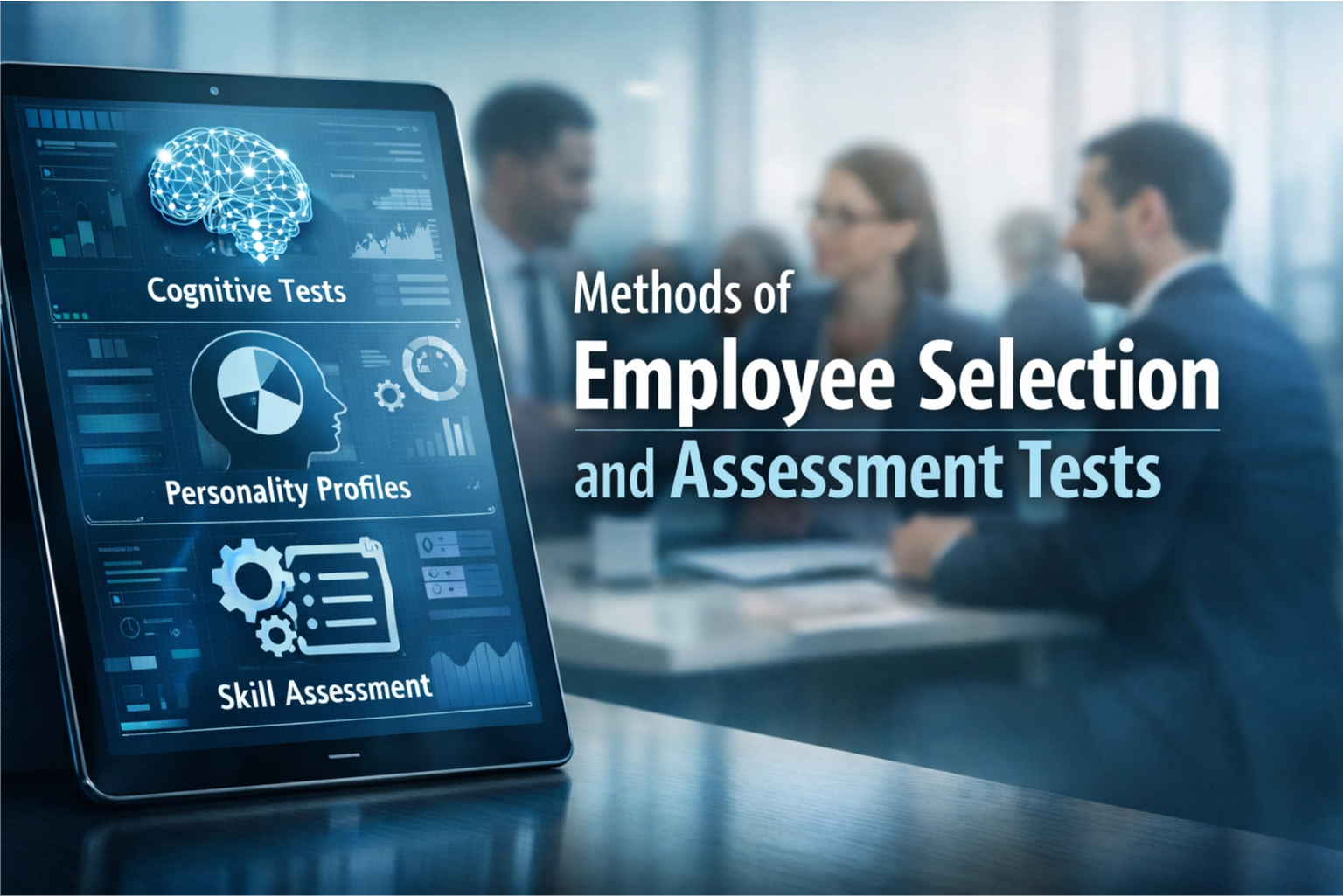
In today’s competitive talent landscape, organizations are constantly seeking effective strategies to identify and recruit the best candidates. The process of employee selection and the use of assessment tests are critical components in building a high-performing workforce. This blog post delves into various modern methods of employee selection and the different types of assessment tests that aid in making informed hiring decisions.
The Evolving Landscape of Employee Selection
Employee selection is more than just filling a vacancy; it’s about finding individuals whose skills, experience, and cultural fit align with the organization’s goals. Traditional methods, while still relevant, are being augmented by more sophisticated approaches. The initial stages often involve a resume sorting process and introductory screening, which can now be significantly enhanced by artificial intelligence (AI) to efficiently filter through large applicant pools . This automation helps in identifying candidates who meet the basic qualifications, allowing human recruiters to focus on more nuanced evaluations.
Following initial screening, structured interviews have emerged as a best practice. Unlike unstructured interviews, which can be prone to bias, structured interviews involve a standardized set of questions asked to all candidates, ensuring fairness and consistency in evaluation. This approach helps in objectively comparing candidates and predicting job performance more accurately.
For roles requiring specific practical abilities, assignment tests or job trials are invaluable. These methods allow candidates to demonstrate their skills in a real-world or simulated work environment, providing direct evidence of their capabilities. This hands-on assessment can reveal problem-solving abilities, technical proficiency, and how a candidate approaches tasks, offering insights that traditional interviews might miss .
Finally, candidate references and background checks remain crucial steps. These processes verify the information provided by applicants and offer insights into their past performance, work ethic, and professional conduct from previous employers or colleagues.
Comprehensive Assessment Tests for Deeper Insights
Beyond selection methods, various assessment tests provide deeper insights into a candidate’s potential and fit. These tests are designed to measure a range of attributes, from cognitive abilities to personality traits and specific job knowledge.
Cognitive Ability Tests
Cognitive ability tests are among the most reliable predictors of job performance across various roles. They measure general intelligence, problem-solving skills, critical thinking, and the ability to learn new information quickly. Examples include numerical reasoning, verbal reasoning, and abstract reasoning tests. These assessments help identify candidates who can adapt to new challenges and grasp complex concepts .
Personality Assessments
Personality assessments evaluate a candidate’s behavioral traits and preferences. While many types exist, those based on the Big Five personality traits (Openness, Conscientiousness, Extraversion, Agreeableness, and Neuroticism) are generally considered more scientifically robust for predicting job fit. These tests can indicate how well a candidate might collaborate with a team, handle stress, or take initiative, providing valuable insights into cultural alignment and potential team dynamics .
Skills and Job Knowledge Tests
Skills assessment tests and job knowledge tests are designed to measure a candidate’s proficiency in specific areas directly relevant to the job. This could include technical skills like coding, data analysis, or proficiency in particular software applications. For example, a software developer might undergo a coding challenge, while an accountant might complete a test on financial regulations. These tests directly verify the candidate’s ability to perform the core functions of the role .
Emotional Intelligence (EQ) Tests
With the increasing emphasis on soft skills, Emotional Intelligence (EQ) tests are gaining prominence. These assessments measure an individual’s ability to understand, use, and manage their own emotions in positive ways to relieve stress, communicate effectively, empathize with others, and overcome challenges. High EQ is often linked to better leadership, teamwork, and conflict resolution skills, making it a valuable trait in many professional environments .
Integrity Tests
Integrity tests are designed to assess a candidate’s honesty, trustworthiness, and ethical behavior. These tests often present hypothetical situations or ask direct questions about attitudes towards theft, rule-breaking, or other counterproductive workplace behaviors. They can be a useful tool in roles where trust and ethical conduct are paramount .
Best Practices in Employee Selection and Assessment
To maximize the effectiveness of selection methods and assessment tests, organizations should adhere to several best practices:
- Ensure Reliability and Validity: It is crucial that assessment tests are both reliable (consistent results over time) and valid (accurately measure what they are intended to measure). Using validated assessments ensures that the hiring decisions are based on accurate and relevant data .
- Maintain Legal Compliance: All selection processes and assessment tests must comply with anti-discrimination laws and regulations, such as those enforced by the Equal Employment Opportunity Commission (EEOC). Assessments should be job-related and consistent with business necessity to avoid discriminatory practices .
- Prioritize Candidate Experience: A positive candidate experience is vital for attracting top talent. Assessments should be engaging, clearly explained, and not excessively long. Providing feedback, where appropriate, can also enhance the candidate’s perception of the organization .
- Adopt a Multi-Method Approach: Relying on a single selection method or assessment test can lead to incomplete or biased evaluations. A comprehensive approach that combines various methods—such as resume screening, structured interviews, and a mix of relevant assessment tests—provides a more holistic and accurate picture of a candidate’s suitability .
Future Trends in Employee Selection (2025-2026)
The field of employee selection is continuously evolving, with several key trends shaping its future:
- AI Integration: The use of AI in screening resumes, analyzing assessment results, and even conducting initial interviews is becoming more sophisticated. AI can help reduce bias and improve efficiency in the early stages of recruitment .
- Gamification: Incorporating game-like elements into assessment tests can make the process more engaging for candidates while still providing valuable data on their skills and cognitive abilities .
- Focus on Soft Skills: Beyond technical competencies, there’s a growing emphasis on evaluating soft skills such as emotional intelligence, adaptability, collaboration, and creativity, which are crucial for success in dynamic work environments .
- Data-Driven Hiring: Leveraging analytics to predict long-term performance, reduce turnover, and improve the overall quality of hires is becoming standard practice. This involves using data from various assessment points to make more strategic hiring decisions .
Effective employee selection and assessment tests are cornerstones of successful talent acquisition. By employing a combination of modern selection methods and scientifically validated assessment tools, organizations can build a robust hiring process that identifies individuals who not only possess the necessary skills but also align with the company’s culture and values. As the workplace continues to evolve, embracing new technologies and best practices in selection will be paramount for securing a competitive advantage in the war for talent.