

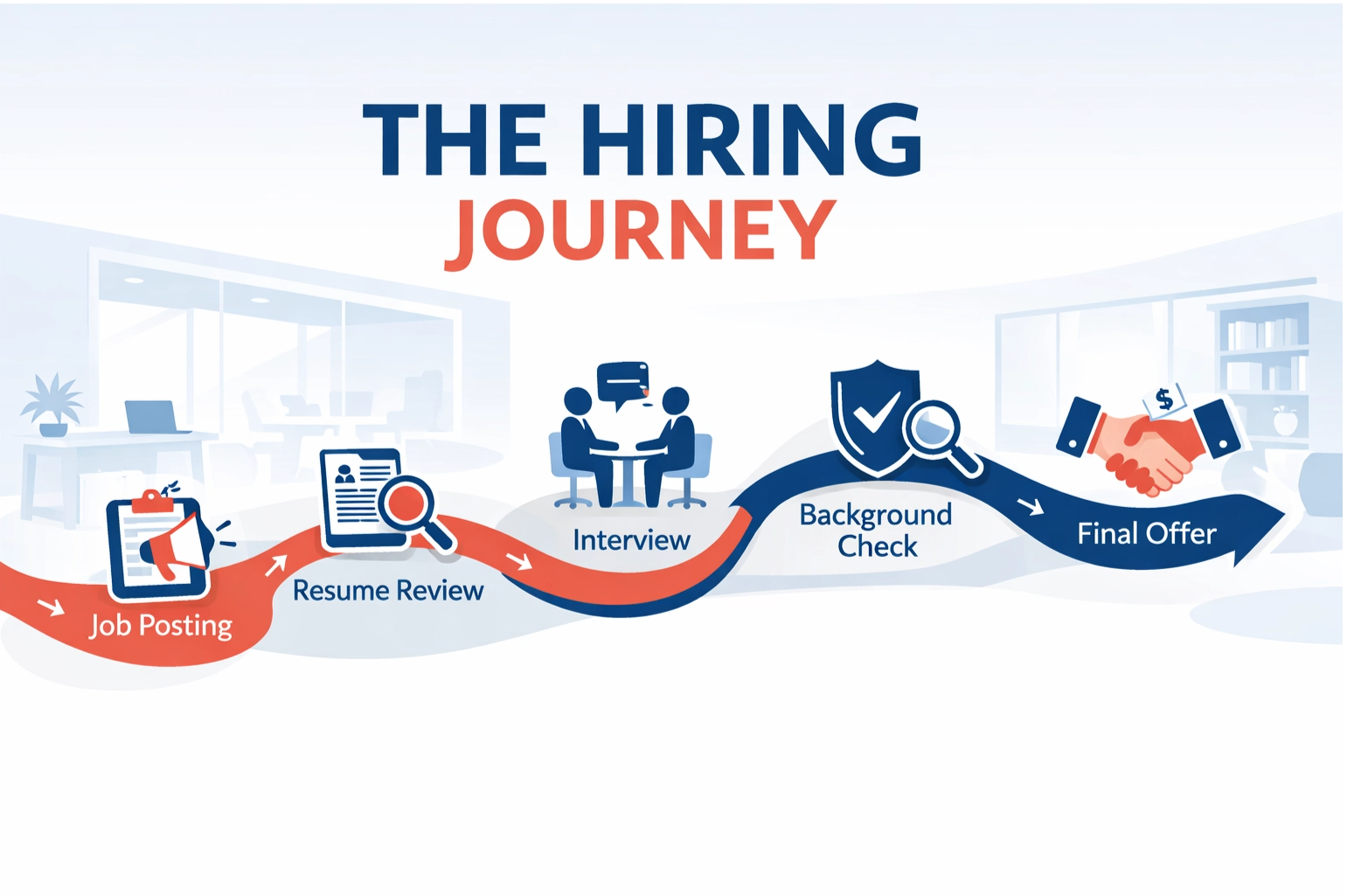
In today’s dynamic business landscape, attracting and retaining top talent is paramount for organizational success. The process of bringing new individuals into an organization is often multifaceted, involving distinct stages of recruitment and selection. While often used interchangeably, these two phases serve different, yet complementary, purposes in building a robust workforce. This article delves into the intricacies of the recruitment and selection process, outlining its key steps, highlighting the distinctions between recruitment and selection, and exploring contemporary best practices for 2026 and beyond.
Understanding the Foundations: Recruitment vs. Selection
To effectively navigate the hiring journey, it is crucial to first understand the fundamental differences between recruitment and selection. Recruitment is a proactive process focused on identifying, attracting, and encouraging a pool of qualified candidates to apply for job openings. It is often described as a positive process, aiming to broaden the applicant base. Conversely, selection is a reactive process that begins after recruitment, involving the systematic evaluation of candidates from the recruited pool to identify the most suitable individual for a specific role. This is often viewed as a negative or eliminative process, as it narrows down the applicant pool to a single hire .
The table below summarizes the key distinctions:
Feature |
Recruitment |
Selection |
Purpose |
Attract candidates
|
Choose the best candidate
|
Approach |
Positive (Encouraging)
|
Negative (Eliminating)
|
Outcome |
A pool of applicants
|
A single hired employee
|
Order |
Precedes selection
|
Follows recruitment
|
The Recruitment Journey: Building the Talent Pool
The recruitment phase is the initial step in the hiring process, designed to generate a diverse and qualified pool of applicants. This typically involves several critical activities:
1. Workforce Planning and Job Analysis
Before any active recruitment begins, organizations must conduct thorough workforce planning to identify current and future talent needs. This includes analyzing existing skill gaps and forecasting future requirements. Concurrently, a detailed job analysis is performed to define the responsibilities, duties, skills, and qualifications necessary for the vacant position. This analysis forms the basis for creating an accurate and compelling job description .
2. Crafting an Engaging Job Description
A well-written job description is a powerful recruitment tool. It should clearly articulate the role’s expectations, required qualifications, and the company culture. In 2026, job descriptions are increasingly optimized for digital platforms, ensuring they are mobile-friendly and inclusive to attract a wider range of candidates. Modern approaches also emphasize showcasing the company’s values and mission to resonate with purpose-driven job seekers .
3. Sourcing and Advertising
This stage involves actively searching for potential candidates and advertising the job opening across various channels. Effective sourcing strategies in 2026 leverage a mix of traditional and digital platforms:
- Online Job Boards: Platforms like Indeed, LinkedIn, and specialized industry job boards remain crucial.
- Company Career Pages: A well-designed and informative career page on the company website serves as a central hub for applications and employer branding .
- Social Media: Professional networks (LinkedIn) and even broader platforms (Facebook, X) are utilized for targeted advertising and passive candidate engagement.
- Recruitment Agencies: For specialized or hard-to-fill roles, external agencies can provide access to niche talent pools.
- University and College Partnerships: Collaborating with educational institutions helps identify emerging talent and build a pipeline for entry-level positions.
- Employee Referrals: Leveraging existing employees’ networks often yields high-quality candidates who are a good cultural fit.
- Talent Pipelines: Proactive building of candidate databases for future roles, even when no immediate openings exist .
4. Candidate Engagement and Employer Branding
Beyond simply posting ads, successful recruitment in 2026 focuses on actively engaging with potential candidates and cultivating a strong employer brand. This involves consistent communication, showcasing the company’s culture, values, and employee benefits. A positive employer brand not only attracts more applicants but also enhances the quality of the talent pool .
The Selection Process: Identifying the Best Fit
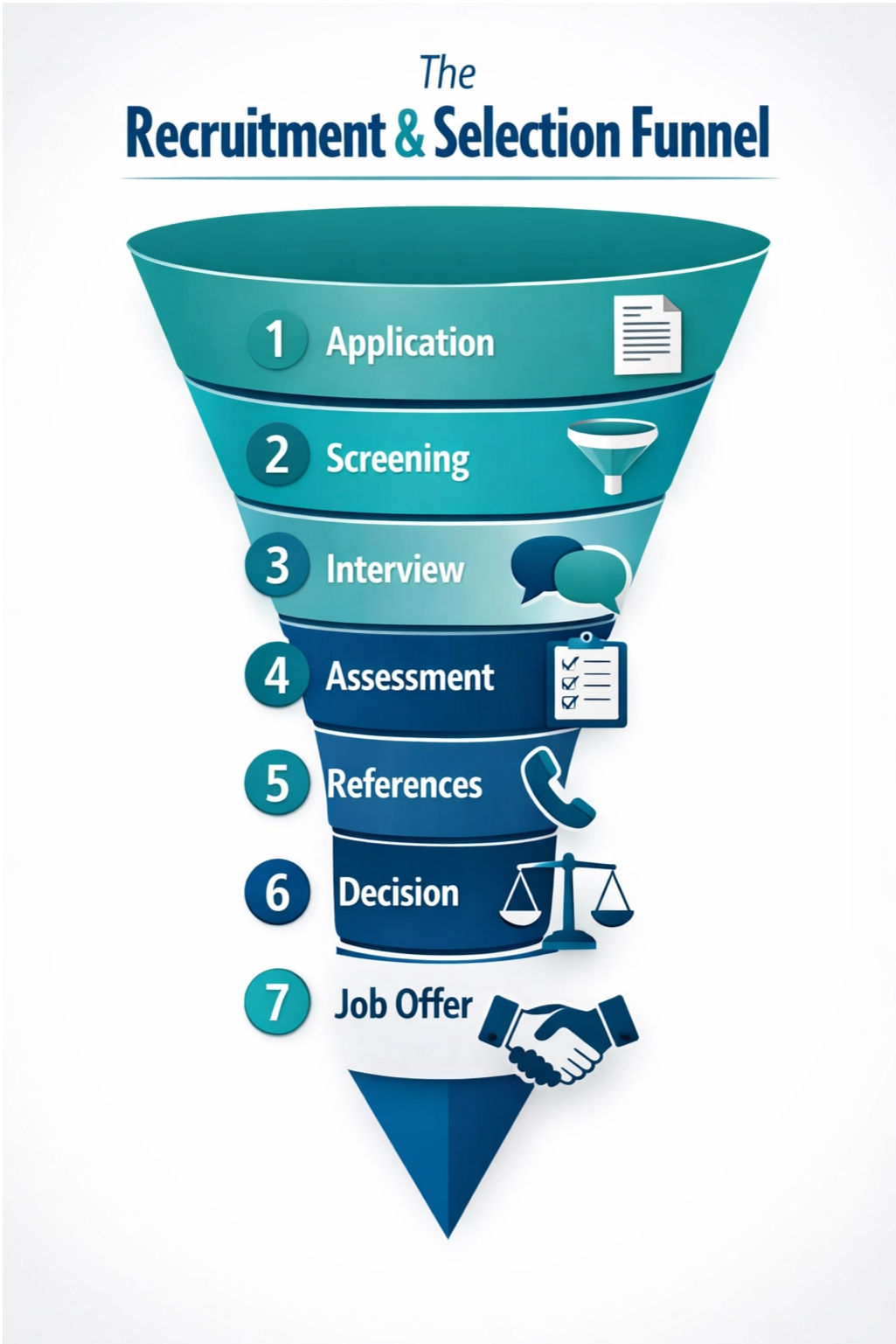
Once a sufficient pool of candidates has been generated through recruitment, the selection process begins. This phase systematically evaluates applicants to determine their suitability for the role and the organization. The selection process typically involves the following steps:
1. Application Review and Screening
The initial step in selection involves reviewing submitted applications, resumes, and cover letters to assess basic qualifications and experience. Pre-screening techniques are often employed to efficiently narrow down the applicant pool. This can include automated resume screening tools (Applicant Tracking Systems – ATS) that filter candidates based on keywords and criteria, as well as initial phone screens to verify key qualifications and assess interest .
2. Interviews
Interviews are a cornerstone of the selection process, providing an opportunity for direct interaction with candidates. Various interview formats are utilized:
- Structured Interviews: Using a standardized set of questions ensures fairness and consistency across all candidates, reducing bias .
- Unstructured Interviews: More conversational, allowing for deeper exploration of a candidate’s personality and motivations.
- Behavioral Interviews: Focus on past behaviors to predict future performance (e.g., STAR method) .
- Situational Interviews: Present hypothetical scenarios to assess problem-solving skills.
- Panel Interviews: Multiple interviewers assess the candidate simultaneously, offering diverse perspectives.
- Video Interviews: Asynchronous or live video interviews offer flexibility and efficiency, especially for remote roles .
3. Assessments and Testing
To gain a more objective understanding of a candidate’s capabilities, various assessments and tests are often incorporated:
- Skills Tests: Evaluate practical abilities directly relevant to the job (e.g., coding tests, writing samples).
- Cognitive Ability Tests: Measure problem-solving, critical thinking, and learning aptitude.
- Personality Assessments: Provide insights into a candidate’s work style, interpersonal skills, and cultural fit.
- Work Sample Tests: Candidates perform tasks similar to those required in the actual job, offering a realistic preview of their performance .
4. Reference and Background Checks
Before making a final offer, organizations typically conduct reference checks to verify information provided by the candidate and gain insights from previous employers or colleagues. Background checks, which may include criminal record checks, educational verification, and employment history verification, are also crucial for ensuring the integrity and suitability of the candidate .
5. Decision Making
This stage involves a comprehensive review of all gathered information from applications, interviews, and assessments. Hiring managers and HR professionals collaborate to evaluate each candidate against the job requirements and organizational culture. The goal is to make an informed decision that aligns with the company’s strategic objectives .
6. Job Offer and Contract
The final step in the selection process is extending a formal job offer to the chosen candidate. This offer typically includes details such as salary, benefits, start date, and terms of employment. Once the candidate accepts, an employment contract is drafted and signed, formalizing the new hire’s entry into the organization .
Best Practices and Trends for 2026
The recruitment and selection landscape is continually evolving. To remain competitive and attract the best talent in 2026, organizations are adopting several key best practices:
- AI Integration: Artificial intelligence is transforming various aspects of hiring. AI-powered tools assist with resume screening, candidate matching, and even chatbot-driven candidate engagement, streamlining processes and reducing administrative burden.
- Enhanced Candidate Experience: A positive candidate experience is paramount. This includes providing clear communication, timely feedback, a mobile-friendly application process, and a respectful interaction throughout the entire hiring journey. Organizations are increasingly using candidate satisfaction (NPS) as a key metric .
- Diversity, Equity, and Inclusion (DEI): Prioritizing DEI is not only ethical but also a strategic imperative. Best practices include implementing blind recruitment techniques (removing identifying information from resumes), using structured interviews to minimize unconscious bias, and actively sourcing candidates from diverse backgrounds .
- Data-Driven Hiring: Leveraging data and analytics to inform recruitment decisions is becoming standard. Metrics such as Time-to-Fill, Time-to-Hire, Quality of Hire, and sourcing channel efficiency provide valuable insights for optimizing the hiring process .
- Skill-Based Hiring: There’s a growing shift towards evaluating candidates based on demonstrable skills rather than solely on academic qualifications or years of experience. This approach broadens the talent pool and promotes meritocracy .
- Talent Pipelining: Proactively building relationships with potential candidates, even when there are no immediate openings, creates a ready pool of talent for future needs .
- Humanizing the Process: While technology offers efficiency, maintaining a human touch throughout the process is crucial. Personalized communication, empathetic interactions, and clear explanations help build rapport and trust with candidates .
The recruitment and selection process is a strategic imperative for any organization aiming for sustained growth and success. By understanding the distinct phases of recruitment and selection, implementing a structured approach, and embracing modern best practices, companies can build a robust talent acquisition strategy. In an increasingly competitive talent market, a well-executed hiring process not only secures the best individuals but also enhances the organization’s reputation as an employer of choice. The continuous evolution of technology and a focus on candidate experience and DEI will continue to shape the future of hiring, making it both an art and a science.