

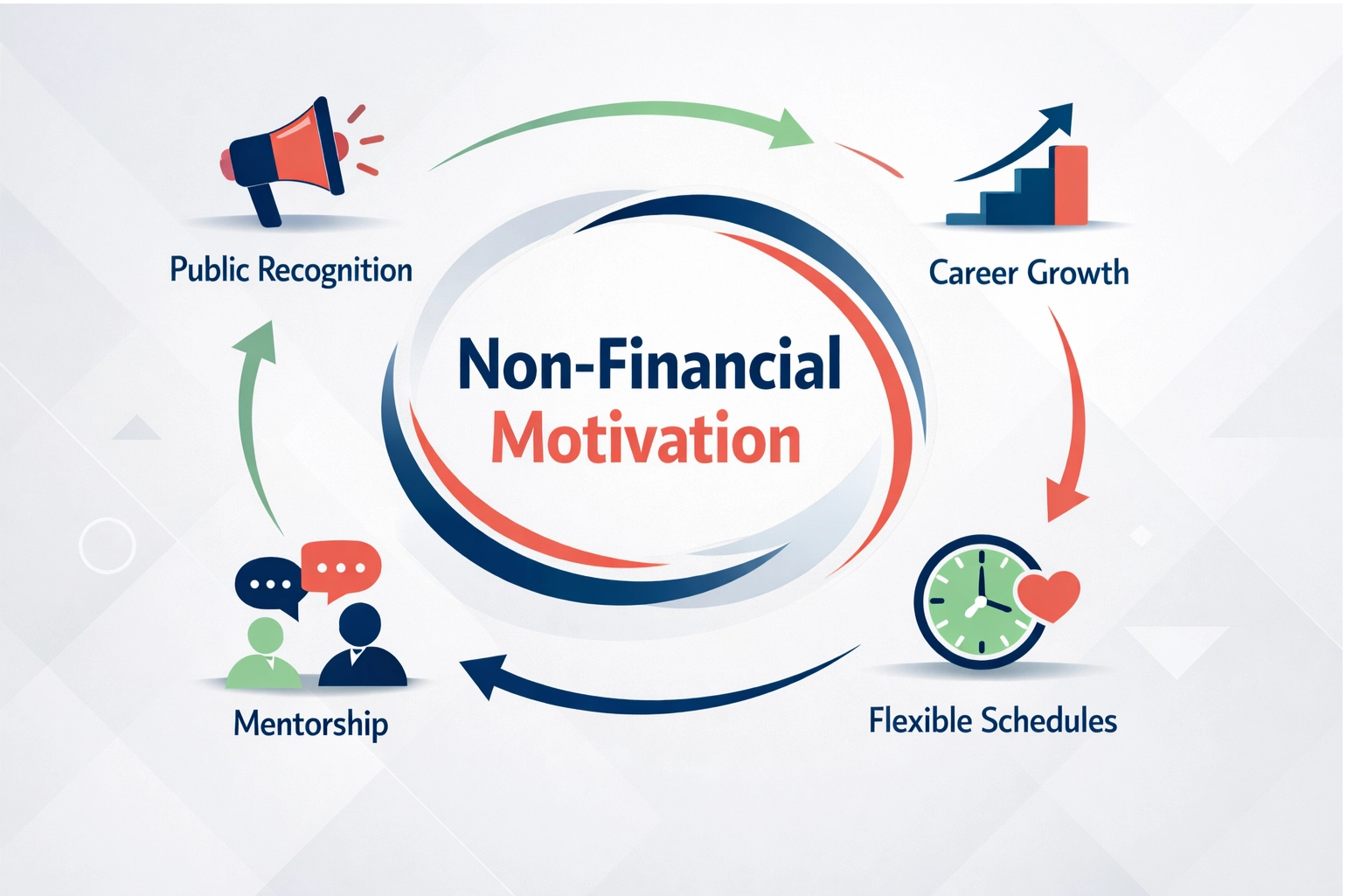
In the high-stakes arena of modern business, a persistent myth continues to drain corporate resources and stifle human potential: the belief that a fatter paycheck is the primary driver of peak performance. While competitive compensation is undeniably essential—serving as the “ticket to the game”—it is rarely the reason employees go the extra mile, innovate under pressure, or stay loyal during turbulent times. According to recent Gallup research, a staggering 85% of employees globally are either not engaged or are actively disengaged at work, costing the global economy trillions in lost productivity. This “engagement crisis” suggests that the traditional carrot-and-stick approach to management is failing.
True, sustainable motivation is not a transaction; it is a psychological state. To unlock the full discretionary effort of a workforce, leaders must look beyond the balance sheet and tap into the intrinsic drivers of human behavior. This article explores the psychological foundations and practical applications of non-financial motivation strategies that transform workplaces from mere sites of employment into hubs of inspiration and excellence.
The Psychological Foundations of Motivation
To understand why non-financial strategies work, we must first look at the behavioral science that governs human effort. Three core theories provide the bedrock for modern motivational practices:
1. Herzberg’s Two-Factor Theory
Psychologist Frederick Herzberg famously distinguished between “hygiene factors” and “motivators.” Hygiene factors—such as salary, job security, and working conditions—do not motivate when present, but cause significant dissatisfaction when absent. In contrast, true motivators are intrinsic to the work itself: achievement, recognition, responsibility, and growth [4]. You can pay someone to show up, but you cannot pay them to care; that requires motivators.
2. Self-Determination Theory (SDT)
Developed by Edward Deci and Richard Ryan, SDT posits that humans have three innate psychological needs [3]:
- Autonomy: The desire to be the causal agent of one’s own life.
- Competence: The urge to experience mastery and progress.
- Relatedness: The need to feel connected to others and have a sense of belonging.
When these needs are met, employees exhibit higher levels of creativity, persistence, and well-being.
3. Maslow’s Hierarchy of Needs
In a professional context, once basic physiological and safety needs are met through a fair salary, employees seek to fulfill higher-order needs. These include “Social Needs” (belonging), “Esteem Needs” (recognition), and “Self-Actualization” (reaching one’s full potential). Non-financial strategies are the primary tools for addressing these upper tiers of the hierarchy.
Strategy 1: Radical Autonomy and the Results-Oriented Mindset
One of the most potent non-financial motivators is the gift of control. In a traditional “command and control” environment, employees are managed by the clock. In an autonomous environment, they are managed by outcomes. This shift from “presenteeism” to “performance” is best exemplified by the Results-Only Work Environment (ROWE).
The Power of ROWE
Originating at Best Buy’s corporate headquarters, ROWE is a management philosophy where employees are paid for results, not hours. They have total autonomy over when, where, and how they work, as long as the work gets done. The psychological impact is profound. As noted in a Slate analysis of the experiment, employees reported feeling “liberated and dignified,” often describing the experience as being treated like an “adult” for the first time in their careers [8].
While Best Buy eventually scaled back the program during a period of financial distress to prioritize “all hands on deck” collaboration, the lessons remain valid. Autonomy reduces burnout and increases ownership. When an employee chooses their own path to a goal, they are no longer just “doing a job”; they are solving a problem they own.
Implementing Micro-Autonomy
For organizations not ready for a full ROWE model, “micro-autonomy” offers a middle ground. This involves:
- Flex-Time and Hybrid Models: Allowing employees to structure their day around their peak productivity hours.
- Decision-Making Power: Giving frontline staff the authority to solve customer issues without seeking managerial approval for every minor deviation.
- Project Choice: Allowing employees to spend a percentage of their time (e.g., Google’s famous 20% time) on projects they are passionate about.
Strategy 2: Cultivating a Culture of Peer-to-Peer Recognition
Recognition is often misunderstood as a top-down exercise—a manager patting a subordinate on the back. However, the most meaningful recognition often comes from one’s peers. Peer-to-peer recognition taps into the “Relatedness” pillar of SDT, reinforcing social bonds and creating a community of appreciation.
Beyond “Employee of the Month”
Traditional recognition programs, like “Employee of the Month,” are often viewed with cynicism. They can feel arbitrary, competitive, or stale. Modern recognition is:
- Specific: Instead of “Good job,” say “I appreciate how you handled that difficult client call by staying calm and offering a creative solution.”
- Timely: Recognition loses its impact if it is delayed until an annual review.
- Public: Celebrating wins in a shared space (physical or digital) amplifies the positive reinforcement.
Case Study: Adobe’s “Thanks for Being Awesome”
Adobe’s recognition program is a masterclass in peer-led motivation. Employees can nominate colleagues for going above and beyond. While there is a monetary component, the real value lies in the public acknowledgment and the branded “kudos” that serve as social currency within the company. This creates a “virtuous cycle” where employees are actively looking for the good in their colleagues’ work, fostering a culture of gratitude rather than competition [9].
Gamification in Recognition
Many companies are now using digital platforms to gamify appreciation. Employees can award “points” or “badges” to each other for demonstrating company values. These badges might appear on an internal leaderboard or a Slack channel, providing instant, visible feedback that triggers the brain’s reward system far more effectively than a distant year-end bonus.
Strategy 3: Growth, Mastery, and the “Stretch” Assignment
The desire for mastery is a fundamental human drive. When employees feel they are stagnating, their motivation plummets, regardless of their salary. Providing clear pathways for professional development is not just an investment in the company’s skill base; it is a powerful retention tool.
The Concept of the “Stretch Assignment”
Formal training sessions and workshops are valuable, but the most significant growth often happens “on the job.” A stretch assignment is a project or task that is currently beyond an employee’s comfort zone or skill level, requiring them to “stretch” to succeed.
- The Psychology of Flow: When the challenge of a task matches an individual’s high skill level, they enter a state of “flow”—a deep immersion in work that is inherently rewarding.
- Preventing Stagnation: For high-performers, the greatest “hygiene factor” is boredom. Stretch assignments provide the intellectual stimulation necessary to keep them engaged.
Mentorship and Shadowing
Non-financial growth also includes social learning. Mentorship programs pair junior employees with seasoned veterans, facilitating knowledge transfer and building professional confidence. Similarly, “job shadowing” allows employees to spend time in different departments, broadening their perspective and helping them understand the interconnectedness of the business. This not only builds competence but also enhances “Relatedness” by breaking down departmental silos.
Strategy 4: Purpose-Driven Work and Social Connection
In the modern workplace, “Why” is just as important as “What.” Employees, particularly Gen Z and Millennials, are increasingly seeking work that has meaning beyond profit. A study by Deloitte found that purpose-driven companies witness higher levels of employee satisfaction and retention [5].
Connecting Tasks to the “Big Picture”
Motivation often dies in the details. A software developer might feel uninspired by a line of code until they realize that code helps a doctor diagnose patients faster. Leaders must consistently bridge the gap between daily tasks and the organizational mission. This can be achieved through:
- Impact Stories: Sharing testimonials from customers whose lives were improved by the company’s products or services.
- Direct Interaction: Allowing employees to meet the end-users of their work.
- Transparency: Sharing the “Reason Why” behind strategic decisions, ensuring employees feel like partners in the journey, not just cogs in the machine.
Psychological Safety and Community
The “Relatedness” need is met through a culture of psychological safety—a term popularized by Harvard professor Amy Edmondson [6]. When employees feel safe to take risks, admit mistakes, and voice dissenting opinions without fear of retribution, they are more likely to be engaged and innovative. Building this community involves:
- Social Impact Initiatives: Organizing volunteer days or charity drives where employees work together for a common cause outside of their job descriptions.
- Shared Rituals: Whether it’s a weekly “wins” meeting or a casual coffee chat, consistent social rituals build the trust necessary for a high-performance culture.
Financial vs. Non-Financial Incentives: A Comparative Analysis
To effectively balance a total rewards strategy, leaders must understand the distinct roles of financial and non-financial incentives.
Feature |
Financial Incentives (Extrinsic) |
Non-Financial Incentives (Intrinsic) |
Primary Goal |
Attracting talent and meeting basic needs.
|
Engaging talent and driving performance.
|
Duration of Impact |
Short-term (the “bonus high” fades quickly).
|
Long-term (builds lasting habits and loyalty).
|
Cost to Organization |
High and recurring.
|
Low to moderate (requires time and effort).
|
Psychological Driver |
Reward/Penalty (External).
|
Purpose/Growth/Autonomy (Internal).
|
Best Used For |
Standardized, repetitive tasks.
|
Creative, complex, and collaborative work.
|
Examples |
Salary, bonuses, stock options.
|
Recognition, autonomy, mentorship, purpose.
|
Implementation Guide: A Step-by-Step Approach for Leaders
Transitioning to a motivation strategy centered on non-financial rewards requires a cultural shift, not just a policy change.
- Conduct a “Motivation Audit”: Use anonymous surveys or stay interviews to understand what currently drives (and drains) your team. Do they feel micromanaged? Do they feel invisible?
- Start with “Low-Hanging Fruit”: Implement a peer recognition channel on your internal communication platform (e.g., Slack or Teams). It costs nothing but immediate cultural dividends.
- Train Managers as Coaches: The number one reason people leave jobs is their direct supervisor. Train managers to provide coaching and recognition rather than just monitoring tasks.
- Measure and Iterate: Use metrics like Employee Net Promoter Score (eNPS) and turnover rates to gauge the effectiveness of your initiatives. Motivation is not a “one and done” task; it is a continuous process of adjustment.
The future of work is undeniably human-centric. As automation and AI take over routine tasks, the uniquely human qualities of creativity, empathy, and complex problem-solving will become the primary drivers of competitive advantage. These qualities cannot be coerced through financial incentives alone; they must be nurtured through autonomy, recognition, growth, and purpose.
By mastering non-financial motivation, leaders do more than just improve the bottom line. They create environments where people feel valued, empowered, and inspired to do their best work. In the end, the most successful organizations are not those with the deepest pockets, but those that understand the profound power of the human spirit when it is truly engaged.