

The traditional image of the professional workplace—a sea of cubicles, the hum of fluorescent lights, and the rigid adherence to a 9-to-5 schedule—is rapidly becoming a relic of the past. For decades, the standard employment model was built on the assumption that productivity was synonymous with physical presence and synchronized hours. However, the last few years have catalyzed a seismic shift in how we perceive work. Today, the conversation has moved beyond mere “work-life balance” toward a more integrated concept of “work-life harmony,” where professional responsibilities and personal lives coexist in a fluid, adaptable ecosystem. Part-time jobs and flexible working options are no longer just alternative paths for a select few; they have become the cornerstones of a modern, resilient, and inclusive economy.
This evolution is driven by a fundamental change in mindset. Employees are increasingly valuing autonomy and time as much as, if not more than, their base salary. Simultaneously, forward-thinking organizations are realizing that rigid structures often stifle creativity and lead to burnout. By embracing flexibility, both parties can unlock a higher level of engagement and performance. Whether it is a parent looking for part-time hours to accommodate childcare, a student balancing education with a career, or a seasoned professional seeking a semi-retirement “portfolio career,” the demand for diverse working arrangements is at an all-time high.
Defining the Landscape: A Spectrum of Flexibility
To understand the current state of employment, it is essential to recognize that flexibility is not a monolithic concept; it exists on a spectrum, ranging from minor adjustments in hours to entirely decentralized work models. At one end of the spectrum is part-time work, which has evolved significantly from its traditional roots. Modern part-time roles are often high-impact, professional positions that allow individuals to contribute their expertise without the commitment of a 40-hour week. This is particularly prevalent in “portfolio careers,” where individuals might hold multiple part-time roles across different industries, diversifying their income and skill sets.
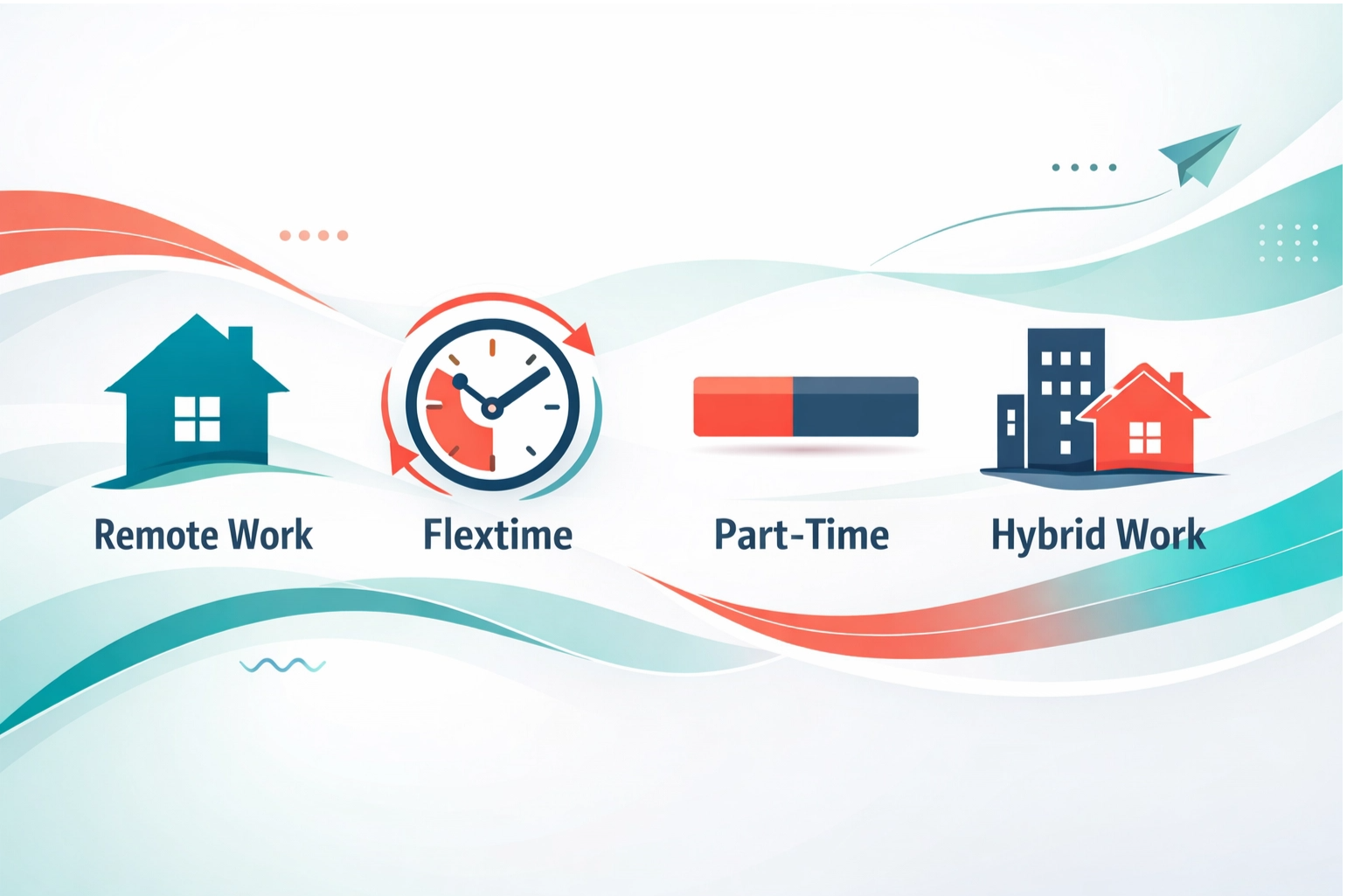
Beyond part-time hours, remote and hybrid models have become the standard for many office-based roles. Remote work allows for a complete decoupling of location and productivity, while hybrid models offer a “best of both worlds” approach, combining the collaborative benefits of in-person interaction with the focus and comfort of home-based work. Another increasingly popular option is flextime, which permits employees to choose their start and end times within certain parameters. This is invaluable for those who may be more productive during non-traditional hours or who need to navigate personal commitments like school runs or medical appointments.
For those seeking even more radical shifts, compressed workweeks—such as the four-day workweek—are gaining traction. This model involves working the same total number of hours over fewer days, providing a longer weekend that significantly boosts recovery time and mental well-being. Additionally, job sharing allows two people to split the responsibilities and hours of one full-time role, ensuring continuity for the employer while providing maximum flexibility for the employees. Finally, the gig and freelance economy represents the ultimate form of flexibility, where individuals operate as independent contractors, choosing their projects, clients, and schedules with complete autonomy.
Why the Shift? Current Trends in 2026
As we move through 2026, the data reflects a workforce that is uncompromising about its need for flexibility. Recent surveys indicate that a staggering 85% of workers now prioritize flexible working options over a higher salary . This is not merely a preference; it is a prerequisite for many when considering a new role. The “Great Realignment” of the mid-2020s has shifted the power dynamic, forcing companies to move from reactive, ad-hoc flexible arrangements to what experts call “Intentional Flexibility.” This means that flexibility is no longer a perk granted to high performers, but a strategic design element built into the organization’s culture and operations.
Interestingly, the trend is also climbing the corporate ladder. Historically, senior-level roles were the most resistant to flexibility, often requiring an “always-on” presence. However, 2026 has seen a surge in senior leaders embracing hybrid and part-time models . This shift is partly enabled by the maturation of artificial intelligence and collaborative technologies, which have streamlined administrative tasks and made asynchronous communication more effective. AI tools now handle scheduling, meeting summaries, and routine project management, freeing up human professionals to focus on high-level strategy and creative problem-solving, regardless of their physical location or the specific hours they are logged in.
The Employee Perspective: Benefits Beyond the Paycheck
For the individual, the benefits of flexible and part-time work extend far beyond the convenience of avoiding a morning commute. The most profound impact is on work-life harmony and mental health. The ability to step away from the desk to attend a child’s school play, go for a midday run, or simply rest during a low-energy period reduces the chronic stress associated with rigid schedules. This autonomy fosters a sense of trust and agency, which are key drivers of job satisfaction and overall life fulfillment .
Financial considerations also play a significant role. While some might assume that part-time work always leads to lower income, the savings associated with flexible work can be substantial. Employees save thousands annually on commuting costs, fuel, vehicle maintenance, and public transit fares. There are also less obvious savings, such as reduced spending on professional attire and expensive “convenience” meals. For many families, flexibility is the only way to manage the skyrocketing costs of childcare; being able to adjust hours means parents can share caregiving duties, reducing the need for full-time external support.
Furthermore, flexible work is a powerful tool for career longevity and inclusivity. It opens doors for individuals who might otherwise be excluded from the traditional workforce. This includes parents returning from leave, caregivers for elderly relatives, and people with disabilities or chronic health conditions that make a standard office environment challenging. By allowing people to work in ways that accommodate their unique life circumstances, we ensure that their talents and expertise are not lost to the economy. It also provides the “breathing room” necessary for personal growth, allowing individuals the time to pursue upskilling, education, or side projects that keep their careers dynamic and future-proof.
The Employer Perspective: Building a Resilient Workforce
From a business standpoint, the move toward flexible and part-time working arrangements is not an act of charity; it is a strategic imperative. In a global talent market, offering flexibility is one of the most effective ways to attract and retain top-tier talent. Companies that insist on rigid, on-site models often find themselves losing their best people to competitors who offer more autonomy. High turnover is incredibly costly, involving not just the expense of recruitment and training, but also the loss of institutional knowledge and the disruption of team dynamics .
Moreover, the “output over hours” philosophy is proving to be a major driver of increased productivity. When employees are given the freedom to work when and where they are most effective, the quality of their work often improves. Without the fatigue of a long commute or the constant interruptions of an open-plan office, many workers find they can achieve in four hours what used to take eight. This focus on results rather than “presenteeism” encourages a more disciplined and goal-oriented work culture. Additionally, flexibility is a natural antidote to burnout. By allowing employees to recharge and manage their personal lives, organizations maintain a more energized and engaged workforce, which is essential for long-term innovation.
There are also significant operational cost efficiencies to be gained. As more employees work remotely or on staggered part-time schedules, companies can significantly reduce their real estate footprint. “Hot-desking” and smaller, more collaborative office spaces replace rows of assigned desks, leading to massive savings on rent, utilities, and office maintenance. These funds can then be reinvested into technology, employee development, or better compensation packages, further strengthening the organization’s competitive position .
Navigating the Challenges
Despite the clear benefits, transitioning to a flexible or part-time model is not without its hurdles. One of the most significant challenges is communication and connection. In a distributed or non-synchronous team, the spontaneous “watercooler” moments that often spark new ideas can be lost. To combat this, organizations must be intentional about creating digital spaces for social interaction and ensuring that information flows transparently to everyone, regardless of their schedule.
Another critical issue is proximity bias—the subconscious tendency for managers to favor employees who are physically present or more visible. This can lead to unfair advantages in promotions and project assignments for those in the office, while remote or part-time staff are overlooked. Overcoming this requires a fundamental shift in management style, focusing strictly on measurable outcomes and ensuring that career development pathways are accessible to all. Finally, there is the risk of the “always-available” trap. Without the physical boundary of the office, the lines between work and home can blur, leading to employees feeling they must be reachable at all hours. Clear policies regarding “right to disconnect” and setting explicit expectations for response times are essential to prevent this from becoming a new form of burnout.
How to Find and Negotiate Flexible Work
For those looking to transition into a more flexible or part-time role, the process begins with thorough research and a clear understanding of one’s own needs. Not all flexibility is created equal; some may require a specific type of flextime, while others may need a permanent remote arrangement. When searching for new opportunities, look for companies that explicitly mention “flexibility” or “remote-first” in their values. Websites like FlexJobs or specialized niche job boards are excellent resources for finding vetted flexible roles.
If you are already in a full-time role and wish to propose a flexible arrangement, preparation is key. Instead of framing it as a personal request, frame it as a business proposal. Highlight how the change will improve your productivity, reduce distractions, and allow you to better serve the company’s goals. Propose a trial period—perhaps three months—to prove that the arrangement works. During this time, be extra diligent about communication and meeting deadlines to build the necessary trust. Utilizing tools like shared calendars, project management software (such as Trello or Asana), and robust communication platforms (like Slack or Microsoft Teams) can help demonstrate that you are organized and fully integrated into the team, regardless of your hours.
The Future of Work is Personal
The shift toward part-time jobs and flexible working options represents a maturing of the professional world. We are moving away from a one-size-fits-all approach to a more human-centric model that recognizes the diverse needs and rhythms of a global workforce. While the transition requires effort, intentionality, and a willingness to challenge long-held assumptions, the rewards are undeniable.
For the employee, flexibility offers the chance to build a career that fits their life, rather than forcing their life to fit their career. For the employer, it provides access to a broader, more diverse talent pool and a more resilient, productive team. As we look toward the future, the most successful individuals and organizations will be those who embrace this fluidity, using it as a catalyst for innovation, inclusivity, and long-term success. The future of work is not just about where or when we work, but about the freedom to do our best work in a way that makes sense for who we are. It is time to move beyond the rigid structures of the past and embrace the limitless possibilities of a flexible future.