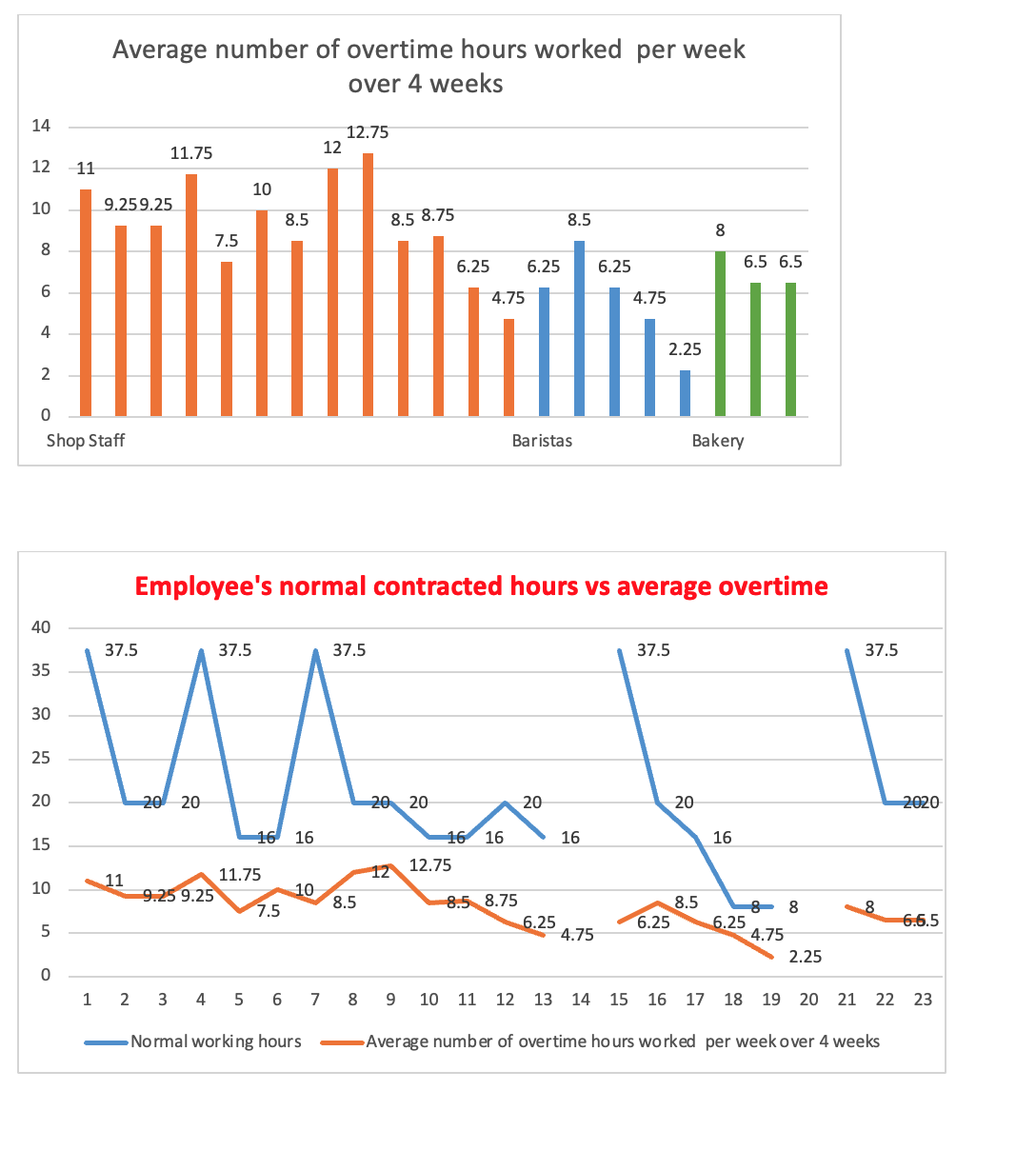

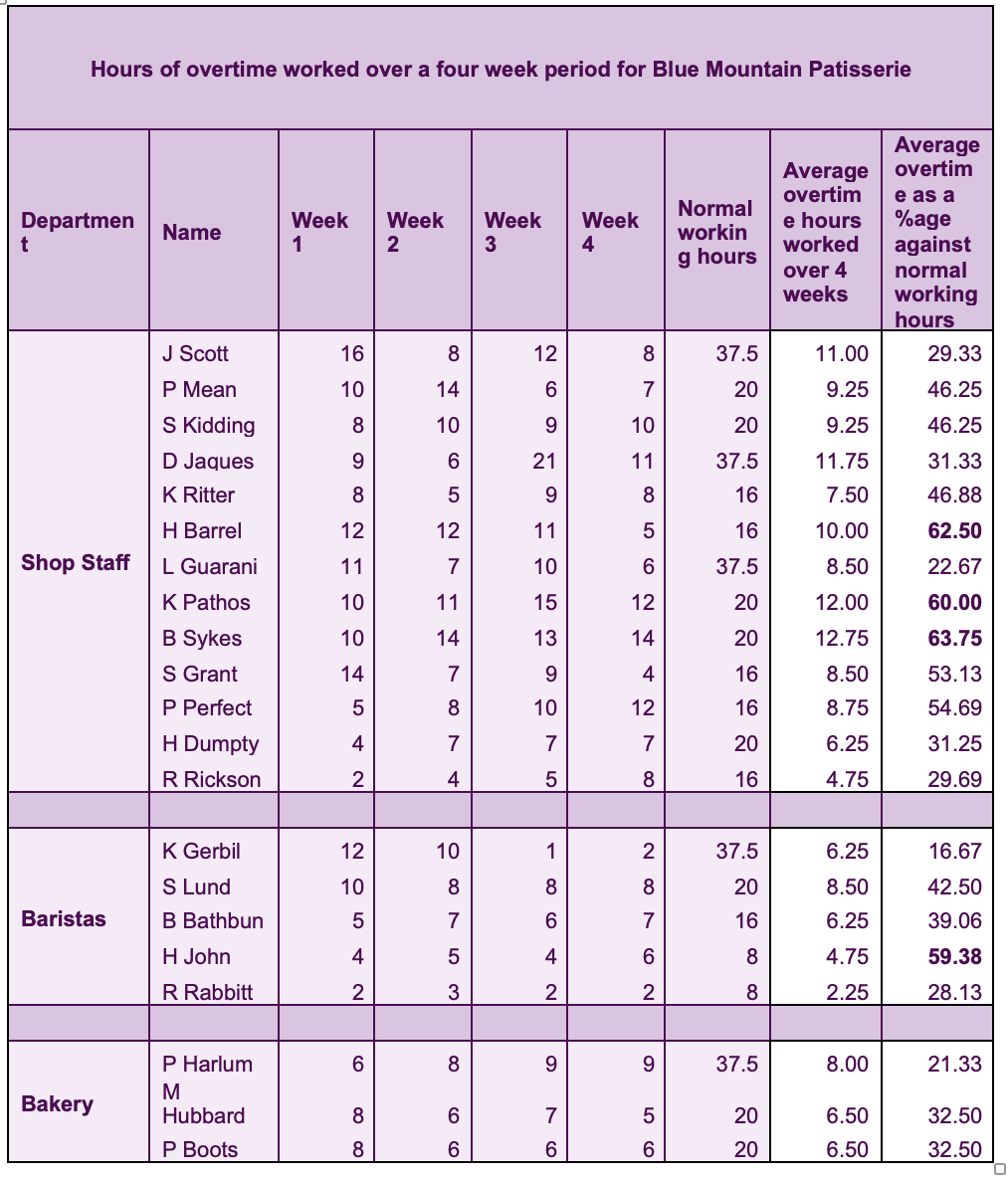
A primary issue is the huge overtime burden placed on certain staff. For instance, B Sykes averages 12.75 hours which is 63.75% of his 20-hour week. H Barrel averages 10 hours which is 62.5% of his 16-hour week while K Pathos averages 12 hours which is 60% of his 20-hour week. These extreme overtime demands on staff are a strong indicator of poor workload distribution, inadequate staffing and managerial inefficiency. They could result in employee burnout, diminished productivity and increased errors on the job.
Furthermore, the data suggests inconsistent application of overtime as evidenced in the barista department where K Gerbil’s overtime is only 16.67% of normal working hours while H John’s overtime is 59.38% of his working hours. This irregular pattern suggests either data entry errors or scheduling conflicts possibly as a consequence of under-staffing and an over-reliance on a flexible workforce to cover core functions.
To address these challenges, Company X can suggest various evidence-based solutions. First, a comprehensive review of workload allocation and staffing levels within the affected departments is necessary to redistribute work equitably and prevent staff burnout. Second, the client should investigate the lopsided overtimes in the barista team to identify the underlying causes and ensure accuracy in record-keeping. Finally, the consistently high overtime among the part-time staff suggests a need to analyse the shift patterns and consider the need to create more full-time roles. This could be more cost-effective and sustainable compared to continuously supplementing staff with high overtimes, thereby improving operational efficiency and employee wellbeing.
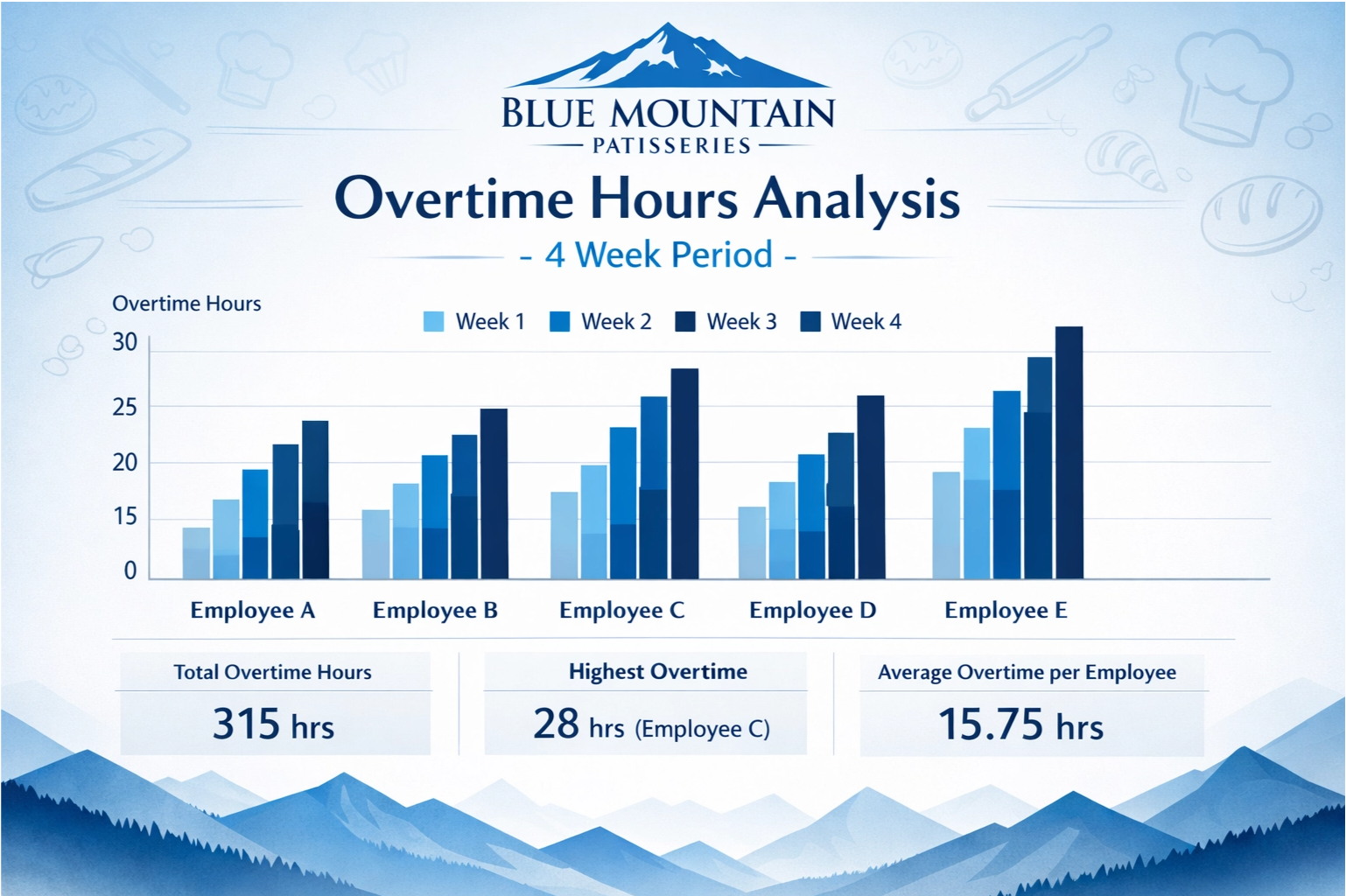
Two different diagrammatic forms to clarify the findings for Blue Mountain.